Spanish garlic growers seek EU safeguards as third-country imports rise 128.4%
Spanish garlic growers are preparing a request for an EU safeguard clause after third-country imports increased 128.4% over the past decade to 111,812 tonnes. The initiative comes as Spain reports an excellent-quality 2026 crop from slightly more than 24,000 hectares.
Import growth raises pressure on the EU market
Spain’s garlic industry is preparing to seek protection from rising third-country supplies even as the country harvests a high-quality crop in 2026. The National Association of Garlic Producers and Marketers, ANPCA, agreed to begin the technical work required to request an EU safeguard clause, according to AgroNews Castilla y León.
Garlic imports into the European Union from non-EU countries have increased 128.4% over the past decade, reaching 111,812 tonnes. China accounts for approximately two-thirds of that volume, with shipments of 74,231 tonnes, while Egypt supplied 19,555 tonnes and recorded the highest percentage growth among the origins highlighted by ANPCA.
The association argues that continued import growth could disrupt the EU market, weaken prices and reduce the profitability of European farms. The effects could extend beyond growers to cooperatives, storage facilities, marketing companies and service providers in rural areas where garlic is an important source of employment and commercial activity.
Strong quality but less acreage than in 2022
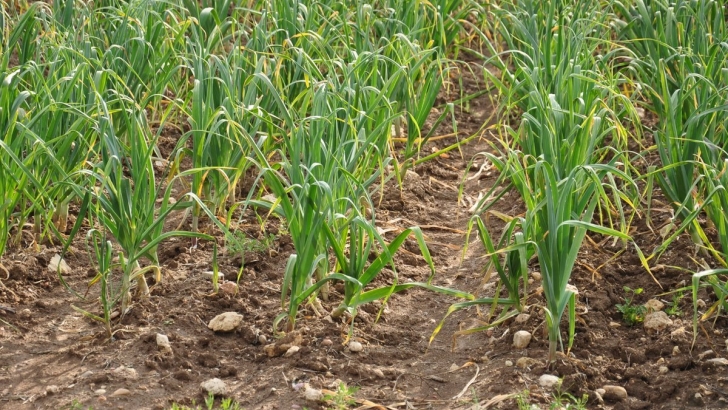
The trade concerns coincide with a solid Spanish harvest. ANPCA assessed the sanitary and commercial quality of garlic harvested in 2026 as excellent, while planted area remained broadly stable from the previous year at slightly more than 24,000 hectares. However, that area is still well below the nearly 30,000 hectares planted in 2022, showing how far the crop has contracted in recent years.
Spring garlic recovered the yield levels lost in earlier seasons because of adverse weather. The return to normal production gives relief to farms that had experienced lower output and, together with strong commercial quality, should improve their ability to compete in the European market.
Morado garlic also achieved excellent quality, although yields were slightly below the high expectations recorded at the start of the season. Final production therefore did not fully meet initial forecasts. Its healthy condition, storage characteristics, organoleptic qualities and established commercial reputation nevertheless preserve the variety’s differentiated position.
Industry must demonstrate serious injury
ANPCA plans to pursue an erga omnes safeguard clause covering third-country garlic generally rather than targeting a single supplier. Such a trade instrument can permit corrective measures when a rise in imports causes, or threatens to cause, serious injury to European producers. Activation is not automatic and will require evidence connecting imports to economic and commercial harm.
To build that case, ANPCA will survey producers and agricultural organisations in several EU member states. The survey will collect economic, production and market data for submission to Spanish authorities and the European Commission. Broad participation will be necessary to create what the association describes as a solid, objective and representative database.
The process places import volumes, farm profitability and the EU crop’s competitiveness under closer scrutiny. For Spanish growers, the challenge is particularly significant in specialised production areas such as Castilla-La Mancha. The 2026 crop offers quality and more normal yields, but the safeguard application will depend on whether the industry can document serious damage or a credible threat from the growth in outside supplies.