Spanish egg prices fall 30% as avian flu pressure eases
Prices for caged-hen eggs in Spain have dropped 30% since April as farms emptied by avian flu return to production. Extra-EU egg imports jumped 750% in Spain in early 2026, with 90% sourced from Ukraine, according to consultancy Areté.
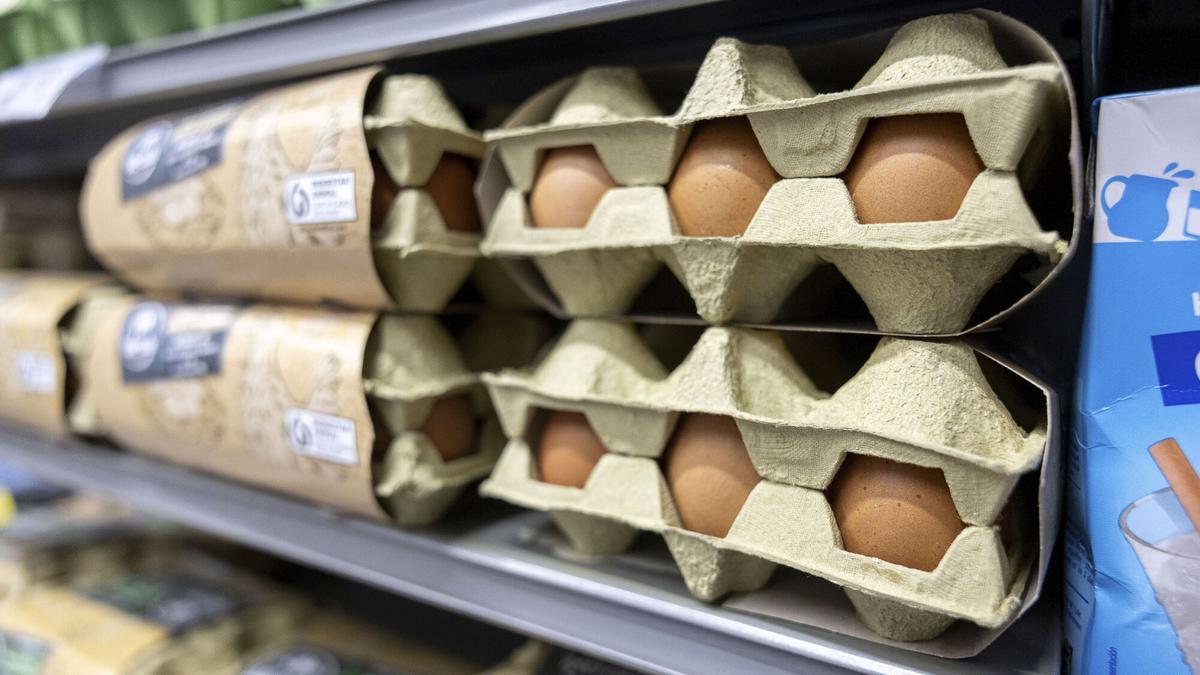
Prices ease after a year of shortages
Egg prices in Spanish supermarkets have fallen sharply as the pressure from avian influenza eases, according to laopiniondemurcia.es. Five months after Spain declared itself free of the disease across its entire territory on 10 February 2026, prices that had surged more than a year earlier are now in their third consecutive month of decline.
The deflationary trend began in April and is holding despite summer being a period of high demand, affecting both origin prices paid to farmers and retail prices paid by consumers. Across Europe the average decline is 15%, returning values to levels equivalent to June 2025. In Spain, eggs from caged hens have fallen 30% since April.
Farms return to production
Anna Toda, director of the Federació Avicola Catalana, described the shift as stabilisation rather than a simple price drop. She attributed it not only to the respite from avian influenza but also to farms that had to be emptied because of the virus gradually returning to activity. Toda added that the sector is still adapting to new European animal welfare rules, with production normalising slowly.
The crisis struck the Spanish poultry sector in July 2025. The first outbreaks in domestic birds were recorded in Badajoz, at a farm of 7,000 fattening turkeys, and in Toledo, at an operation of 50,000 breeding hens. In September, outbreaks were reported at a farm of 8,400 birds in Huelva, at an operation in Guadalajara, and at a laying-hen farm of around 760,000 birds in Valladolid. Further outbreaks followed in October across Castilla y Leon and the Madrid region, and in December in the Urgell area of Lleida, at a farm of around 235,000 hens.
Imports fill the gap
Sources at the European Commission's agriculture directorate said mass egg imports from Ukraine were also decisive. According to consultancy Areté, which specialises in agri-food commodity markets, egg purchases from countries outside the European Union rose 88% in the first four months of 2026 compared with the same period of 2025. The main origins were Ukraine, up 51%, and Turkey, up 31%. Spain recorded a 750% increase in extra-EU imports over the same period, with 90% of volumes coming from Ukraine.
Spain's free-of-disease status was delayed by renewed outbreaks. The Ministry of Agriculture had begun work in December on a self-declaration to the World Organisation for Animal Health (WOAH) to ease trade with third countries, but a new highly pathogenic outbreak was reported in Lleida in January 2026, pushing the declaration back to 10 February.
Demand keeps growing
Toda noted that egg demand continues to rise regardless of availability or price, with summer and Easter the peak periods for consumption. Spanish households kept buying eggs through 2025 despite inflation, with the product accounting for 1.46% of total household food spending, according to the interprofessional organisation Inprovo. Domestic consumption grew 2.8% by volume last year to 438 million kilos, an increase of 15% over three years.