Biomethane from waste could cover 40% of Spain's gas demand, analysis finds
An analysis of Spain's waste-to-energy potential concludes that biomethane produced from urban, agricultural, livestock and food waste could cover 40% of the country's natural gas demand. The finding positions organic residues currently treated as a disposal cost as a domestic energy resource capable of reducing import dependence.
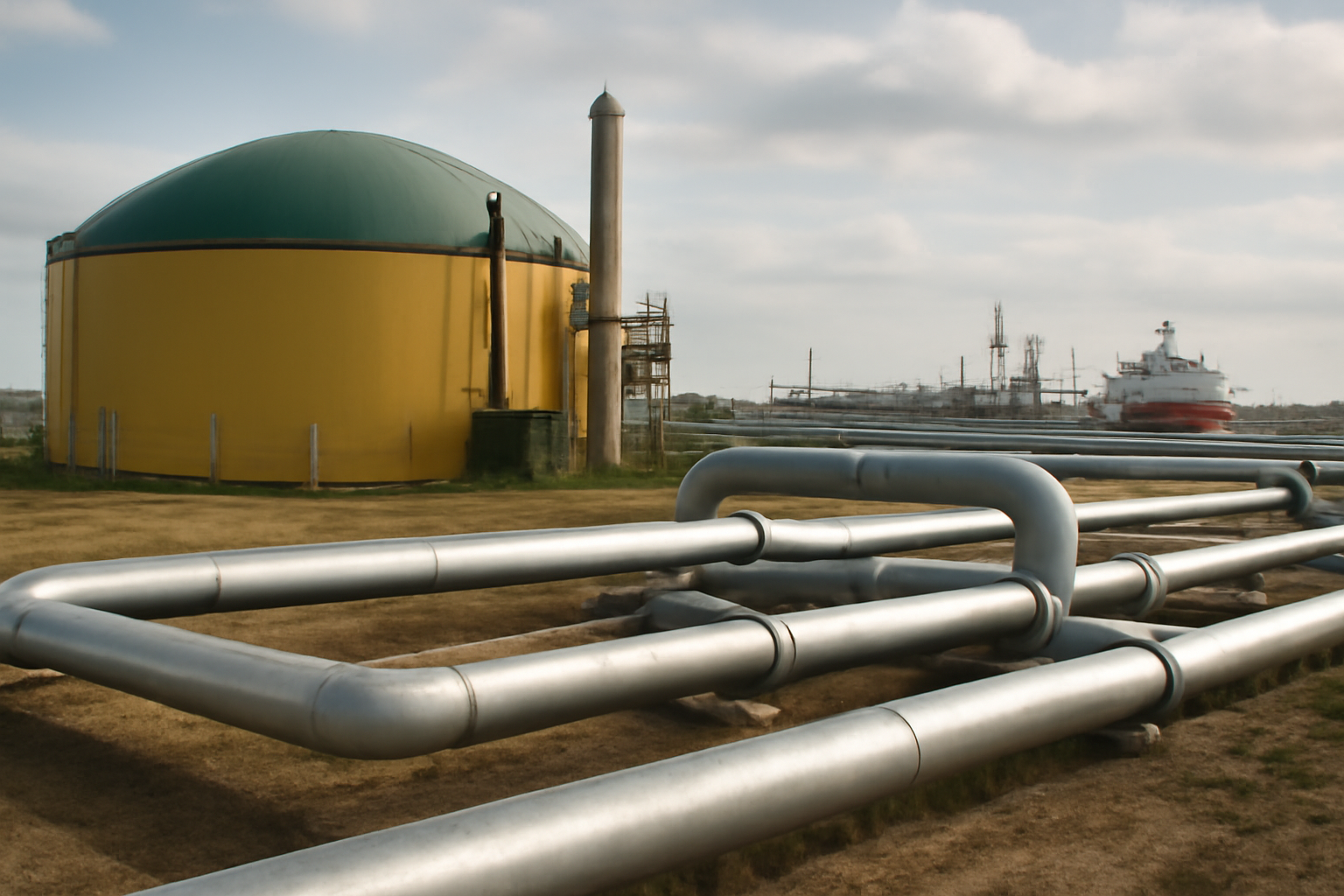
Biomethane produced from urban, agricultural, livestock and food waste could cover 40% of Spain's natural gas demand, according to an analysis of the country's waste-to-energy potential. The estimate reframes organic residues — handled today largely as a disposal cost by municipalities, farms and food processors — as a domestic energy resource on a scale that is relevant to national supply planning.
Which waste streams carry the energy
Biomethane is upgraded biogas. Organic matter is broken down in anaerobic digesters to produce a raw gas made up mainly of methane and carbon dioxide; the carbon dioxide and trace compounds are then removed until the product matches pipeline-quality natural gas. Once upgraded, it can be injected into the existing grid, liquefied for heavy transport or burned in industrial boilers with no change to downstream equipment. That drop-in quality is what gives the 40% figure its weight: the resource would feed demand that already exists, through infrastructure that is already built.
The feedstocks behind the estimate are generated continuously across the Spanish economy rather than produced deliberately for energy use:
- the organic fraction of municipal solid waste and sludge from urban treatment plants;
- crop residues and other agricultural by-products;
- manure and slurry from livestock farming;
- process waste and effluent from the food and beverage industry.
From resource estimate to installed capacity
A potential figure is not a production forecast. Turning waste into grid-injected gas requires digesters, upgrading units, connection points to the transport or distribution network, and the permits that go with each of them. Every one of those steps carries its own lead time, and the gap between theoretical potential and operating capacity is where most biomethane projects in Europe stall. The 40% therefore describes a ceiling, not a volume that can be scheduled into supply balances.
Logistics set a second limit. Organic waste is dispersed, heavy and wet, which makes it expensive to move relative to its energy content. Plants have to be sited close to their feedstock, which in practice means livestock basins, irrigated crop areas, food industry clusters and the catchment areas of large municipal treatment facilities. That geography determines where injection points are needed and how much of the theoretical resource is economically reachable.
The commercial layer matters as much as the engineering. Biomethane competes against a commodity — imported natural gas — whose price it cannot usually match on cost alone. Projects are financed against long-term offtake agreements and against the value buyers place on a certified renewable gas, which means certification schemes, guarantees of origin and the willingness of industrial consumers to pay a premium are the variables that decide how much of the potential is built.
What 40% would mean for the market
Spain has no material domestic natural gas production, so the gas it consumes arrives by pipeline and as liquefied natural gas. A domestically produced share of that size would change the country's exposure to seaborne and pipeline supply, shifting part of the gas bill from an import line into local processing, logistics and plant operation. It would also convert a share of gas spending into payments to farmers, waste operators and rural contractors.
The most likely first buyers are industrial users with heat demand that is hard to electrify — ceramics, food processing, paper, glass and chemicals. For these sectors, a drop-in renewable gas is the shortest route to lower direct emissions without rebuilding process equipment, which is why biomethane offtake in Europe has concentrated there rather than in the residential market.
Agriculture stands to gain twice. Manure and slurry that are currently a disposal and nutrient-management problem become a paid feedstock, and the digestate left after anaerobic digestion returns to the field as fertiliser, offsetting part of the farm's mineral nutrient purchases. Capturing methane that would otherwise escape from manure storage adds a further emissions argument for livestock operations facing tightening environmental rules.