Spain’s table olive harvest forecast to rise 27% to 638,000 tonnes
Spain expects table olive production of 638,000 tonnes, 27% above last year and 37.2% above the four-campaign average. The larger crop could pressure prices and processing capacity as exports have fallen 6% and dry conditions threaten fruit size.
Crop rebounds after abundant seasonal rain
Spain’s table olive production is forecast to reach 638,000 tonnes this season, according to the second crop estimate presented by industry organization Interaceituna. That would be 27% more than last year and 37.2% above the average of the previous four campaigns, reinforcing Spain’s position as the world’s largest producer.
El Español reports that the improvement reflects a strong response from olive groves after abundant rainfall in autumn and winter. Manzanilla output is estimated at 214,000 tonnes and Hojiblanca at 283,000 tonnes, making them the two largest varieties in the forecast. Carrasqueña could contribute 57,000 tonnes and Cacereña 34,000 tonnes, alongside smaller volumes of Gordal and several local green varieties.
Heat and water shortages threaten marketable volumes
The estimate remains vulnerable to weather conditions. No rain has fallen since February, and rain-fed groves and inadequately irrigated farms are entering the harvest under stress after five summer heatwaves. Much of the Manzanilla fruit in heavily loaded orchards has not yet reached sufficient size and still requires water. Without early autumn rainfall, part of the projected table olive crop could instead be sent for oil extraction rather than processing by curing plants.
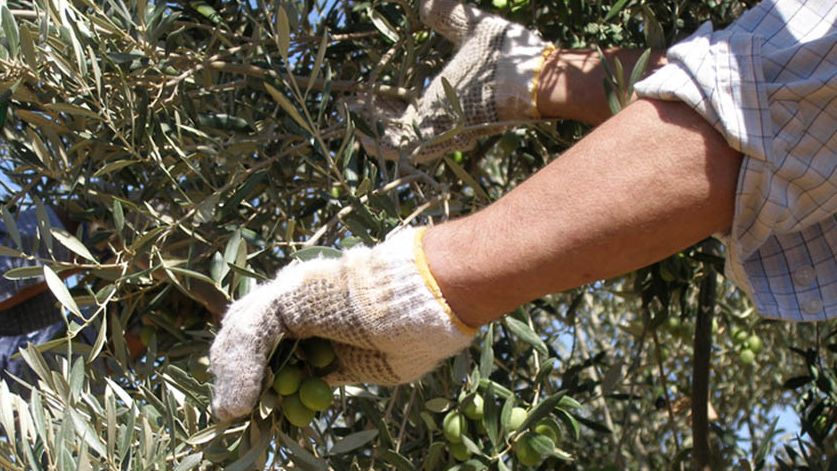
Harvesting has begun in the Aljarafe and Utrera areas with early Manzanilla and Gordal olives. These varieties cannot be mechanically harvested and therefore require considerable labor. The Hojiblanca harvest, expected to become widespread around the 15th, can be mechanized, allowing growers to reduce collection costs. Andalucía accounts for 80% of Spanish table olive production, while Sevilla, the leading province, expects between 200,000 and 220,000 tonnes. Its harvest is projected to employ around 45,000 workers for 30 to 40 days.
Higher supply meets weaker export demand
The larger harvest arrives as international sales lose momentum. More than half of last season’s crop, which totaled about 500,000 tonnes, was sold abroad, but exports fell 6% amid tariffs and wider international uncertainty, according to El Español. Spanish table olives, particularly black olives, have faced tariff pressure in the US market for years, allowing competing producing countries to gain market share. Domestic consumption, exceeding 200,000 tonnes annually, increased only 1%, according to agricultural cooperatives.
This combination creates uncertainty over prices and plant utilization. Large crops normally weaken quotations, while the export decline has left a substantial carryover from the previous season. Curing and packing businesses could gain access to more raw material, but producers need prices that cover rising labor, fuel, fertilizer and energy costs. Spain has 197,335 hectares associated with table olives, including 77,650 hectares dedicated to table varieties and 119,685 hectares with dual use. The country supplies an average 62% of EU table olive production and 17% of global output, so changes in the Spanish crop can affect availability and pricing across major markets.