Spain standardizes names and labeling for canned seafood
Spain’s Royal Decree 1082/2025 creates national lists of approved names for fishery and aquaculture products, including canned and prepared seafood. The rules define terms such as “in olive oil,” “pickled,” “preserve” and “small sardine,” while giving processors transition periods for existing labels and stocks.
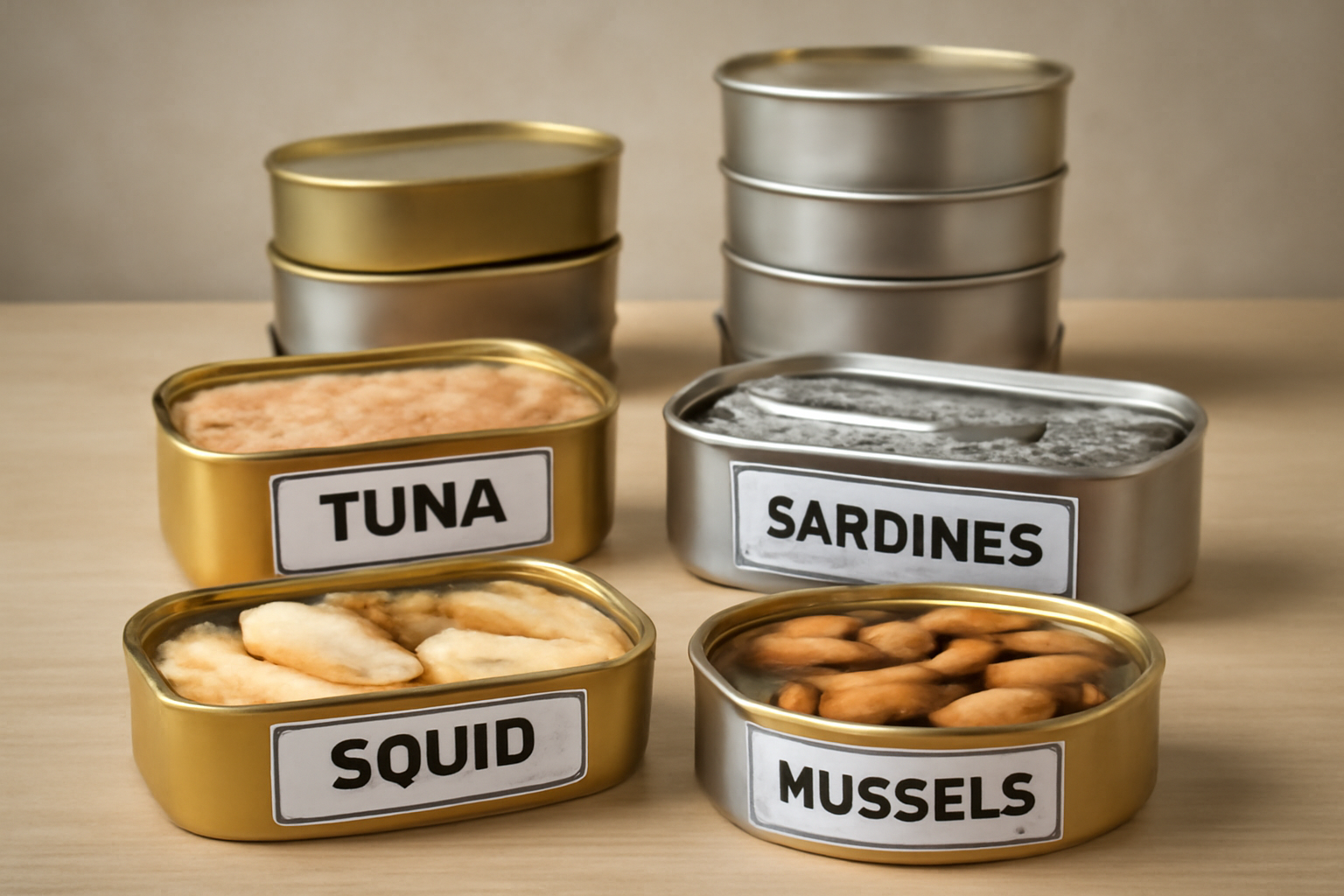
A national system for seafood names
Spain has introduced a new framework governing the names and labeling of fishery and aquaculture products, including canned tuna, sardines, mussels, clams and cockles. Royal Decree 1082/2025, dated December 3, 2025, was published in the Official State Gazette on December 6 and entered into force on January 2, 2026.
The decree requires products offered to final consumers or collective caterers to carry the national commercial name or the approved name for a canned or prepared food. Spain’s General Secretariat for Fisheries will establish two official lists: one for national commercial names of species and another for canned and prepared products. Regional names may appear as supplementary information but cannot replace the national designation.
The reform replaces a fragmented system that included provisions dating from 1984 and quality standards for canned mussels, clams and cockles adopted in 1985. The Official State Gazette said the previous framework needed updating to reflect changes in European and Spanish food law, production methods, consumption patterns and the range of processed seafood products.
Definitions become part of the label
The decree updates 47 definitions covering presentation, preservation and preparation. A “preserve” is a product given sufficient heat treatment to remain sterile for an extended period without refrigeration. A “semi-preserve” receives treatment that limits microbial development but does not ensure sterility and must remain refrigerated. These terms must accompany the commercial or food name where required by applicable labeling rules.
Descriptions of packing media and recipes are also standardized. “In olive oil” means that the covering liquid consists solely of olive oil, without a mixture of other oils. “Natural” refers to natural cooking juices together with water and salt. “Pickled” or “in escabeche” applies when seasonings, spices, vinegar, oil or other characteristic liquids are added and the product undergoes heat treatment. The decree separately defines products in tomato, American-style or spicy sauces, as well as products in ink.
Specific anatomical and presentation terms are covered as well. “Loin” refers to a thick portion of dorsal fish muscle, while “belly” means the muscle bordering the abdominal cavity. The rules also define fillets, slices, pieces, crumbs, tentacles, roe and other forms commonly used on seafood labels. These definitions affect how processors describe the contents of a package rather than setting new production-capacity targets.
Small sardines and compliance timetable
Products made from Sardina pilchardus may use the Spanish designation “sardinilla” only within specified size and average-weight ranges. Mediterranean raw material must measure between 11 cm and 15 cm, with average weights ranging from 10.7 g to 25 g. Sardines from other fishing grounds must measure between 11 cm and 13.7 cm, with average weights from 12.5 g to 25 g. The designation remains subject to its inclusion in the resolution issued by the General Secretariat for Fisheries and compliance with European Union and national technical rules.
Operators may request the addition, amendment or removal of a name. The General Secretariat for Fisheries has up to six months to decide, and approved individual changes will be consolidated through annual updates. Applications from companies must be submitted electronically and identify the scientific name, proposed designation and FAO three-letter code.
The transition rules limit immediate disruption for processors and retailers. Existing labeled packaging and products made before the first relevant list takes effect may remain on sale for up to one year, provided they complied with the previous rules. When a later resolution changes a name, operators generally receive six months to adapt. The decree does not quantify relabeling or compliance costs, but companies may need to review packaging artwork, product specifications and master data across retail channels. Goods legally marketed in another EU member state, Turkey or qualifying European Economic Area countries remain covered by mutual-recognition provisions.