Spain’s reclaimed water output outpaces its agricultural reuse infrastructure
Spain reused 343 cubic hectometres of treated and reclaimed water, but supply remains concentrated in a handful of regions. Distribution networks, storage, treatment standards and links to irrigation districts determine whether reclaimed water reaches Mediterranean farms.
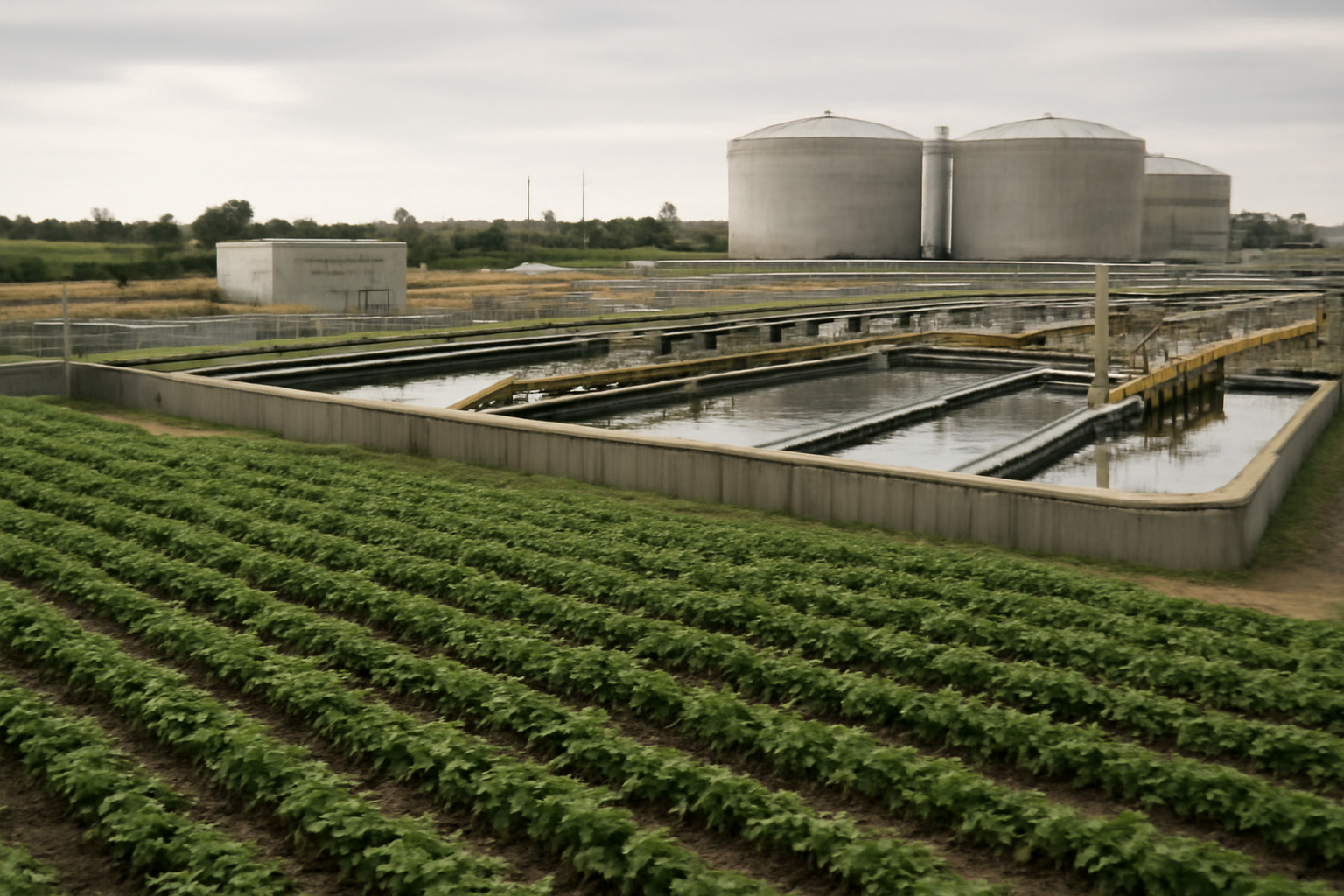
Reclaimed supply remains unevenly used
Spain has developed substantial wastewater-treatment capacity, but turning treated effluent into a dependable agricultural resource remains an uneven process. The country has more than 2,000 wastewater-treatment plants and reused 343 cubic hectometres of treated and reclaimed water, according to iAgua, citing the 2022 national water supply and sanitation study by AEAS-AGA.
Reuse is led by Murcia, the Valencian Community and Andalusia, followed by the Balearic Islands, Catalonia, Madrid and the Canary Islands. That distribution reflects both water scarcity and the presence of treatment and delivery systems capable of connecting urban effluent with farms, parks and other users. Agricultural and landscape irrigation account for the largest reclaimed-water flows in Spain.
The Segura basin illustrates what an integrated system can achieve. Rafael Mujeriego, president of the Spanish Association for Sustainable Water Reuse, told iAgua that the basin produces about 110 cubic hectometres of reclaimed water a year and reuses 95%, including planned and incidental reuse. Conditions elsewhere are less favourable, even where treatment plants produce water that could supplement conventional irrigation supplies.
Distance and timing constrain irrigation
Regeneration at a treatment plant does not by itself create usable farm supply. Water must meet the required quality, reach irrigation districts through dedicated pipelines and often be stored until crop demand emerges. Urban wastewater is generated throughout the year, while irrigation demand varies by season. Without reservoirs, pumping stations and distribution networks, treated flows may still be discharged when farmers do not need them.
The planned overhaul of the Torrent treatment plant in Valencia shows how location can affect reuse. Spain’s official environmental assessment selected an option that would treat wastewater close to where it is generated and prepare it either for irrigation or discharge into the Poyo ravine. The plant’s design capacity is 18,000 cubic metres a day for 105,000 population equivalents.
The assessment noted that almost all treated water around the Quart-Benàger plant was already regenerated through nearby irrigation communities. Around Torrent, by contrast, additional irrigation communities could use reclaimed water. The area is served by the Júcar-Turia Canal, which also supplies drinking-water plants serving more than 2 million people. Substituting reclaimed water for irrigation could therefore leave more canal water available for human consumption.
Quality rules and local networks shape expansion
Treatment technology remains another part of the equation. The Torrent project includes ultrafiltration and ultraviolet disinfection. Its anaerobic membrane process could retain microorganisms while leaving 80% to 90% of influent nutrients in the permeate, according to the environmental assessment. Used for irrigation, those nutrients could reduce the need for additional fertiliser.
Regulation is also changing. iAgua reported that Spain approved a water-reuse decree designed to align national rules with European requirements. It provides for reuse-promotion plans for urban uses and economic incentives, including subsidies or exemptions from water-use tariffs, when reclaimed water replaces natural resources. The stated national objective is to double reclaimed-water use in the coming years.
For Mediterranean agriculture, the main constraint is consequently not treatment volume alone. Projects must align the treatment plant, required water quality, seasonal storage, energy costs and the irrigation network. Murcia and the Segura basin show that high reuse rates are possible where those elements operate together. Expanding the model elsewhere will depend on investments that connect reclaimed supply to actual farm demand near the point where the water is generated.