Newcastle disease spreads in Spain: 1.3 million birds culled, some 30 countries curb poultry imports
A fast-spreading Newcastle disease outbreak in Spain has forced the culling of more than 1.3 million birds, with foci now concentrated in Valladolid. Around 30 countries have suspended or restricted imports of Spanish poultry products, hitting markets from Japan to Latin America.
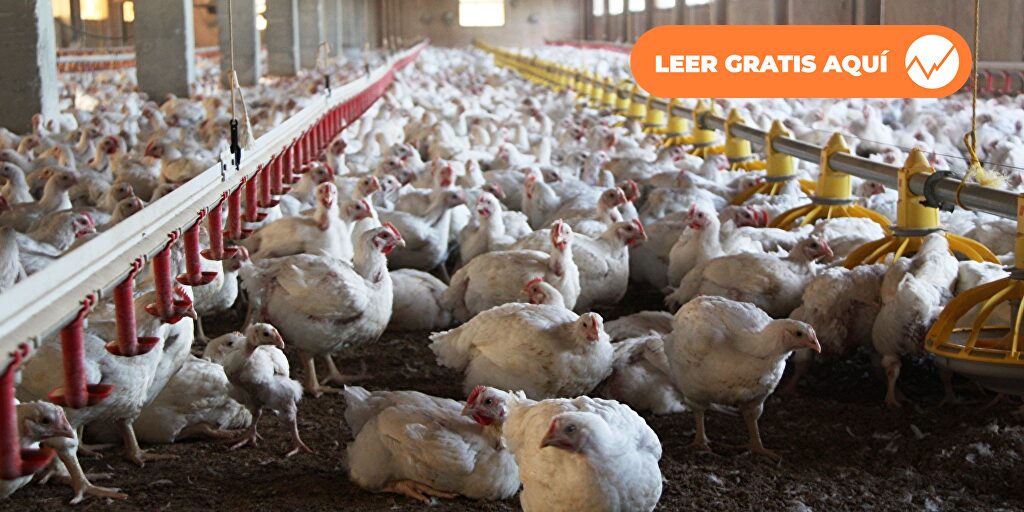
Spain's poultry sector is grappling with a rapidly worsening outbreak of Newcastle disease that has forced the culling of more than 1.3 million birds and prompted roughly 30 countries to suspend or restrict imports of Spanish poultry products, according to libertaddigital.com, which cites data compiled by Efeagro. Poultry is one of Spain's most important livestock sectors, and the wave of import bans threatens significant export losses even though the disease poses no risk to humans.
Culls quadruple in under a month
The scale of the outbreak has shifted dramatically in a matter of weeks. At the end of June the number of birds culled stood at around 323,000; it has since climbed above 1.3 million, a fourfold increase. Spain has recorded 24 confirmed outbreaks since the disease reappeared in late 2025, with the foci now concentrated in Valladolid.
The first ten outbreaks were detected in the province of Valencia, where about 300,000 birds were culled. The problem has since moved to Valladolid, in Castilla y León, where 14 outbreaks have been declared in under a month, affecting more than a million animals — broiler chickens, laying hens and rearing birds. On Monday the Ministry of Agriculture, Fisheries and Food (MAPA) reported a new outbreak in Castilla y León but outside Valladolid province, in the municipality of Peleagonzalo, in the Toro area of Zamora.
Around 30 countries curb Spanish poultry
The commercial fallout is already visible, even though the sector does not yet have an official estimate of the economic losses. More than twenty third countries have blocked the sanitary certificates required to import Spanish poultry products. This means that certain goods cannot enter markets such as Japan, Mexico, the United Arab Emirates, Algeria, Peru, Uruguay, Argentina and Bolivia, regardless of whether a farm lies hundreds of kilometres from any outbreak. A further ten countries have imposed additional limitations that MAPA updates as the situation develops.
The restrictions cover a broad range of goods:
- day-old chicks and hatching eggs;
- poultry meat;
- ornamental birds, carrier pigeons and fighting cocks.
Containment measures and market outlook
Newcastle disease is a highly contagious viral infection that mainly affects poultry and spreads easily through air, water, droppings and objects or people in contact with infected farms. It does not endanger the public but can cause severe illness and high mortality on unvaccinated farms. Each new case requires immobilising the holding, culling the birds, setting up a three-kilometre protection zone and a ten-kilometre surveillance zone, fully disinfecting the premises and keeping them empty for a sanitary void period before activity resumes.
To reduce the virus's circulation, the Ministry has made vaccination mandatory on farms around the detected foci. The industry association Avianza says chicken meat supply is guaranteed and that there are so far no signs of shortages in the egg market. Officials stress that Newcastle remains far less widespread and less virulent than avian influenza. Even so, the sharp increase in outbreaks over just a few weeks has heightened the main fear: that the disease could keep spreading to new producing regions and trigger further import bans.