Spain’s Moroccan olive oil imports jump 68-fold in first half of 2026
Spain imported 18,797.9 tonnes of Moroccan olive oil in the first half of 2026, compared with 276.5 tonnes a year earlier. The value rose by about 9,000%, but Morocco still accounted for 13.6% of Spain’s total olive oil imports.
Import volume rises from a low base
Spanish companies imported 18,797.9 tonnes of olive oil from Morocco between January and June 2026, up from 276.5 tonnes in the first half of 2025, according to Spanish Ministry of Economy, Trade and Enterprise data reported by Newtral. The increase amounted to 6,798%, meaning the physical volume was approximately 68 times higher year on year.
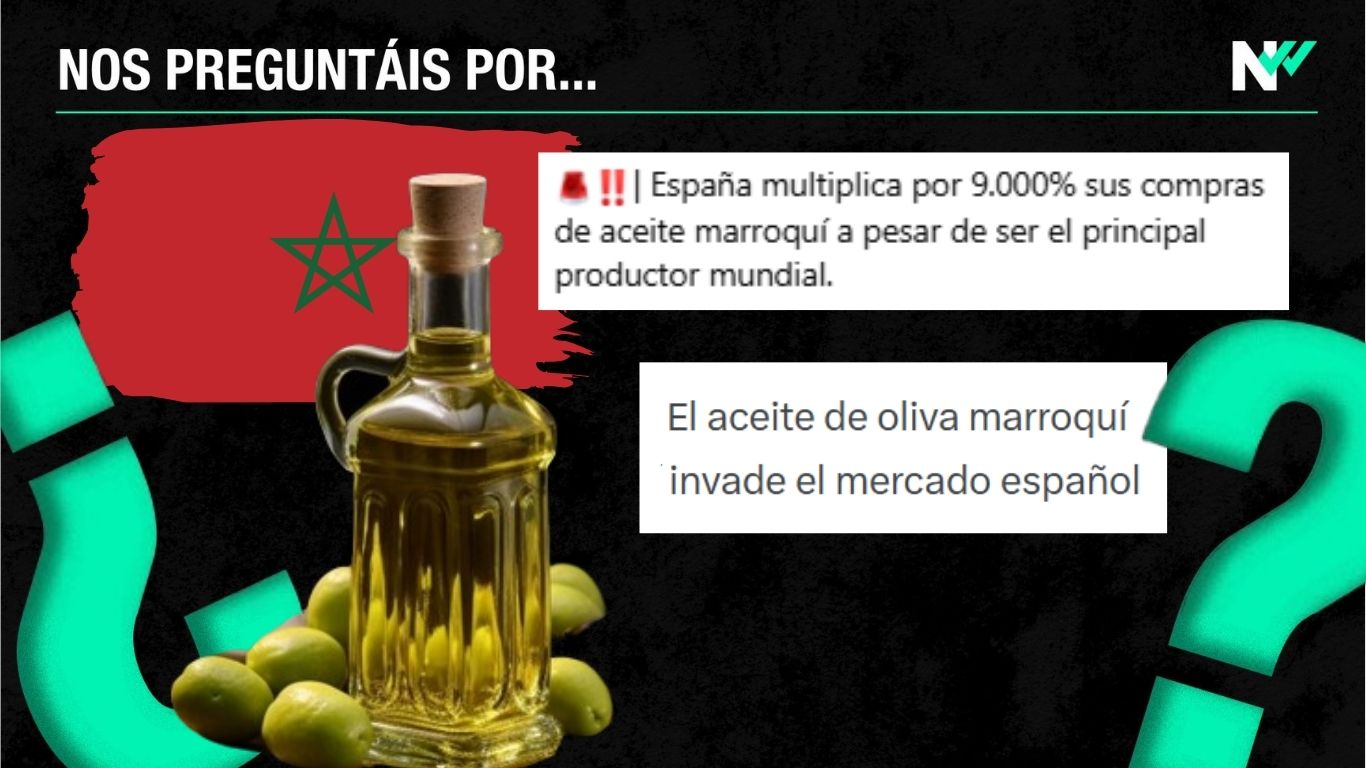
The widely reported increase of about 9,000% refers to the monetary value of the shipments rather than their volume. Spain’s expenditure on Moroccan olive oil reached €57.98 million during the first six months of 2026, compared with €641,071 in the corresponding period of 2025. The import bill therefore rose roughly 90-fold.
The comparison begins from an exceptionally small base. Imports of 276.5 tonnes in the first half of 2025 were only a fraction of the following year’s purchases, making the percentage increase particularly striking. The 2026 volume is nevertheless substantial in absolute terms and moved Morocco above Italy, Egypt and Greece in Spain’s supplier ranking.
Average price climbs to €3.08 per kilogram
The expansion was accompanied by a higher average import price. Spanish buyers paid an average of €2.32 per kilogram for Moroccan olive oil in the first half of 2025 and €3.08 per kilogram in the same period of 2026, Newtral reported. The combination of a 68-fold rise in volume and the higher unit price explains why the increase in value was larger than the increase in tonnage.
Despite the rapid growth, Moroccan oil represented 13.6% of Spain’s total olive oil imports during the period. That share provides important context for claims that Moroccan supply is overwhelming the Spanish market: Morocco became a significant source, but it did not account for a majority of foreign purchases.
Tunisia and Portugal remained the two leading origins for olive oil imported by the Spanish sector, while Morocco advanced to third place over the latest year. The change indicates that Spanish buyers diversified a larger portion of procurement toward Morocco, although the available figures do not establish whether this supplier mix will persist beyond the first half of 2026.
Imports support domestic supply and export commitments
Rafael Pico of the Spanish Association of the Olive Oil Industry and Export Trade, ASOLIVA, told Newtral that the distribution of purchases between countries is not constant over time. He also said Spain needs to import oil from other origins to maintain its presence in international markets while serving domestic consumption.
Spain’s broader trade balance in olive oil remained strongly positive in 2025. The country earned €4.8385 billion from olive oil exports that year and spent €735.1 million on imports, according to the figures cited by Newtral. Export receipts were therefore more than six times the amount paid for foreign supplies.
The Moroccan increase should consequently be viewed within Spain’s dual role as a major producing and exporting country that also buys foreign oil. For processors, packers and exporters, imported material can supplement available supply and help sustain sales commitments. The first-half data show a sharp change in sourcing, but the 9,000% headline chiefly reflects the low starting value, the surge in physical purchases and a rise in the average price per kilogram.