Spain Loses 527,600 Hectares of Cropland as Permanent Plantings Expand
Spain’s cultivated area contracted by 527,600 hectares between 2015 and 2024, falling to 16.50 million hectares. Permanent crops gained 425,400 hectares, while herbaceous crops and fallow land declined, changing the country’s agricultural production base.
Cultivated area falls 3% in a decade
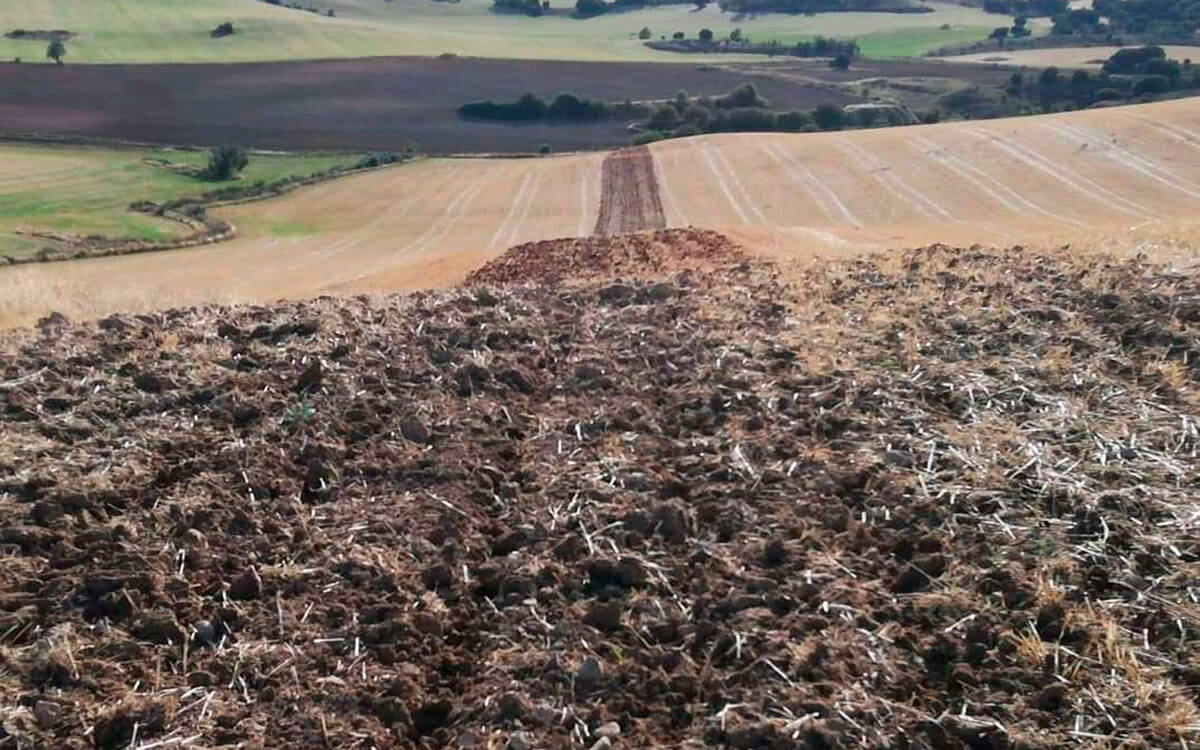
Spain’s cultivated area declined by 527,600 hectares between 2015 and 2024, according to the Ministry of Agriculture, Fisheries and Food’s 2025 Statistical Yearbook, as reported by Agroinformación. The total fell 3%, from 17.03 million hectares in 2015 to 16.50 million hectares in 2024.
The contraction points to a gradual reduction in the land directly used for crop production. It also comes amid a marked change in the composition of Spanish agriculture: land devoted to herbaceous crops and fallow has decreased, while permanent plantings have continued to expand.
The figures should be distinguished from the broader agricultural area controlled by farms. Spain counted 784,089 agricultural and livestock holdings in 2024, managing a total of 27.55 million hectares. This wider measure includes land beyond the 16.50 million hectares classified as cultivated area.
Permanent crops gain ground
Herbaceous crops occupied 8.97 million hectares in 2024, compared with 9.04 million hectares in 2015. The decline was relatively limited over the full decade, but it reduced the land base available for annual crops and other herbaceous production.
The fall in fallow land was considerably larger. Its area decreased from 3.28 million hectares in 2015 to 2.41 million hectares in 2024, a reduction of 870,000 hectares. Part of the changing land balance was offset by permanent crops, whose area increased by 425,400 hectares, from 4.69 million to 5.12 million hectares.
This shift changes the production profile of Spanish farming. Herbaceous crops generally allow farmers to alter planting decisions between seasons, while permanent crops commit land and capital for longer periods. A larger permanent-crop base can therefore make output more specialized and reduce the speed at which growers respond to changes in annual crop prices, input costs or demand.
Weather and profitability threaten further losses
Agroinformación said the downward trend in cultivated area could continue. Major fires, heavy rainfall, storms and isolated high-altitude depressions known in Spain as DANAs have affected the sector, while weak profitability has prompted warnings about lower production and the abandonment of crops.
For processors, traders and transport operators, a smaller and changing production base can alter procurement areas, seasonal volumes and freight demand. The effect will depend on which crops leave production and where permanent plantings expand. Spain’s regional concentration is important: Castilla y León accounted for 5.98 million hectares of the area managed by agricultural and livestock holdings, while Andalusia accounted for 5.46 million. Andalusia also had 251,820 of Spain’s 784,089 holdings in 2024.
The decade-long data do not establish how much output was lost or whether higher yields compensated for the reduction in cultivated area. They do show that Spain is farming less crop land overall and allocating more of that land to permanent crops. For commodity buyers and suppliers, future availability will depend not only on total hectares, but also on the crops replacing herbaceous production and on whether weather risks and low returns accelerate land abandonment.