Spain loses 530 dairy farms in a year as COAG seeks changes to national strategy
Spain had 8,578 active cow-milk producers in May 2026, 5.8% fewer than a year earlier, according to FEGA data cited by AgroDigital. COAG is proposing ten measures for the national dairy strategy as farm costs rise and producer milk prices fall.
Farm closures accelerate across Spain
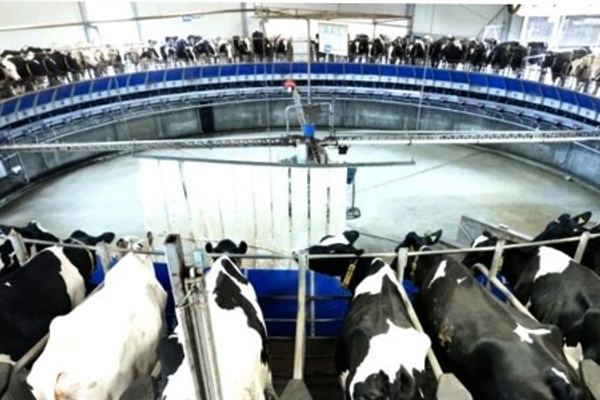
Spain’s dairy cattle sector lost more than one farm every day over the past year, intensifying debate over the future structure of national milk production. AgroDigital reports that the agricultural organization COAG has submitted ten proposals for Spain’s Dairy Sector Strategic Plan as discussions begin on the plan’s first draft.
COAG says 530 cow-milk farms closed during the past twelve months, equivalent to 1.5 farms a day, leaving roughly 8,600 operations. Official delivery declarations compiled by the Spanish Agricultural Guarantee Fund, FEGA, show 8,578 active producers in May 2026, down from 9,104 in May 2025. That represents a 5.8% contraction in one year.
The decline extends across the main producing regions. Galicia, Spain’s largest milk-producing autonomous community, lost 301 farms over the period. Asturias, Cantabria, Castile and León, Catalonia and Andalusia also recorded significant reductions, indicating that the contraction is neither temporary nor confined to one region.
More milk, but a lower farmgate price
Farm numbers have fallen even as national milk production has increased. The average price paid to producers declined from €0.502 per litre in May 2025 to €0.477 per litre in May 2026, with sharper decreases reported in areas including Galicia. The combination points to production becoming concentrated among fewer operations rather than an overall retreat in milk output.
COAG estimates that farms face an additional cost of about €0.06 per litre that they can no longer absorb. It links that pressure to animal-feed prices and an energy bill that has risen by around 30%. Lower farmgate prices alongside higher costs are squeezing margins and making continuity particularly difficult for smaller and independently managed businesses.
The organization argues that the issue is not simply how much milk Spain will produce, but who will control production. It warns that independent livestock farmers could be replaced by employees or contractors inside larger operations controlled by investment funds, financial capital and multinational food companies. In COAG’s assessment, such a model would move decision-making away from farms while transferring commercial risk to producers and concentrating value higher in the chain.
COAG calls for cost-linked contracts
The dairy industry organization INLAC commissioned the University of Santiago de Compostela to prepare the strategic plan’s first draft. COAG says the text should give greater weight to the sector’s social base and the survival of autonomous, professionally managed farms, rather than focusing primarily on production volumes.
Its proposals include prices that cover actual production costs, independent cost studies as a mandatory negotiating reference and standard sector contracts linked to those costs. COAG also wants faster enforcement against abusive conduct and cartels, as well as protection against contracts that formally meet minimum-duration rules while containing clauses designed to make medium-term commitments unattractive to farmers.
Other measures address the full dairy chain. COAG seeks more value-added production, a stronger position for Spanish products in the domestic market and European origin labelling that would help consumers distinguish local products from imported dairy goods. It also proposes reducing administrative requirements that do not improve food safety, creating public and collective replacement services for holidays, illness and parental leave, and lowering dependence on external inputs and oil through electrification, self-generated energy, circular practices and shorter supply chains.
For producers, processors and investors, the strategic-plan debate will determine more than aggregate capacity. With output rising while the producer base contracts, policy choices on pricing, contracts, operating costs and generational renewal could decide whether future capacity remains distributed among owner-operated farms or becomes concentrated in larger, externally controlled businesses.