Spain’s La Robla Green targets 140,000 tonnes of renewable e-methanol a year
Reolum is advancing a €900 million integrated renewable e-methanol complex in León, with operations targeted for 2028-2029. The project combines agricultural biomass, biogenic CO2 capture and a 200 MW electrolyser to produce about 140,000 tonnes of e-methanol annually.
An integrated renewable-fuels complex in León
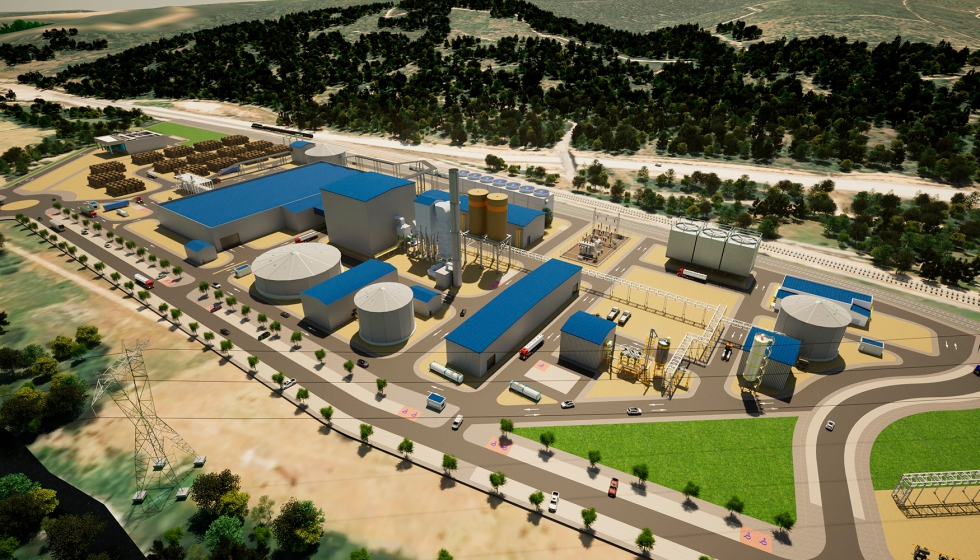
Reolum is developing La Robla Green as an integrated renewable e-methanol complex in the El Crispín industrial estate in La Robla, León. According to Interempresas, the project will occupy about 40 hectares in a region historically associated with coal mining and conventional thermal power generation. The location is part of a Just Transition area seeking new productive capacity, technical employment and industrial supply chains to replace fossil-fuel activity.
The project represents an investment of close to €900 million and is at an advanced development stage. Interempresas reports that front-end engineering design has been completed, the main permits have been finalised and the financial structure is advanced, with planned participation from the European Investment Bank. La Robla Green has also secured €90 million in public support through Spain’s Hydrogen Valleys programme. Operations are planned for 2028-2029.
Biomass, captured carbon and renewable hydrogen
The complex is organised around four units: cogeneration using residual agricultural biomass, capture and purification of biogenic CO2, renewable hydrogen production through electrolysis, and e-methanol synthesis. The biomass cogeneration plant will have capacity of about 50 MW and is expected to generate approximately 400 GWh annually.
La Robla Green will consume between 290,000 and 315,000 tonnes of residual biomass each year, principally herbaceous agricultural residues including corn, rye and rapeseed straw. The biomass will provide dispatchable renewable energy while producing a stream of flue gas containing biogenic CO2. The carbon-capture unit is designed to recover as much as 400,000 tonnes of CO2 annually, roughly twice the amount required by the La Robla methanol plant itself.
Annual output of 140,000 tonnes
A 200 MW proton-exchange membrane electrolyser is expected to produce around 28,000 tonnes of renewable hydrogen per year. Rather than being sold as a final product, the hydrogen will react with captured biogenic CO2 to manufacture renewable e-methanol classified as a renewable fuel of non-biological origin. Planned e-methanol capacity is 140,000 tonnes annually.
Producing both hydrogen and biogenic CO2 within the complex reduces reliance on third-party suppliers for critical inputs. It also gives Reolum greater control over feedstock availability, traceability, certification and execution risk. The e-methanol is intended for sectors that still require carbon-based molecules, including shipping, aviation-fuel production, refining, chemicals and biodiesel.
Regulation supports industrial demand
Interempresas identifies the EU’s revised Renewable Energy Directive, RED III, as the principal framework turning renewable fuels of non-biological origin into regulated demand. Spain approved a Royal Decree transposing the transport provisions of the directive in July, establishing a framework through 2040. For 2030, it sets a combined target of 8% for advanced biofuels, advanced biogas and renewable fuels of non-biological origin, including a specific 2.5% sub-target for the latter.
Shipping companies, airlines, refineries, road transport operators and parts of the chemical industry are examining renewable fuels for processes that cannot be fully electrified. E-methanol can support compliance with FuelEU Maritime and serve as an input for synthetic aviation fuels under ReFuelEU Aviation. That framework raises the quota for such aviation fuels from 1.2% in 2030 to 35% in 2050.
A local supply chain and a second production node
Reolum plans to source agricultural biomass within a radius of approximately 200 kilometres through agreements with more than 3,000 farmers. The estimated economic contribution to farmers and local suppliers is around €16 million annually. Once operating, the project is expected to support about 200 permanent direct jobs. Construction will employ an average of more than 450 workers per month, with peaks of as many as 1,000.
La Robla Green is designed as the first node of a platform connected to Villadangos Green, another project in León province. Although the two developments are technically and administratively independent, both are intended to produce renewable e-methanol from renewable hydrogen and biogenic CO2. About half of La Robla’s captured CO2 would be consumed on site, with the remainder transported to Villadangos through a pipeline of roughly 37 kilometres. A hydrogen pipeline between the two locations is also planned.