Spain’s Industrialized Housing Sector Advances but Remains a Small Part of the Market
Factory-built housing is gaining ground in Spain as developers seek faster delivery, lower dependence on scarce labor and greater certainty over costs and schedules. El Periódico reports that the model still represents a small part of the market, limiting its immediate impact on housing supply.
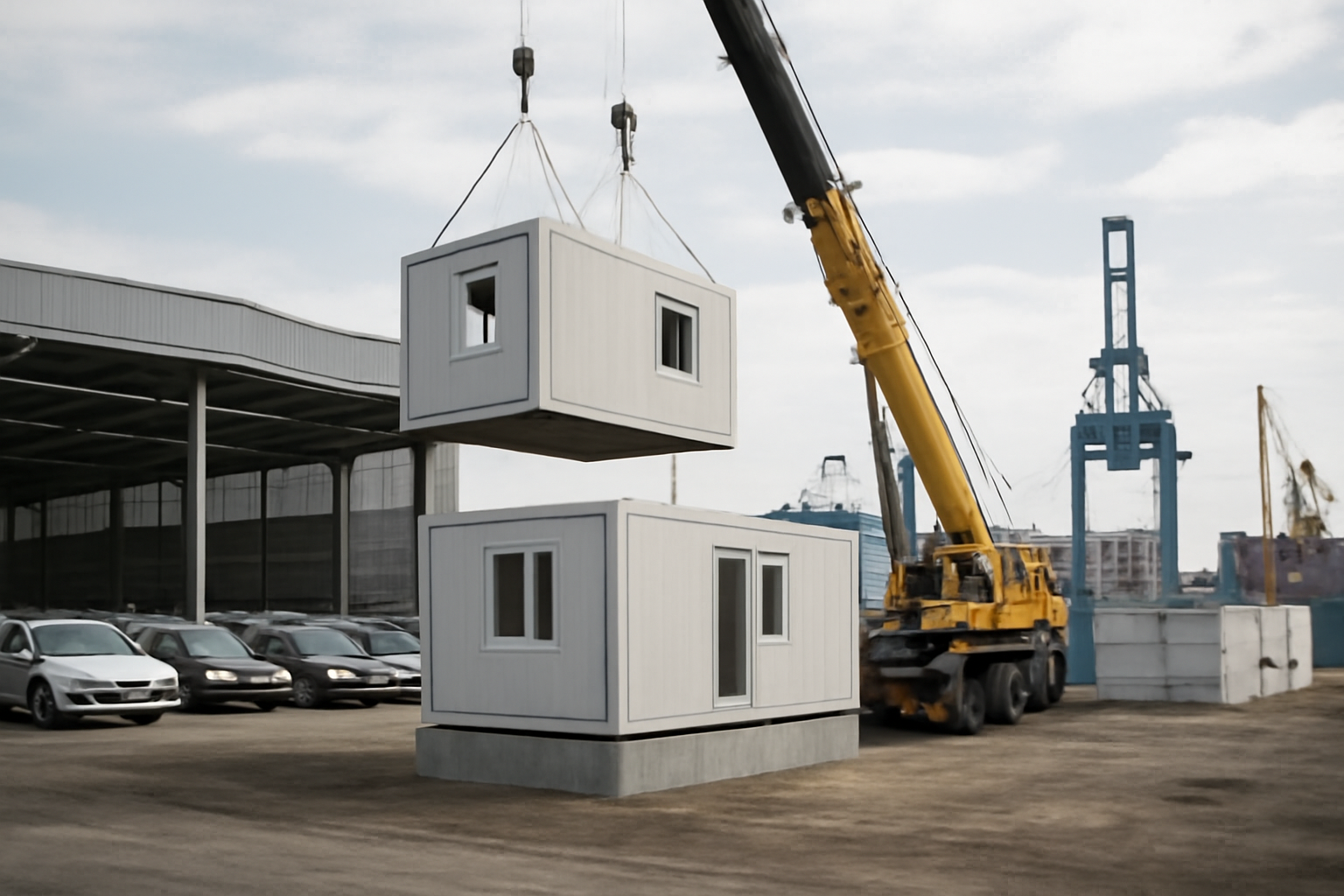
Housing production moves into factories
Industrialized construction is gaining visibility in Spain as the housing sector looks for ways to shorten building schedules and reduce its dependence on on-site labor. The model transfers a larger share of production from the construction site to a controlled factory environment, where building components can be manufactured before being transported for assembly.
According to El Periódico, the approach promises faster completion of residential projects, less exposure to labor constraints and greater certainty over costs and delivery dates. These advantages address persistent risks for developers: delays can increase financing and operating costs, while labor availability can affect both schedules and the consistency of execution.
Predictability is the main commercial argument
Factory production can give developers, contractors and investors a clearer sequence of work than conventional site-based construction. More of the process can be planned in advance, and standardized components can reduce the number of tasks that must be completed outdoors. For buyers and housing operators, more reliable delivery dates can also improve planning for occupancy and project financing.
The model does not remove construction risk. Industrialized projects still require land, permits, design, transport, site preparation and final assembly. Their advantage depends on coordinating these stages with factory production. A delay in approvals or site work can disrupt the expected gains even when components are manufactured on schedule.
Small market share remains the central barrier
Despite growing interest, El Periódico says industrialized housing still accounts for only a small part of Spain’s market. Limited scale can make it harder for factories to maintain continuous production, while developers may hesitate to adapt designs and procurement processes without a sufficiently predictable project pipeline. This creates a circular constraint: suppliers need recurring orders to improve capacity utilization, but buyers want proof of scale and repeatability before committing more projects.
Adoption will therefore depend on more than the speed of factory assembly. Producers must demonstrate consistent quality, workable transport and installation systems, and enough flexibility to meet planning and design requirements. Developers will need to involve manufacturers earlier, because a project conceived for conventional construction cannot always be transferred directly to an industrial process. For Spain’s housing industry, the near-term significance lies in whether the model can progress from individual projects to repeatable production. If that happens, industrialized construction could help reduce exposure to labor shortages, delays and cost uncertainty. Until then, it remains a growing but limited segment rather than a replacement for conventional building.