Spain's grid bottleneck stalls its renewable energy dividend, El Economista reports
Spain has installed one of Europe's largest fleets of renewable generation but cannot convert that clean power into new industrial demand, investment, housing and jobs, according to El Economista. The paper blames a transmission and distribution network that lags far behind generation, leaving projects stuck without grid connections.
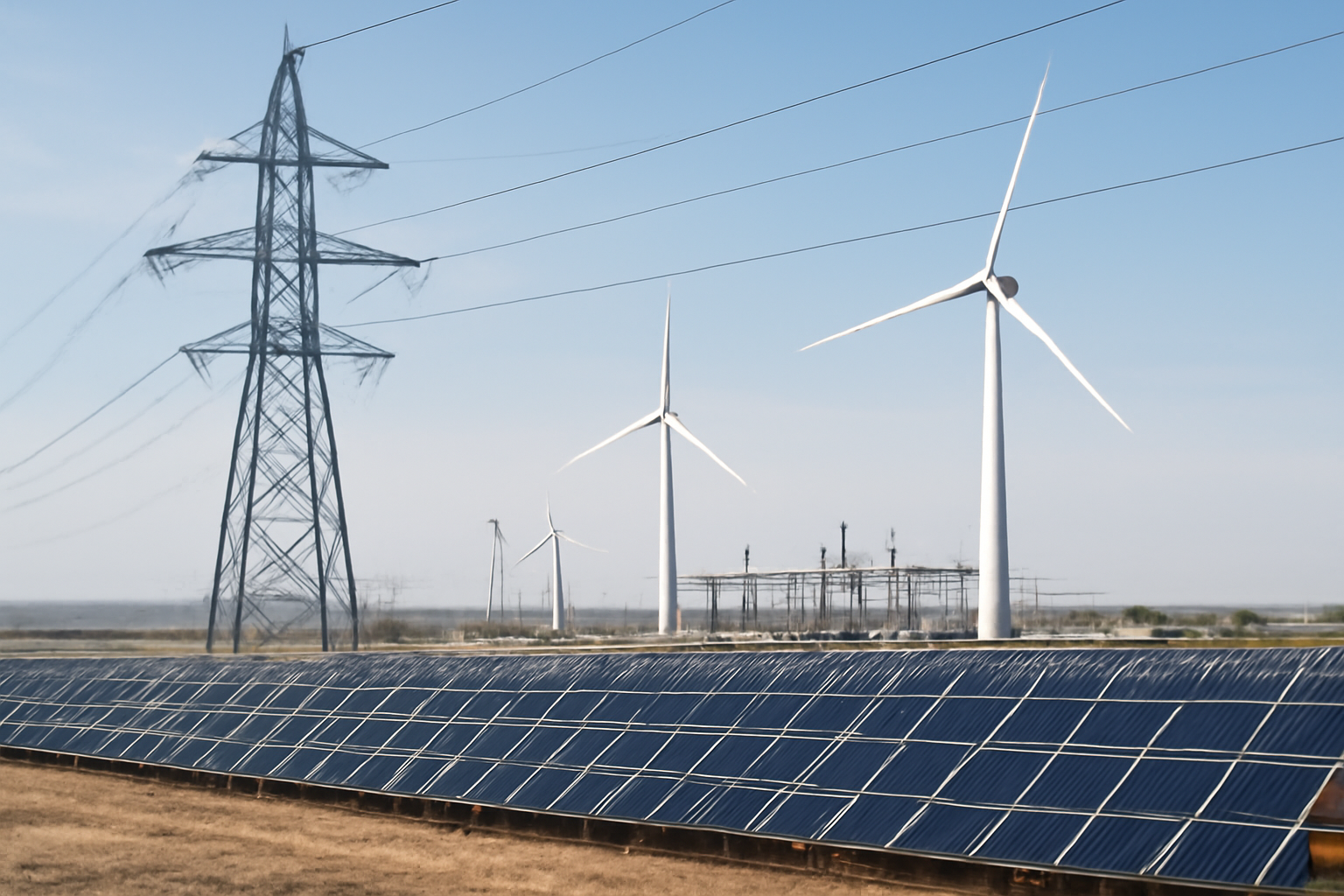
Spain's renewable power runs into a grid bottleneck
Spain has deployed one of Europe's largest volumes of renewable generation, yet it is failing to convert that clean electricity into new power demand, industrial investment, housing and employment, according to El Economista. The Spanish daily describes the country as a renewable power that has become "disconnected": abundant generation on one side, and a grid that cannot move or absorb it on the other.
Capacity ahead of the network
The imbalance, as El Economista frames it, is between the speed at which solar and wind capacity has been installed and the far slower build-out of the transmission and distribution network. Renewable plants can be permitted and constructed relatively quickly, while high-voltage lines, substations and distribution upgrades take much longer. The result is a system rich in installed capacity but short on the connections needed to deliver that power to where new demand would sit. Generation, in other words, has outrun the wires that are supposed to carry it.
Investment and housing held back
According to El Economista, the shortfall in grid capacity is directly braking investment. New industrial projects and housing developments require firm grid connections before they can proceed. Where those connections are unavailable or subject to long waits, projects stall — and with them the industrial demand, construction activity and employment that the energy transition was expected to unlock. The paper's central argument is that cheap renewable electricity, on its own, does not translate into growth if the network cannot carry it to users. A surplus of clean megawatts sits idle when there is no connected demand to consume it.
Why it matters for industry and trade
For importers, exporters and industrial planners, the Spanish case is a reminder that generation capacity is not the same as usable energy. A country can lead on installed renewables and still fail to attract the energy-intensive manufacturing, processing and construction activity that would monetise that lead. The binding constraint shifts from producing power to connecting it — from turbines and panels to lines, transformers and substations. Companies weighing where to site energy-hungry operations look not only at the price of electricity but at whether and when they can physically plug in.
El Economista's account points to grid infrastructure as the decisive variable for whether Spain's renewable lead becomes an economic advantage. Until the transmission and distribution network catches up with generation, the country risks producing more clean electricity than its economy can currently use, and the investment, housing and jobs tied to that power remain out of reach. The story stands as a cautionary example for other economies pursuing energy-led growth: building generation is only the first step, and without a network to match, the promised dividend does not arrive.