Spain exported 70,518 tonnes of dehydrated forage in June, led by UAE demand
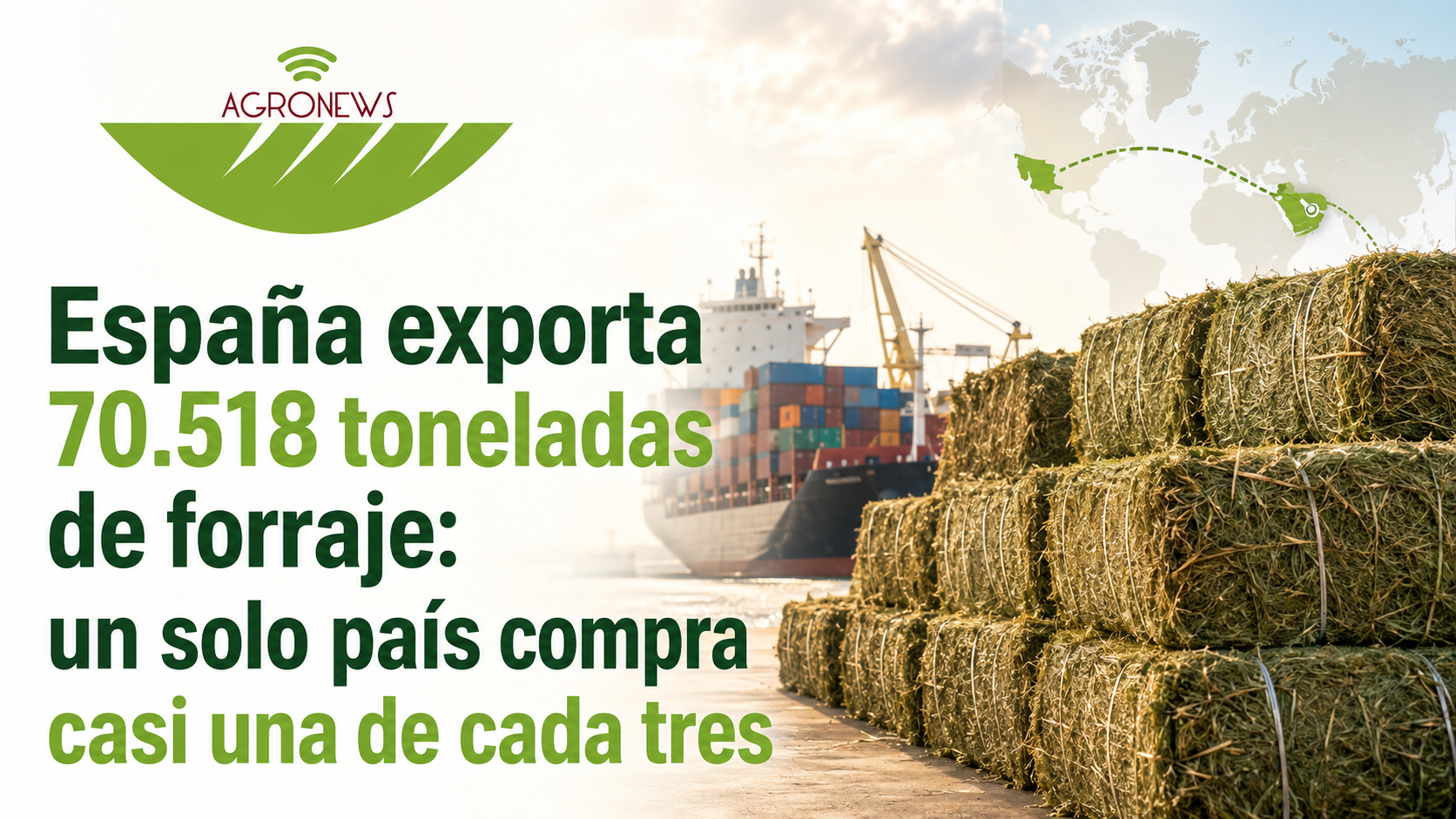
Spain exported 70,518 tonnes of dehydrated forage in June 2026, including 48,108 tonnes of bales and 22,410 tonnes of pellets. The United Arab Emirates and Saudi Arabia jointly purchased 53.4% of the total, highlighting concentrated demand for Spanish forage in the Middle East.
Middle East buyers take more than half of shipments
Spain exported 70,518 tonnes of dehydrated forage in June 2026, according to figures from the Spanish Association of Manufacturers of Dehydrated Alfalfa reported by Agronews Castilla y León. Bales accounted for 48,108 tonnes, or about 68.2% of the total, while pellet shipments reached 22,410 tonnes, equivalent to 31.8%.
The United Arab Emirates was the largest overseas buyer across both formats, purchasing 23,092 tonnes. Its orders comprised 17,910 tonnes of bales and 5,182 tonnes of pellets, giving the country a 32.7% share of Spain’s total dehydrated-forage exports for the month.
Saudi Arabia ranked second with 14,542 tonnes, divided between 10,752 tonnes of bales and 3,790 tonnes of pellets. Together, the UAE and Saudi Arabia bought 37,634 tonnes, representing approximately 53.4% of Spain’s June exports and underscoring the sector’s exposure to demand from the Arabian Peninsula.
Bale trade shows the highest concentration
Concentration was particularly pronounced in bales. The UAE and Saudi Arabia received a combined 28,662 tonnes, or about 59.6% of all Spanish bale exports. Jordan, the third-largest destination, purchased 5,753 tonnes. With Jordan included, the three leading markets accounted for 34,415 tonnes, more than 71% of the bale total.
Demand outside those three markets was distributed across several regions. Morocco received 2,969 tonnes of bales, Japan 2,759 tonnes and Portugal 2,634 tonnes. South Korea purchased 1,310 tonnes and Italy 1,045 tonnes, while smaller volumes went to China, Ireland, the Netherlands, Malta, France and Qatar.
The geographical profile leaves Spanish bale suppliers closely tied to livestock-feed demand in the Middle East. The UAE alone purchased about 37.2% of exported bales, making changes in buying policy, freight costs or regional feed requirements particularly relevant to Spanish processors and traders.
Pellets reach a broader range of markets
Pellet exports were less concentrated. The UAE remained the largest destination with 5,182 tonnes, or 23.1% of the segment, followed by Saudi Arabia with 3,790 tonnes and Morocco with 3,673 tonnes. The UAE and Saudi Arabia together represented about 40.0% of pellet shipments, well below their 59.6% share of bales.
Other pellet buyers broadened Spain’s market coverage. Jordan imported 1,960 tonnes, Brazil 1,822 tonnes and the Marshall Islands 1,660 tonnes. China purchased 1,139 tonnes and France 1,115 tonnes, while Colombia, Portugal, South Korea and Japan also appeared among the recorded destinations. Brazil and Colombia together took 2,424 tonnes.
Morocco’s combined purchases reached 6,642 tonnes across both formats, while Jordan bought 7,713 tonnes. Together with the UAE and Saudi Arabia, these four markets accounted for approximately 51,989 tonnes, close to three-quarters of the monthly total. The figures show two distinct commercial profiles: a bale business heavily dependent on a small group of Middle Eastern buyers and a pellet segment supported by a wider customer base across Africa, Asia, Europe, Latin America and the Pacific.