Spain Closes 2025/26 Wine Campaign With 32.37 Million Hectolitres in Stock
Spain ended the 2025/26 wine marketing year with 32.37 million hectolitres of wine and must in storage as of 31 July, according to provisional INFOVI data from the Ministry of Agriculture, Fisheries and Food. Finished wine accounted for 30.07 million hectolitres, or 92.9% of the total. The ministry is not publishing a homogeneous year-on-year comparison for this reference, so the figure serves as a starting inventory benchmark for the 2026/27 campaign.
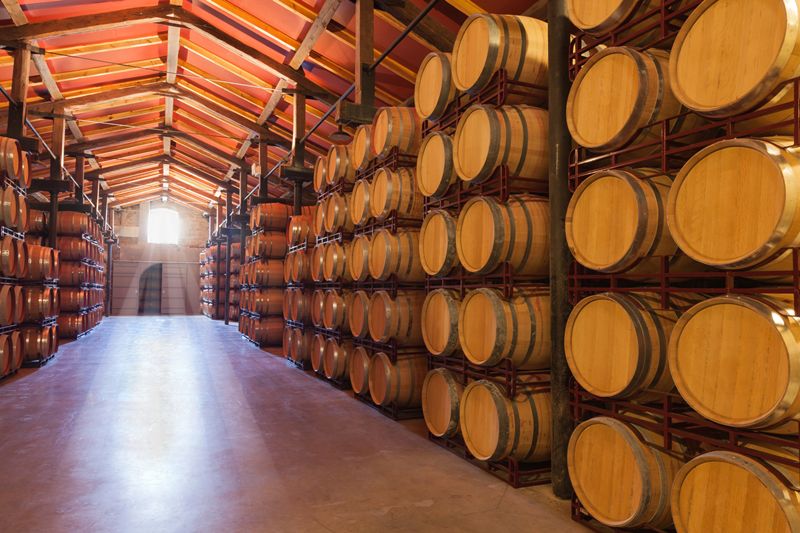
Spain closed the 2025/26 wine marketing year with 32.37 million hectolitres of wine and must in storage, according to provisional data from INFOVI, the wine sector market information system operated by the Ministry of Agriculture, Fisheries and Food. The figure covers volumes held in the country as of 31 July and sets the starting point for the new campaign, the trade publication Vinetur reported.
Wine makes up almost 93% of the inventory
Finished wine accounted for the bulk of the volume at around 30.07 million hectolitres, or 92.9% of the total. Unconcentrated must came to roughly 2.07 million hectolitres, close to 6.4% of the inventory, while concentrated musts and other products stood at 228,000 hectolitres, around 0.7%.
- Wine: around 30.07 million hectolitres, 92.9% of the total
- Unconcentrated must: around 2.07 million hectolitres, about 6.4%
- Concentrated musts and other products: 228,000 hectolitres, about 0.7%
Expressed in litres, the total inventory was equivalent to some 3,237 million litres. Wine alone amounted to about 3,007 million litres, unconcentrated must to roughly 207 million litres, and concentrated musts and other products to 22.8 million litres. The gap between categories is wide: for every hectolitre of unconcentrated must in storage there were more than 14 hectolitres of wine, and the distance is larger still against concentrated musts. That mix matters commercially, because the national stock is dominated by product that has already been vinified rather than by raw material that can still be channelled into other uses.
Provisional figures and a partial statistical perimeter
The data were extracted on 8 September and released on Monday 14 September. The ministry treats them as provisional and open to later adjustment. Revisions of this kind are not unusual in the wine sector, since the close of a campaign brings together declarations from operators of very different sizes alongside administrative validation processes.
The statistical coverage also requires careful reading. INFOVI's detailed tables include producers handling at least 1,000 hectolitres as well as warehousing operators, while the national total additionally incorporates estimates or declarations from smaller operators. That difference in perimeter explains why the aggregate national figure cannot be interpreted as a mechanical sum of the partial tables.
No comparable year-earlier baseline
For the same reason, the ministry is not currently providing a homogeneous year-on-year comparison for this specific reference. That makes it impossible to measure on an identical statistical basis how stocks stand against the close of the previous campaign. Without a comparable series, the 32.37 million hectolitre figure functions above all as a reference for inventory available at the start of 2026/27, rather than as evidence of a rising or falling trend.
What the level means for 2026/27
End-of-campaign stocks condition the supply available in the first months of the new marketing year. As the 2026 harvest advances, the sector will be able to assess more precisely the relationship between the wine and must already held in cellars and the new production entering the system. That balance usually influences the absorption capacity of both the domestic and export markets, as well as the pace at which stocks are released.
In absolute terms Spain enters the new campaign with a high volume of stocks, although the absence of a homogeneous basis against the previous year prevents a definitive judgement on whether the level is above or below that of twelve months earlier under the same methodology. Subsequent INFOVI updates will be the reference point for tracking how the inventory evolves as harvest data arrive and commercialisation of the 2026/27 campaign progresses.