Spain's cement consumption growth moderates to 4.7% after August contraction
Cement consumption in Spain rose 4.7% in the first eight months of 2026, a slower pace than earlier in the year, after falling 5.2% in August. The figures come from Oficemen, the Spanish cement manufacturers' association, and were reported from Madrid by Europa Press. The series is one of the earliest available reads on construction activity in the country.
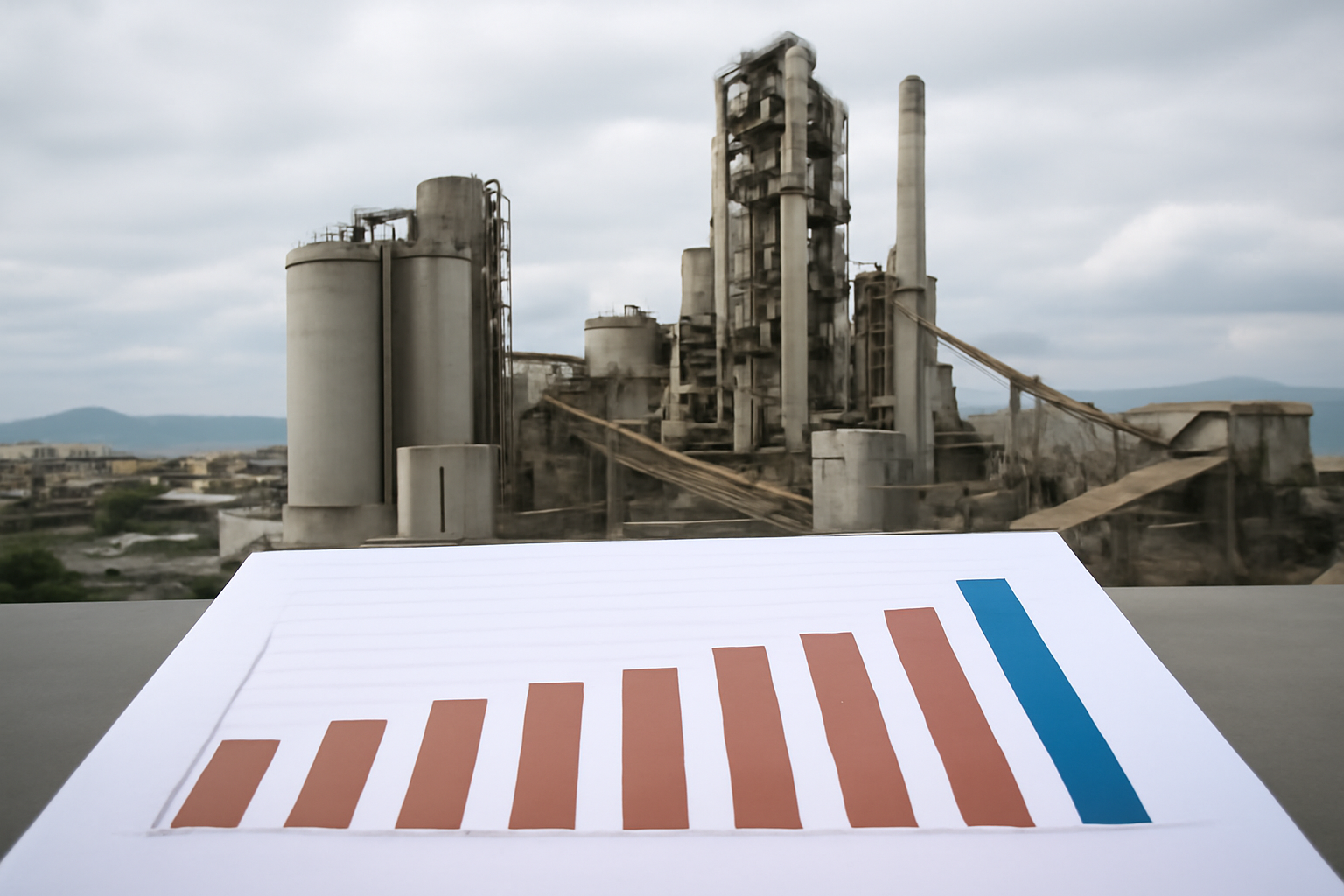
Growth cools after an August setback
Cement consumption in Spain rose 4.7% in the first eight months of 2026, a slower rate than the market had been running at earlier in the year, after demand fell 5.2% in August. The figures were published by Oficemen, the Spanish cement manufacturers' association, and reported from Madrid by Europa Press on 23 September.
The two readings pull in opposite directions. The cumulative January-August figure is still positive, so the domestic market remains larger than a year earlier. August on its own contracted, and a single weak month was enough to pull the year-to-date rate down; the moderation in the cumulative growth rate is a direct arithmetic consequence of that fall. The published summary gives percentage changes only, with no tonnage figure attached.
Why the indicator matters
Cement consumption is one of the earliest hard numbers available on construction activity in any market, which is why the monthly series is tracked well beyond the building-materials sector.
- Cement is consumed close to the point of use and does not store well, so monthly volumes track site activity with very little lag.
- The series captures residential building and civil engineering together, including publicly tendered infrastructure work.
- Production is energy- and carbon-intensive, so swings in demand feed straight through to fuel, power and emissions-cost exposure at plant level.
- Domestic demand determines how much Spanish kiln capacity is absorbed at home rather than pushed towards export markets.
What it means for producers and traders
For cement makers the question is kiln utilisation. Clinker lines carry heavy fixed costs and cannot be stopped and restarted cheaply, so manufacturers plan output against expected demand months ahead. Growth of 4.7% over eight months keeps existing capacity working, but it is not the kind of expansion that justifies new lines or the reactivation of mothballed ones. Utilisation also drives unit economics: the same fixed cost spread over fewer tonnes lifts the cost per tonne and compresses margins even when selling prices hold.
A monthly contraction of 5.2% has a faster effect further down the chain. Ready-mix concrete plants, aggregate suppliers and precast producers feel volume changes almost in real time, and distributors carry the inventory risk when shipments outrun site demand. To the extent that domestic buyers take less material, exports and clinker sales abroad become the balancing valve, which ties a Spanish demand number to freight and price conditions in export markets.
What to watch next
The open question is whether August was an isolated month or the start of a flatter trend. Public works and housing move on different cycles, and the headline number does not separate them, so a monthly drop can originate on either side. The gap between the cumulative 4.7% and the monthly decline of 5.2% will narrow or widen with the September and October releases, and the direction of that gap will tell producers, importers and investors more about 2027 order books than the eight-month figure does on its own. For now, the picture Oficemen presents is a market still growing year to date, but growing more slowly than it was before the summer.