Spain's New Car Market Rises 11.8% in August to 68,544 Units, Best Since 2019
New vehicle registrations in Spain grew 11.8% in August to 68,544 units, the strongest August since 2019, according to Cinco Días. The industry now expects the year to close above 1.2 million vehicles sold.
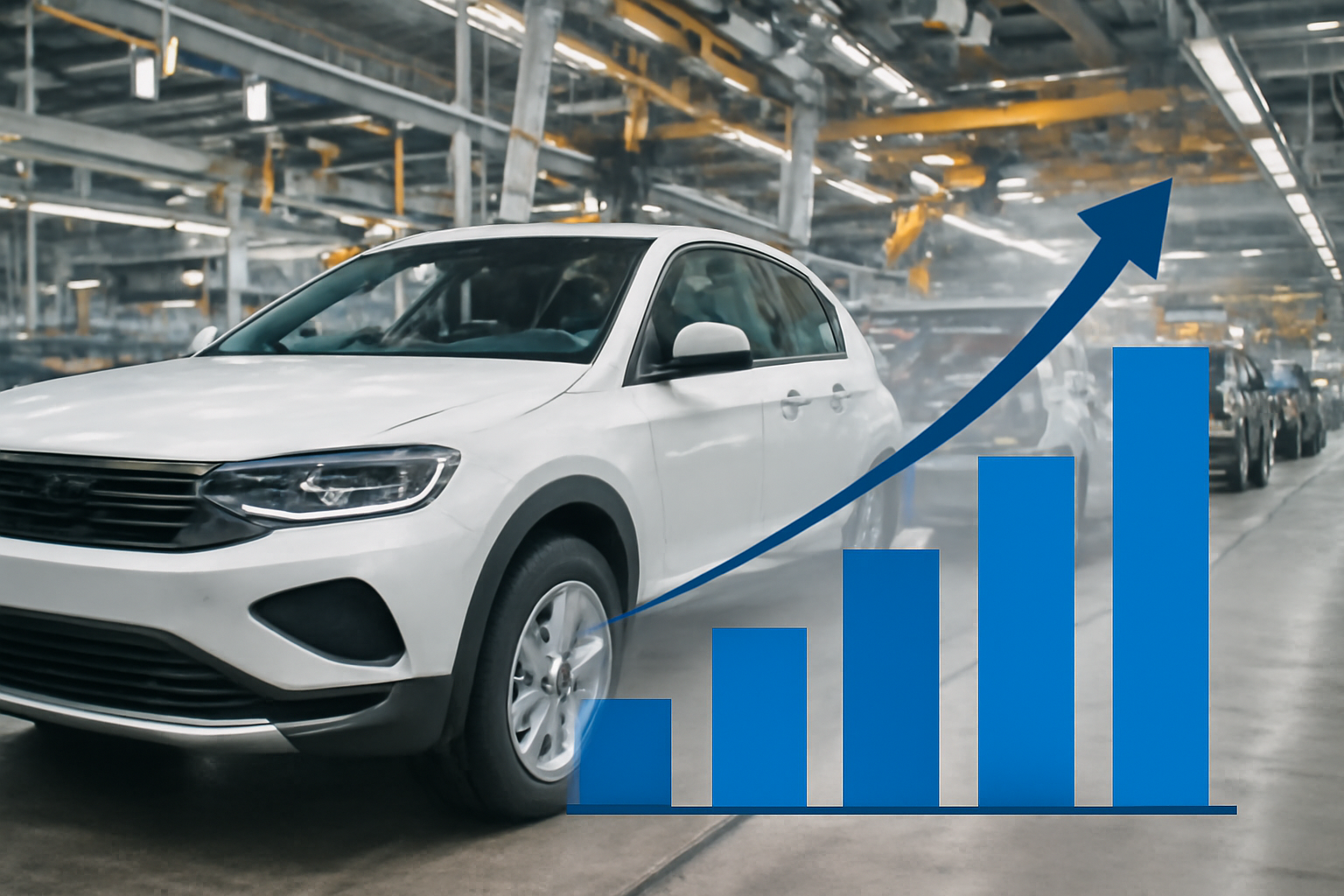
New vehicle registrations in Spain rose 11.8% in August to 68,544 units, the best result for the month since 2019, according to Cinco Días. Sales of new cars continued to climb despite the summer holiday period, which normally makes August one of the weakest months of the Spanish commercial year.
On the strength of that performance, the sector is pointing to a full year above 1.2 million vehicles sold, a threshold the Spanish market has not treated as routine since before the pandemic.
August Breaks the Holiday Pattern
August is structurally a thin month for European car retail. Dealer networks operate with reduced staffing, factories in Spain and elsewhere in Europe run summer shutdowns, and registration paperwork slows. A double-digit gain in that context indicates that demand carried through the holiday weeks rather than being deferred to September.
The 68,544 figure returns the month to a level last seen in 2019, the final full year before the COVID-19 collapse in European vehicle demand and the semiconductor shortage that constrained deliveries through 2021 and 2022. Cinco Días frames the result as the best August since that pre-pandemic benchmark.
The 1.2 Million Marker
The industry expectation of more than 1.2 million units for the full year is the number that matters most for planning across the chain. For manufacturers, it sets allocation decisions for the Spanish market against competing European destinations. For importers and national sales companies, it determines stocking levels for the fourth quarter, when year-end registration incentives and fleet renewals typically concentrate volume.
Spain is one of Europe's five largest new vehicle markets and one of the continent's largest vehicle producers, with output heavily oriented toward export. Domestic demand and export demand are separate businesses for the plants located in the country, but a stronger home market improves capacity utilisation and reduces the exposure of Spanish assembly lines to swings in other European markets.
What the Trend Implies for the Supply Chain
Sustained double-digit growth has consequences beyond the showroom. Components suppliers, logistics operators handling vehicle movements, and finance arms attached to the manufacturers all size their operations against registration forecasts. A market moving from a post-pandemic trough toward 1.2 million units annually changes the arithmetic on:
- Inventory positioning at ports and vehicle compounds, where holding costs rise sharply if volume assumptions overshoot;
- Order books for parts and aftermarket components tied to the size and age profile of the national fleet;
- Dealer network profitability, which is highly sensitive to volume above break-even thresholds;
- Residual values in the used market, since a larger flow of new registrations feeds the used supply two to four years later.
The counterweight is that the comparison base remains soft. The Spanish market spent several years well below its pre-pandemic run rate, and percentage gains measured against those depressed years overstate the recovery in absolute terms. Reaching 1.2 million units would still leave Spain short of the volumes recorded in the strongest years of the previous cycle.
Outlook for the Remaining Months
Four months remain in the year after August, and they include the seasonally heaviest quarter for Spanish registrations. Whether the 1.2 million projection holds depends on whether the demand visible through the summer persists into that period rather than reflecting pull-forward from later in the year.
For market participants, the operative question is the composition of the growth as much as its size: the split between private buyers, company fleets and rental operators determines margin quality, since rental and fleet channels typically carry thinner per-unit profitability than retail sales to private customers. That breakdown will shape how much of the headline recovery translates into earnings across the Spanish distribution network.