Spain’s battery storage pipeline targets 7.1 GW of capacity by 2027
Spain is preparing to connect close to 7.1 GW of battery capacity in 2027, compared with only 260 MW installed today. Public support and a planned capacity market could improve project financing, but large installations face weaker ancillary-service revenues.
Battery capacity approaches the nuclear fleet’s rated power
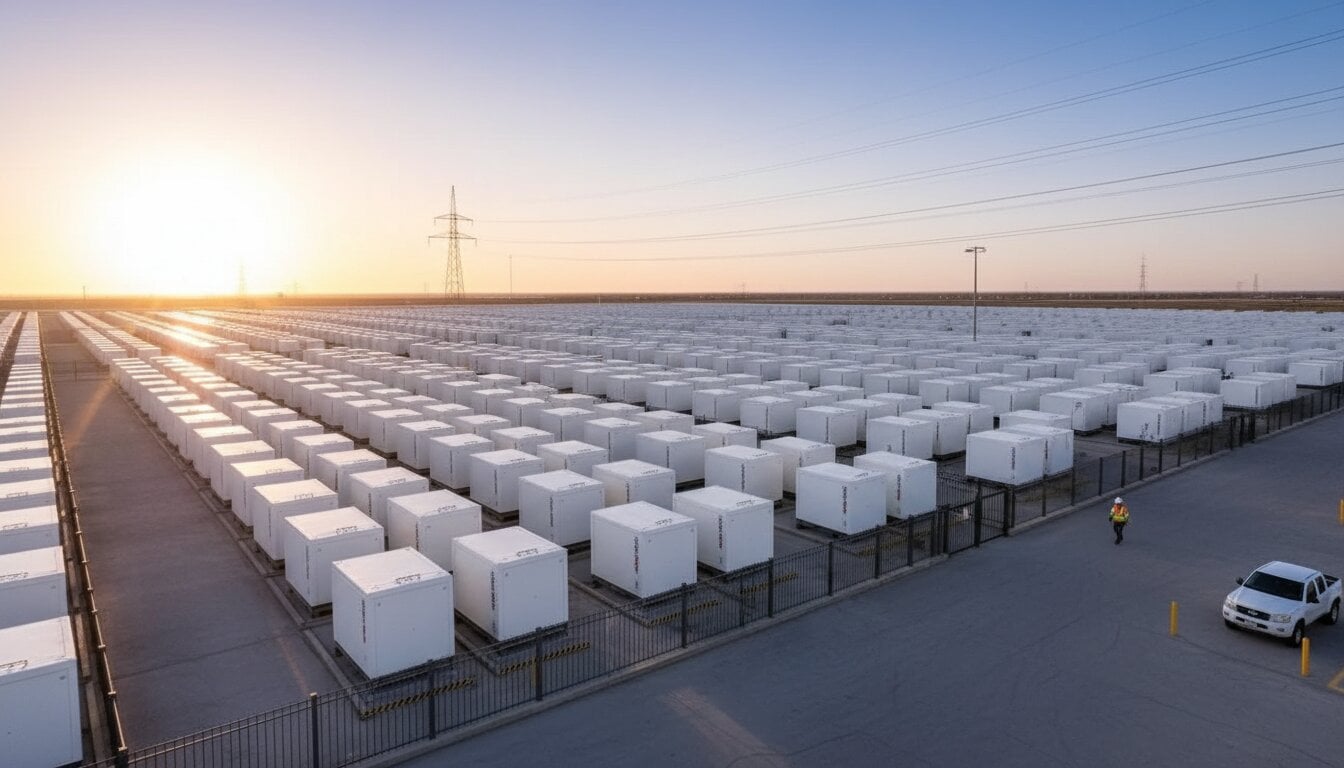
Spain is preparing for a sharp expansion of grid-scale battery storage, with close to 7.1 GW expected to connect in 2027, according to El Confidencial Digital. That would equal the combined rated power of the country’s seven operating nuclear reactors, although the two technologies perform fundamentally different functions. Nuclear plants generate electricity continuously, while batteries store power produced elsewhere and return it to the grid when demand or prices are higher.
The planned increase is substantial compared with the approximately 260 MW of batteries currently installed. Official planning published in Spain’s Official State Gazette includes 6.4 GW of projects with approved applications, while another 3.9 GW has been announced through 2029. The figures indicate a large development pipeline, but they do not guarantee that every approved or announced project will secure financing, complete construction and enter operation on schedule.
Public funding and capacity payments support investment
Pablo Martínez, country manager at Modo Energy, identified the conversion of the 6.4 GW official pipeline into operating assets as the main challenge because financing has not yet been fully defined. Spain’s Ministry for the Ecological Transition has allocated €818.3 million from the European Regional Development Fund to 126 projects. Those grants have supported 2.2 GW of power capacity and 9.4 GWh of storage, reducing the initial capital burden for selected developments.
A separate capacity market is intended to pay generation, storage and flexible demand for being available during periods of system stress. The mechanism has a budget of up to €9 billion between 2026 and 2036. For battery developers and lenders, contracted availability payments could supplement volatile wholesale and ancillary-service revenue, improving the ability of projects to raise debt and reach final investment decisions.
The investment effect could extend beyond standalone batteries. Hybrid projects combining storage with solar or wind generation can charge during low-demand periods, reduce renewable curtailment and discharge during peak hours. This may improve the economics of existing and new renewable capacity while allowing more daytime solar production to be shifted into evening periods. Construction and operation would also create domestic activity, although the source did not provide employment or total investment estimates.
Scale creates a revenue challenge
Revenue prospects vary significantly by project size. A recent Ember report found that four-hour batteries can earn meaningful income from a combination of day-ahead trading and ancillary services. However, liquidity constraints reduce the ancillary-service opportunity for very large installations. According to the report, a 500 MW project could generate 72% less revenue outside the day-ahead market than a 5 MW project.
That difference matters for Spain’s largest proposed battery parks. Adding several gigawatts of capacity should increase competition for the same price spreads and balancing-service requirements, potentially compressing returns as the market becomes more crowded. Developers will therefore depend on a mix of day-ahead arbitrage, ancillary services, capacity payments and public support rather than a single revenue stream. If the financing and construction pipeline advances, batteries could give the Spanish power system more flexibility and reduce renewable curtailment. The 7.1 GW comparison with nuclear power describes installed power, however, not equivalent generation, operating duration or annual output.