Spain's battery pipeline reaches 33 GW with grid access, above installed wind capacity
Battery storage projects holding grid access rights in Spain now total 33 GW, exceeding the country's entire installed wind capacity, according to EL ESPAÑOL-Invertia. A draft royal decree would require data centres of 1 MW or more to back 80% of their consumption with renewable power generated in the same hour, turning storage into a condition for connection. Only 260 MW of batteries were actually connected at the end of August.
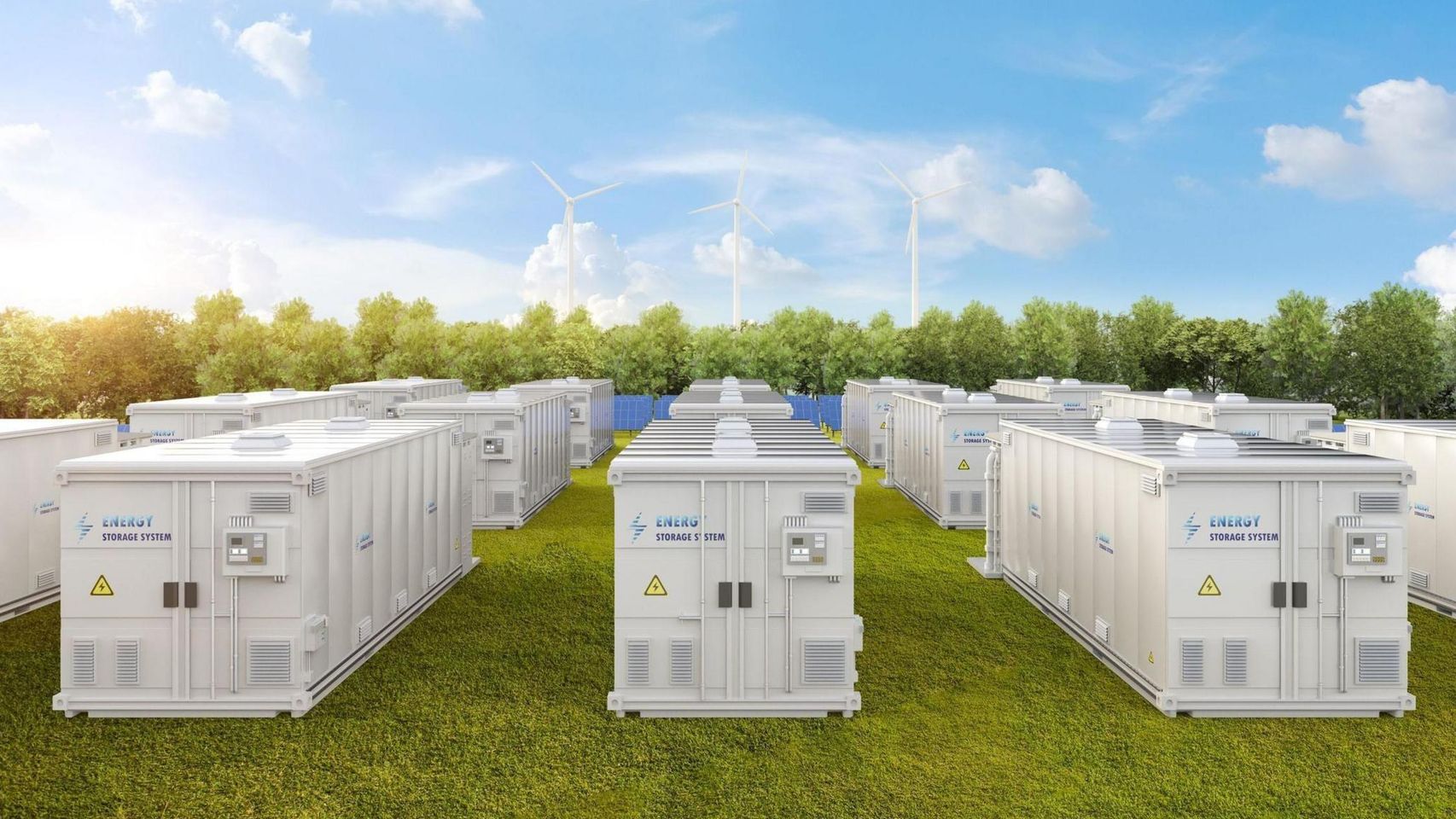
Battery storage projects with authorised access to the Spanish electricity grid now add up to 33 GW, a volume that exceeds the country's entire installed wind capacity, according to EL ESPAÑOL-Invertia. The figure illustrates how many developers are positioning themselves in a market that is still taking shape, on the expectation that storage becomes one of the larger businesses in the Spanish power system over the coming years.
Regulation is reinforcing that expectation. A draft royal decree on data centres, whose public consultation closed at the end of August, would tie grid access for facilities of 1 MW or more to compliance with renewable supply requirements. The text proposes that 80% of a data centre's electricity consumption be backed by renewable generation produced in the same hour, and that the generating assets involved be recent.
Permits run far ahead of connected capacity
The distance between administrative portfolios and operating assets remains the sector's central problem. At the end of January, 24.3 GW of batteries held grid access permits, according to Red Eléctrica data cited by Ignacio López Martín, president of Capflex Energía, a Spanish engineering firm specialised in storage. At the end of August, only 260 MW were connected.
The difference shows that holding an authorisation does not guarantee a battery will be built. Several factors continue to set project schedules:
- financing availability and cost;
- equipment supply;
- environmental permitting;
- land availability and the execution of connection infrastructure.
Data centres emerge as a buyer of flexibility
Data centres have concentrated 34.2% of the access capacity granted on the transmission grid, with 6,328 MW awarded, although none of them has entered service yet, according to the map of the status of demand requests published by REE. In total, 18.52 GW of access has been granted across the system, of which 11.05 GW corresponds to installations that have not begun operating.
A data centre runs continuously, including at night and in the winter months, when photovoltaic output disappears or falls sharply. “To meet an hourly matching requirement, contracting solar electricity during the day is not enough: you need resources able to shift energy between hours, such as batteries, and to complement production with other renewables, especially wind,” López Martín told EL ESPAÑOL-Invertia.
If approved in these terms, he said, the rules “would turn the hybridisation of renewables and storage into a tool for obtaining and keeping access permits,” rather than only an economic decision aimed at improving project returns. He added that the race is no longer limited to renewable plants and is spreading to large electricity consumers, which could even have to install batteries as a condition for their permits.
A mandatory hourly renewable supply would also introduce a buyer with different characteristics from the wholesale market. Large technology operators need constant electricity and may have incentives to contract renewable generation and storage through long-term agreements. For battery developers, that would reduce dependence on revenue earned exclusively by buying cheap power and selling it in high-price hours, and would give more visibility to future income.
Timing, grid capacity and penalties still open
The draft states that renewable plants supplying data centres must have been commissioned no more than 18 months before the facility starts operating. For technology projects aiming to run in 2028, that implies part of the associated generation and storage would already have to be under construction.
Competition for available grid capacity adds further pressure. The Ministry announced consultations on 23 September on the allocation of up to 11 GW of capacity at just transition nodes linked to closed coal and nuclear plants. Part of that capacity could be awarded through temporal priority procedures, which opens opportunities for storage while raising the challenge of avoiding a build-up of permits without construction, according to López Martín.
The proposal is not final. The renewable associations APPA and AEE have asked for the hourly requirement to be relaxed, and essential aspects such as metering, verification and transitional periods remain to be defined. Also under discussion are surcharges on system tolls and charges, which the draft contemplates raising by up to 500% in certain cases of non-compliance, as well as the possible loss of permits after five years of repeated deviations.