Spain to ban single-use plastic condiment sachets in hospitality from 2030
Spanish bars and restaurants will no longer be allowed to serve sugar, salt and sauces in single-use plastic sachets from January 1, 2030. Hospitality businesses can adopt refillable dispensers, reusable containers, paper sachets or certified compostable plastic, subject to hygiene requirements.
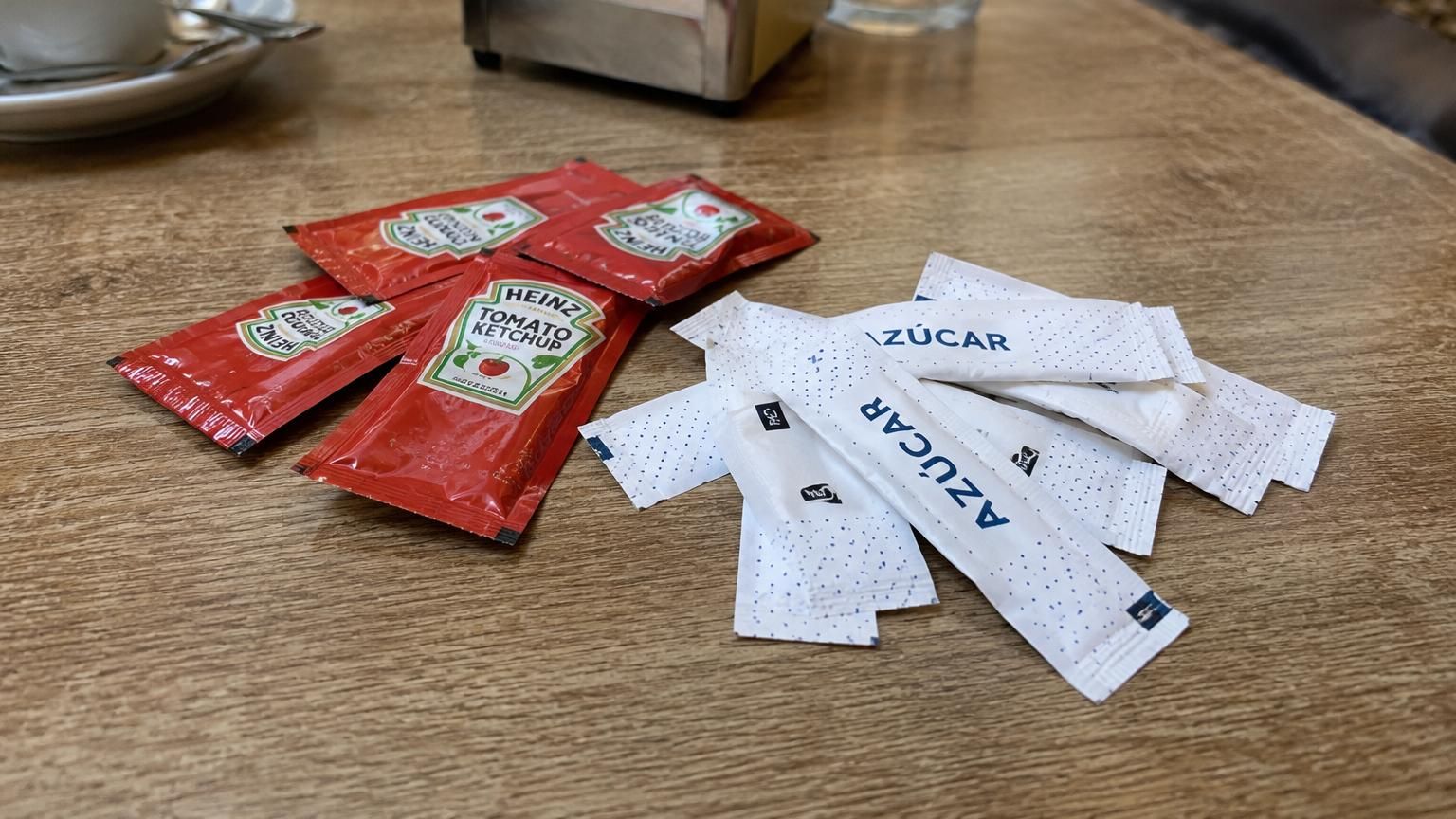
Single-use sachets face a 2030 deadline
Bars and restaurants in Spain will no longer be allowed to serve sugar, salt, ketchup, mayonnaise, mustard, dressings and similar products in traditional single-use plastic sachets from January 1, 2030, according to El Español. The change will affect a familiar format used across cafés, hotels, fast-food outlets and other hospitality businesses.
The measure follows packaging rules approved by the European Parliament and the Council of the European Union in December 2025. The regulation is intended to reduce plastic waste and promote packaging systems that are reusable, recyclable or otherwise less dependent on disposable materials.
Individual condiment portions are small, but European institutions regard their combined waste footprint as significant because millions of units are consumed each year. The rule therefore targets a high-volume packaging format rather than the sugar, salt and sauces themselves. Producers and food-service suppliers will need to adapt packaging portfolios, while hospitality operators will have to change how condiments are presented to customers.
Businesses have several replacement options
El Español reports that permitted alternatives include refillable dispensers, reusable containers, paper sachets and packaging made from certified compostable plastic. Some establishments have already started replacing individual portions with oil dispensers, salt shakers, sugar bowls and small jars that can be refilled periodically.
The range of alternatives creates different requirements for manufacturers and operators. Paper and compostable sachets preserve the convenience of individual portions, while refillable systems reduce the number of packages used. Reusable formats, however, require businesses to manage filling, storage, cleaning and customer handling as part of daily service.
For packaging companies and condiment processors, the deadline provides a defined timetable for product development and customer conversion. Suppliers serving Spain’s hospitality market will have to determine which formats meet the regulation and the operational needs of cafés, restaurants, hotels and fast-food chains. Businesses purchasing these products must also assess equipment, labor and sanitation requirements before the rule takes effect.
Hygiene rules complicate the transition
Food hygiene is one of the main issues raised by the change. A sealed individual sachet ensures that the product reaches each customer unopened. Refillable dispensers and reusable containers instead require stricter cleaning procedures to prevent contamination and comply with existing food-safety rules.
Hospitality operators will consequently need to balance waste reduction with cleaning, disinfection and product-storage controls. The European legislation pursues environmental and food-safety objectives simultaneously, meaning reusable systems cannot be introduced without appropriate sanitation procedures.
The regulation includes exceptions where individual portions are justified by food-safety considerations or the nature of the service. Hospitals and other healthcare facilities are among the settings where additional protection for patients’ food and drinks can justify continued use. Exceptions are also contemplated for certain meals intended for immediate consumption, although El Español notes that uncertainty remains over how that category will be defined and applied.
Implementation details remain important
The practical reach of the exceptions will depend on the interpretation and implementation of the regulation. That distinction matters for suppliers deciding whether to discontinue plastic portions entirely or retain limited production for exempt customers.
For the wider hospitality supply chain, the January 1, 2030 deadline sets a clear endpoint for conventional single-use plastic sachets in Spanish bars and restaurants. The commercial impact will extend beyond sugar and salt to sauces, dressings and similar accompaniments. Operators that move early can test cleaning routines and customer-facing formats, while packaging and food manufacturers have time to qualify compliant materials and adjust production before the prohibition applies.