Spanish automakers’ profit falls 56% as record investment strains margins
Spanish vehicle manufacturers’ net profit fell 56% to €853 million in 2025 despite higher revenue and record investment. Factory conversion costs, weaker production and pressure in export markets are testing Spain’s position as a major European automotive hub.
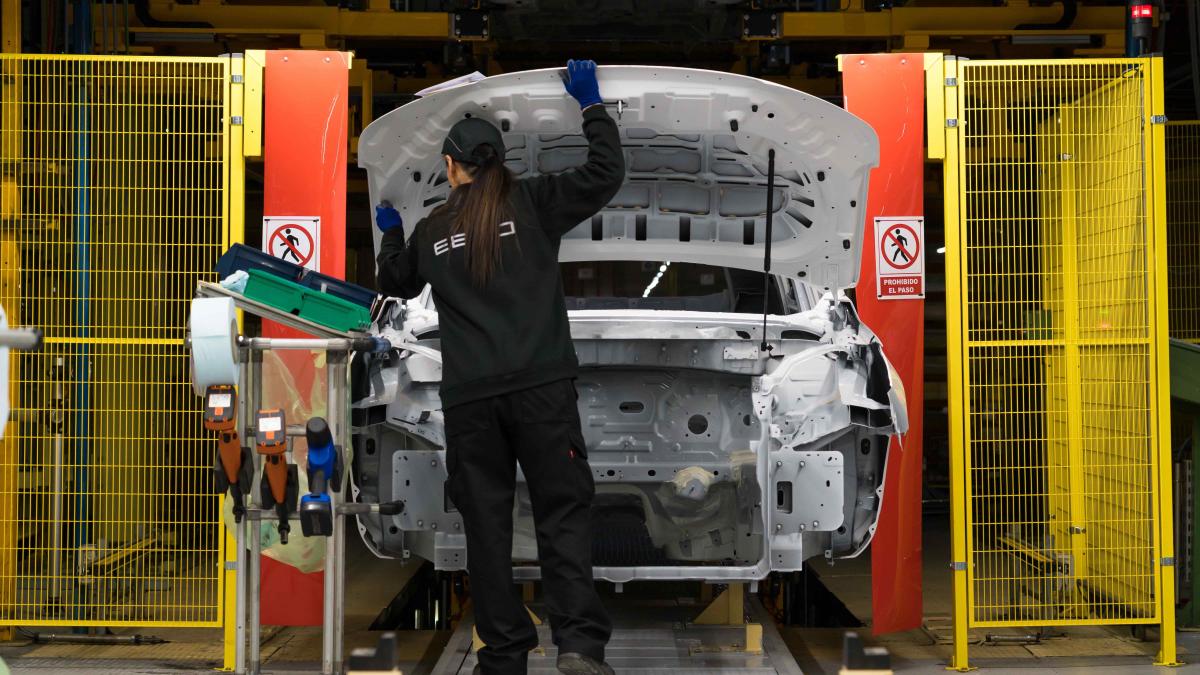
Revenue rises while earnings contract
Spanish car and truck manufacturers recorded a sharp decline in profitability in 2025 even as revenue and investment increased. According to La Vanguardia, citing the annual report of manufacturers’ association Anfac, sector revenue rose 3.8% from 2024 to €80.315 billion. Net profit, however, fell 56% to €853 million, after exceeding €2 billion in the previous reporting period.
Anfac attributed the earnings decline to lower vehicle production, industrial restructuring and higher manufacturing costs. The figures show the financial burden of converting Spanish plants to produce electrified vehicles while established production lines and supply chains remain exposed to weak European demand.
Investment increased 24.7% to a record €3.197 billion. The spending was directed mainly toward adapting factories for electrified-vehicle production and securing new industrial projects. José López-Tafall, Anfac’s director general, said the record investment demonstrated manufacturers’ commitment to Spain and their intention to preserve factories and employment during the technological shift.
Output and export markets remain weak
Spain’s factories continue to face subdued production and difficulties in their principal export markets. Anfac estimates output will close the current year at 2.26 million vehicles, broadly level with the previous year’s 2,274,026 units. The association also described that earlier total as 4.3% below 2024, underlining the loss of momentum at a production base that depends heavily on foreign demand.
New model launches, plant upgrades and the arrival of additional manufacturers could support a recovery. For exporters and component suppliers, however, the timing will be critical: record capital expenditure does not immediately translate into higher assembly volumes. Continued weakness in European vehicle demand could therefore constrain orders for Spanish-made cars, parts and production equipment.
Employment has already declined. Manufacturers reported 53,943 jobs, compared with 57,189 in the association’s previous annual report, a reduction of 3,246 positions. Anfac characterized the latest figure as broadly maintaining employment, but the comparison illustrates the pressure accompanying factory restructuring.
Domestic electrified sales accelerate
Spain’s domestic passenger-car market continued to recover in 2025. Registrations exceeded one million for a second consecutive year, reaching 1,148,650 units, up 12.9% from 2024. Even so, the market remained about 100,000 vehicles below its pre-pandemic level.
Electrification was the main source of growth. Registrations of battery-electric and plug-in hybrid passenger cars, commercial vehicles, heavy vehicles and buses reached a record 245,629 units, an increase of 96.4%. Electrified passenger cars accounted for 225,617 registrations and 19.7% of the passenger-car market.
The stronger domestic market offers some support to distributors and importers of electric vehicles, batteries and related components. It does not fully offset weaker factory utilization or export demand, particularly because many vehicles registered in Spain may be imported while Spanish plants are still preparing new electrified models.
Public revenue grows as incentives approach
The automotive sector’s total fiscal contribution rose 4% to €41.995 billion. Taxes linked to purchases of new vehicles generated €6.771 billion, up 11.9% from 2024, reflecting the recovery in registrations.
Anfac said the Auto+ incentive plan was due to begin in July with €400 million available. López-Tafall expected the funding to last only until September or October and said the association would seek additional support for buyers later in the year. For manufacturers and importers, continuity of incentives will influence order flows, while the gap between rising sales and falling industrial profit shows that demand growth alone has not yet absorbed the cost of Spain’s electric-vehicle transition.