Spain added 10.1 GW of solar capacity in 2025 as captured prices fell
Spain installed 10,105 MW of solar capacity in 2025, becoming the European Union’s second-largest photovoltaic market. Solar supplied nearly 23% of national electricity generation, but falling captured prices and more zero or negative-price hours increased pressure on project returns.
Annual installations exceed 10 GW
Spain installed 10,105 MW of new solar capacity in 2025, consolidating its position as the European Union’s second-largest photovoltaic market, according to the annual report of the Spanish Photovoltaic Union, UNEF. The report was prepared with the University of Castilla-La Mancha and presented on September 15.
Ground-mounted plants accounted for 8,966 MW of the additions, while self-consumption systems contributed 1,139 MW. New ground-mounted capacity increased 31% from 2024, while annual self-consumption installations stabilized at around 1.1 GW. Spain consequently reached 46,286 MW of ground-mounted photovoltaic capacity and 9,276 MW of cumulative self-consumption capacity.
Solar now supplies nearly 23% of Spain’s electricity mix, making it the country’s largest generation technology by share. Spain’s expansion came as the EU installed 67.2 GWp in 2025. Global additions reached 698 GWp, taking cumulative photovoltaic capacity above 3 TWp.
Cheap daytime power squeezes solar revenues
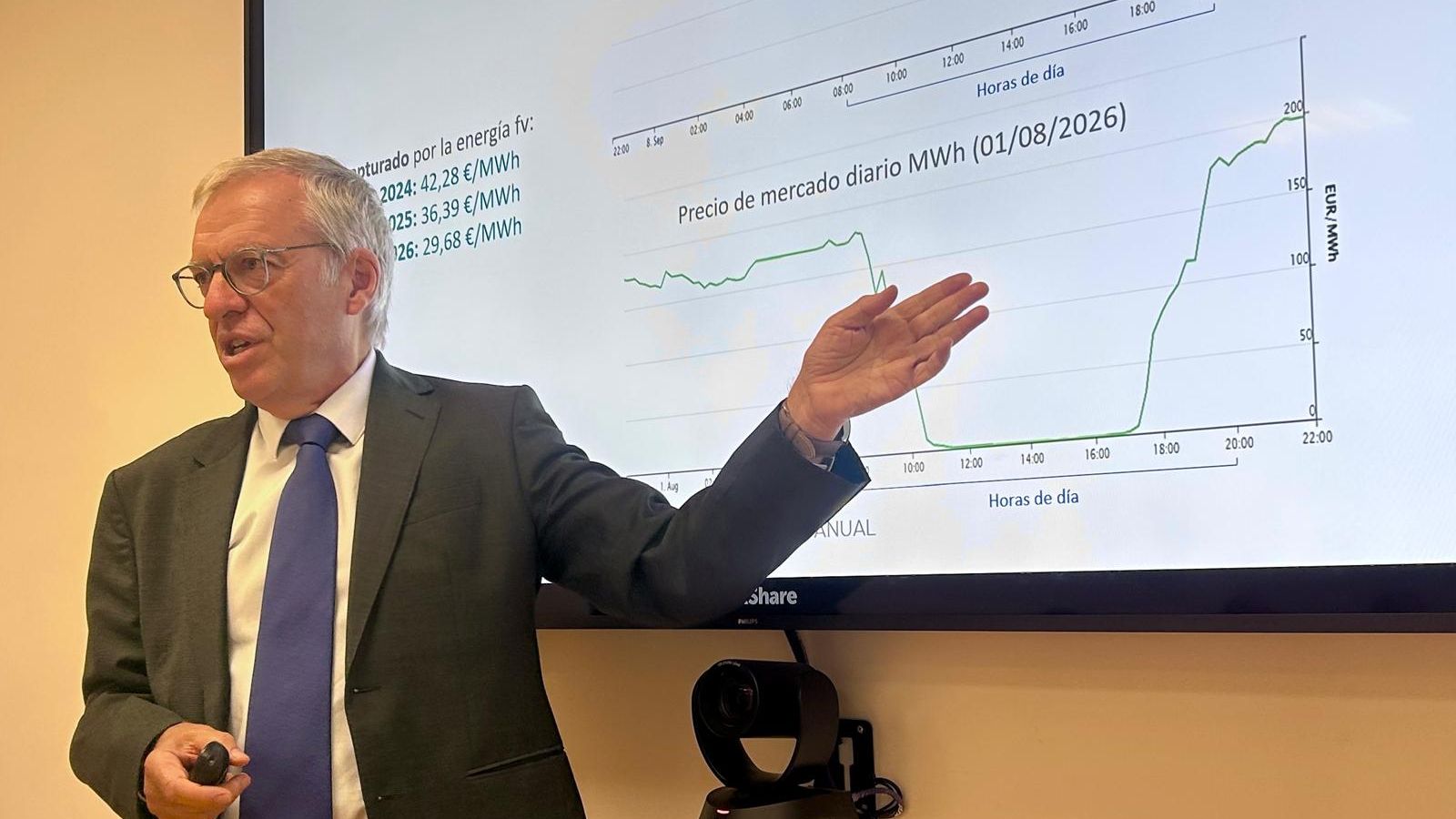
The additional generation has significantly reduced wholesale electricity prices during the middle of the day, providing cheaper power to consumers and industry and helping contain inflation and business costs. The same effect is weakening photovoltaic economics: as more solar enters the system at the same hours, plants receive lower prices for their output.
The price captured by photovoltaic plants fell from €42.28/MWh in 2024 to €36.39/MWh in 2025 and then to €29.68/MWh in the first half of 2026. Spain recorded 797 hours with prices at or below €0/MWh and significant photovoltaic generation in 2025. That threshold had already been reached again by July 7, 2026, and the total was approaching 900 hours by early September.
UNEF argues that further investment could be discouraged unless electricity demand and storage capacity grow alongside generation. Spain has 71.5 GW of demand connection capacity already granted or included in planning through 2030, plus 24 GW requested and awaiting a decision. Data centers, industry, hydrogen, storage and electric mobility account for much of the prospective demand.
Storage and market reform move to the foreground
Behind-the-meter storage installations increased 65% in 2025 to 540 MWh, bringing cumulative capacity installed since 2022 to 2,745 MWh. Ground-based storage remains much smaller, at 261 MW: 241 MW in hybrid projects and 20 MW in standalone facilities. However, projects totaling 33,031 MW have received permits and another 14,607 MW are being processed.
UNEF is seeking flexible grid access and connection permits, simpler administrative procedures and stronger support for hybrid projects. Its proposals also include price floors and ceilings intended to limit the proliferation of zero or negative-price hours, payment for technical restrictions, ICO-backed project finance and adequate remuneration for voltage-control services.
The buildout has become an important part of the Spanish economy. The photovoltaic sector contributed €9.841 billion to GDP in 2025, equivalent to approximately 0.5% of national GDP, while its total economic footprint reached €14.121 billion. It supported 134,708 direct, indirect and induced jobs, generated €3.208 billion in exports and invested €473 million in research, development and innovation. UNEF measured the sector’s innovation intensity at 3.6%, compared with 1.6% for Spanish industry overall. The next phase will depend less on installation records than on whether grids, storage and new electricity users can convert abundant daytime generation into sustainable revenue and industrial activity.