Spain Holds 68% of Global Olive-Pomace Oil Trade and 60% of Production
Spain accounts for 68% of world trade in olive-pomace oil and 60% of global production, with exports worth €326 million in the 2024/25 campaign, according to Agronews Castilla y León. The gap between its trade share and its output share shows the country works as a processing and re-export hub for the category, giving Spanish quotations reference status for importers worldwide.
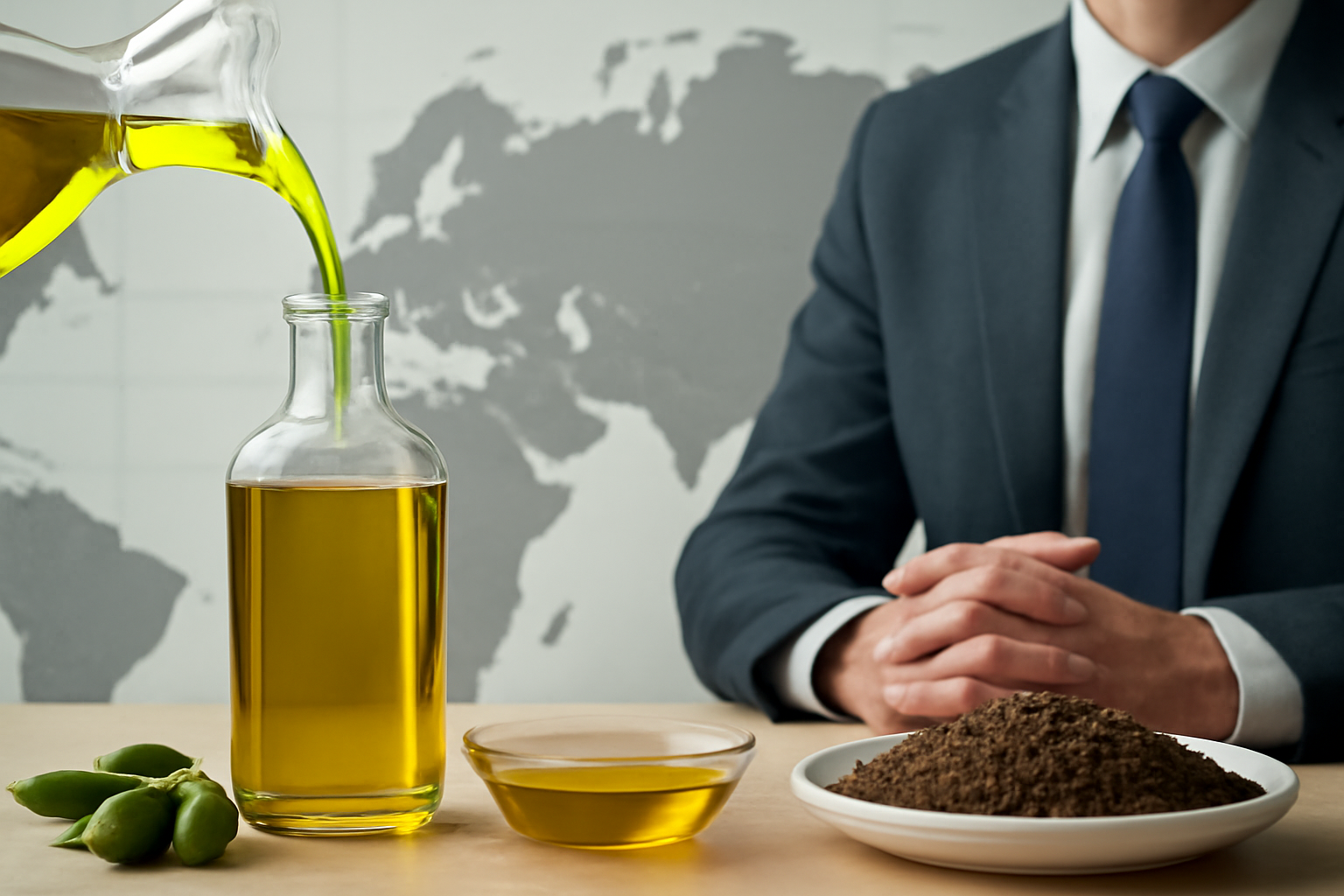
Spain concentrated 68% of world trade in olive-pomace oil and 60% of global production in the 2024/25 campaign, with exports worth €326 million, according to Agronews Castilla y León. Few food categories are as tightly held: one country supplies most of the volume and handles an even larger share of the shipments that reach international buyers.
A by-product with its own market
Olive-pomace oil starts as orujo, the wet mass of skins, pulp and crushed stone left in the mill after olive oil has been separated. That residue still contains oil that pressing and centrifugation cannot recover. Extraction plants dry it, recover crude pomace oil with solvent and refine it; before bottling, the refined oil is blended with virgin olive oil, which is what allows the finished product to carry the olive-pomace oil designation.
The same plants sell the de-oiled cake as biomass fuel, so an extractor's margin depends on three variables at once — the oil price, the energy price and how much pomace the milling season delivers. Volumes are tied to the olive harvest and cannot be expanded independently of it: a short crop cuts the supply of pomace oil and of virgin olive oil in the same season.
Trade share ahead of production share
The distance between the two headline figures is the more informative part of the data. Spain produces 60% of the world's olive-pomace oil but accounts for 68% of the trade in it — eight percentage points more. The country is not only an origin but a processing and re-export hub, moving material that passes through Spanish refining, blending and bottling capacity on its way to third markets.
Concentration of that order carries pricing power. With no supplier of comparable scale, quotations formed in the Spanish market become the reference importers negotiate against, and Spanish decisions on stock release set the pace for the category worldwide. For buyers outside Spain it also means the category has no natural second source: no alternative origin is large enough to absorb a Spanish shortfall.
What the €326 million covers
Agronews Castilla y León reports the €326 million as export value for the 2024/25 campaign. It is a value figure, not a volume figure; the report gives no tonnage, so an average export price cannot be derived from it. Pomace oil has traditionally traded below virgin and extra-virgin grades, which places it in a different competitive set — it meets seed oils and palm oil in professional frying, industrial food manufacturing and non-food uses such as soaps and cosmetics, rather than the premium bottled olive-oil shelf.
That positioning cuts both ways. It opens volume outlets premium olive oil does not reach, and it exposes the category to substitution whenever the discount to sunflower or palm oil narrows.
What the market is watching
For producers, processors and importers, the variables that will move the category from here are narrow and largely observable:
- the size of the Spanish olive harvest, which sets the volume of pomace available for extraction;
- energy costs at drying and extraction plants, the heaviest processing input;
- the spread between pomace oil and competing seed and palm oils in frying and industrial uses;
- the pace at which importing markets accept pomace oil as a distinct product rather than a cheap olive-oil substitute.