Southeast Sulawesi ships first tapioca flour and coconut oil export of 1,027 tonnes to China and Malaysia
Indonesia's Southeast Sulawesi province released its first export consignment of 1,027 tonnes of tapioca flour and coconut oil on 10 September 2026, bound for China and Malaysia. The Indonesian Quarantine Agency and the provincial government staged the send-off in Konawe Selatan regency as the opening step of a plan to build export volumes outside mining.
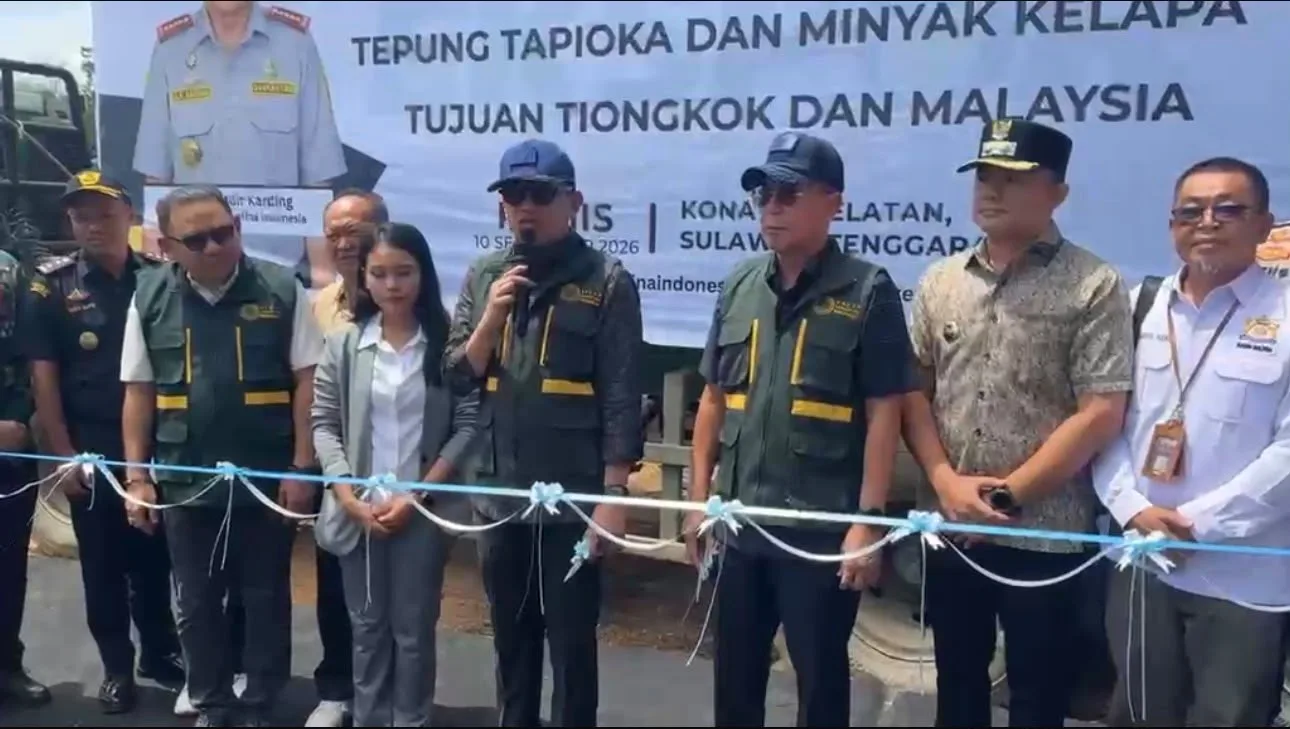
Indonesia's Southeast Sulawesi province dispatched its first export consignment of 2026 on Thursday, 10 September, sending 1,027 tonnes of tapioca flour and coconut oil to buyers in China and Malaysia. The Indonesian Quarantine Agency (Badan Karantina Indonesia) and the provincial government released the cargo at a ceremony in Konawe Selatan regency, suarakendari.com reported.
The shipment is the province's opening move in a plan to build export volumes in commodities outside mining. suarakendari.com described the second product as coconut oil, while sultra.fajar.co.id identified it as virgin coconut oil (VCO). Neither report broke the 1,027 tonnes down by product, and neither assigned volumes to each of the two destination markets.
A first step away from mining
Governor Andi Sumangerukka said the province's economic potential does not rest on the mining sector alone and that agriculture has substantial room to be developed. Southeast Sulawesi's export profile has long been dominated by mining output, and the tapioca and coconut oil cargo is being presented as the start of a broader non-mining effort rather than an isolated dispatch.
According to sultra.fajar.co.id, the shipment shows that the province's non-mining commodities are beginning to find openings in international markets. Both products are processed goods rather than raw farm output: tapioca flour is milled from cassava, and coconut oil is pressed from local coconut supply, which places the consignment inside the value-added category the province says it wants to expand.
Quarantine agency puts standards first
Abdul Kadir Karding, head of the Indonesian Quarantine Agency, said the first shipment is an initial step in the regional government's plan to raise export activity to a larger scale. He pointed to the Southeast Sulawesi Export Acceleration Team as a central mechanism for optimising the province's commodity potential so that local goods meet the standards required to compete in international markets.
The agency is ready to help the provincial government align product standards, in particular for businesses preparing to move into exporting, Karding said. He added that commodity downstreaming is consistent with the central government's priority agenda in agriculture, fisheries and energy. Standards compliance is the practical gate for both destination markets, since tapioca starch and coconut oil are food-chain inputs subject to importing-country requirements.
Raw material supply is the next constraint
The provincial government said it will provide stimulus for activities that develop agricultural commodities, including ensuring the availability of raw materials for processing industries. The stated aim is to stop marketing Southeast Sulawesi's farm output in raw form and to move it into processed products with added value and competitiveness on export markets.
Key details of the shipment, as reported:
- Volume: 1,027 tonnes of tapioca flour and coconut oil
- Date and place: Thursday, 10 September 2026, Konawe Selatan regency, Southeast Sulawesi
- Destinations: China and Malaysia
- Organisers: Indonesian Quarantine Agency and the Southeast Sulawesi provincial government, working with the Southeast Sulawesi Export Acceleration Team
What the reports do not cover
Neither suarakendari.com nor sultra.fajar.co.id disclosed the exporting companies, the buyers, contract values, unit prices or the shipping schedule, and no target was published for follow-on volumes. For processors and traders tracking Indonesian tapioca starch and coconut oil supply, the open questions are whether the province can move from a single ceremonial consignment to regular contracted flows, and whether cassava and coconut supply in Southeast Sulawesi is deep enough to keep processing capacity running at scale.
Full market analysis