Southeast Korea weighs SMR industrial belt linking Busan, Gijang and Ulsan
Busan, Gijang and Ulsan could form an industrial belt combining land-based small modular reactors, maritime capabilities and shipbuilding. The concept is not yet an official government project, while the reactor planned for Gijang and the technology proposed for ships are different designs.
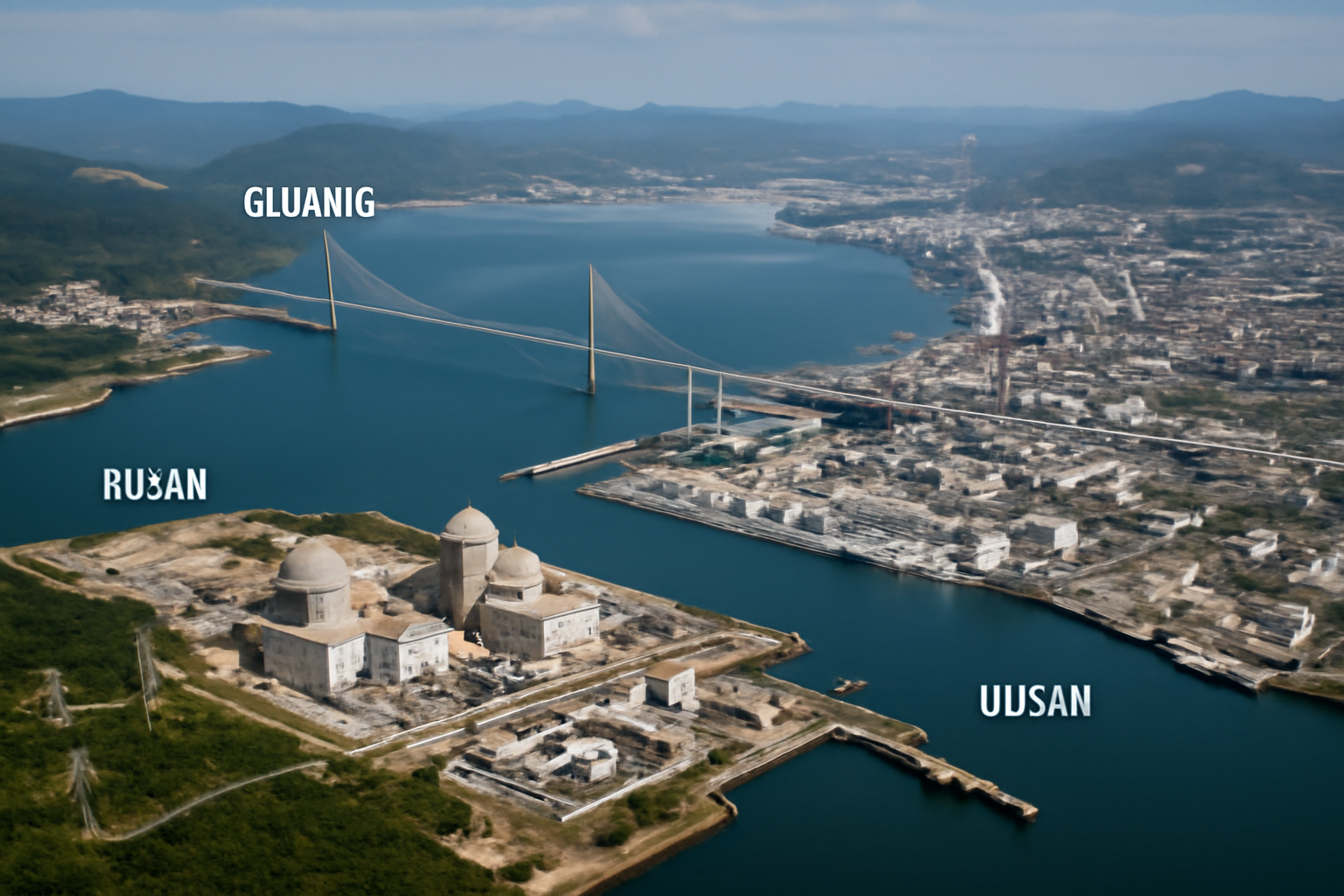
Three locations, one proposed industrial chain
South Korea’s southeastern region is considering an industrial framework that would connect Gijang’s nuclear base, Busan’s maritime and port capabilities and Ulsan’s shipbuilding capacity. The proposed Busan-Gijang-Ulsan small modular reactor belt is attracting attention as international competition in next-generation nuclear technology accelerates, according to Pressian.
The concept would span research and development, component manufacturing, regulatory certification, marine reactor applications, vessel construction and potential exports. However, the three locations have not yet been combined into an official central-government project. The technologies involved are also distinct: the innovative small modular reactor, or i-SMR, planned for Gijang is intended as a land-based installation, while the molten salt reactor, or MSR, under development for ships is a separate reactor design.
Gijang advances toward an i-SMR project
Gijang was selected in June as the site for South Korea’s first i-SMR project following a site-selection assessment by Korea Hydro & Nuclear Power. The county already hosts the operation of the Kori nuclear power plant and the decommissioning of Kori Unit 1. Adding an SMR project would give the area experience across nuclear construction, operation and decommissioning.
The Nuclear Safety and Security Commission has also begun its safety review for standard design approval of the i-SMR. That step moves the project into a formal licensing process, although the source provides no construction timetable, capacity figure or investment value. Those details will be important for suppliers assessing when orders for materials, components and engineering services could emerge.
Busan builds a maritime and certification base
Busan is pursuing a different role centred on the sea. Under its nuclear industry development plan, the city aims to help SMR, nuclear decommissioning and equipment companies enter global supply chains. It is also positioning marine SMRs as a prospective growth industry, drawing on its port, shipping, research and certification capabilities.
Korea Maritime & Ocean University has established a marine SMR task force. Its work covers technology demonstration, regulation, certification and specialist training. These functions would be necessary before nuclear-powered commercial vessels could progress from concepts to construction and operation, particularly because marine nuclear systems must satisfy both nuclear-safety requirements and international shipping rules.
Ulsan brings shipbuilding and equipment production
Ulsan supplies the manufacturing element of the proposed belt. HD Hyundai Heavy Industries and HD Korea Shipbuilding & Offshore Engineering, which have production operations in the city, developed a concept design for a large vehicle carrier powered by an MSR in cooperation with the Korea Atomic Energy Research Institute and other partners.
The design received approval in principle from Lloyd’s Register in June. The approval does not amount to authorization to build or operate a nuclear-powered vessel, but it indicates that the concept has entered an international classification process. It also moves marine nuclear propulsion beyond basic research toward vessel design, technical review and prospective certification.
Pressian reports that linking the three areas could create a value chain extending from research and equipment supply to marine SMRs, ship construction and exports. Common needs include safety technology, materials, components, skilled personnel, regulation and certification, even though the reactor designs differ. The commercial case will depend on regional coordination, successful demonstrations and a clear licensing route. Until those elements are established, the industrial belt remains a regional strategy under discussion rather than a committed national programme.