South Sumatra Prepares Liberica Coffee Producers for Russian Market
Indonesia’s quarantine agency is helping South Sumatran small businesses meet certification, food-safety, labeling and traceability requirements for potential Liberica coffee exports to Russia. The initiative builds on rising regional coffee shipments, although no Russian sales or supply agreements have yet been announced.
Export support targets Russian requirements
Indonesia is stepping up technical support for small Liberica coffee producers in South Sumatra seeking access to the Russian market, with certification and quarantine compliance at the center of the effort.
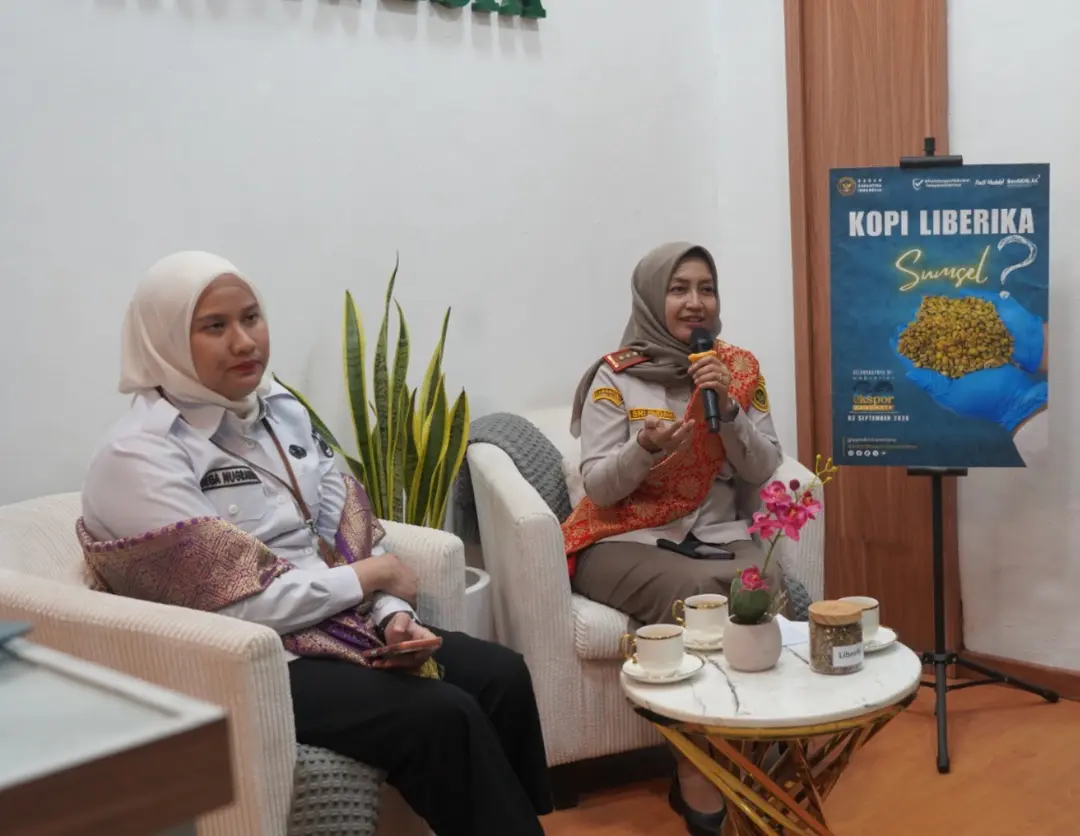
The Indonesian Quarantine Agency, known as Barantin, discussed the initiative during a Go Ekspor web seminar on September 2, 2026. According to SumselSatu.com and Trubus, the event brought together South Sumatra’s quarantine authority, Indonesia’s trade attaché in Moscow, provincial officials and coffee businesses to assess market opportunities and export readiness.
Barantin is offering consultations through Export Clinics operating at quarantine offices across Indonesia. Wisnu Wasisa Putra, head of the agency’s quarantine human-resources development center, said the service provides businesses with information and direct assistance on destination-country requirements and export certification procedures.
The program is aimed particularly at micro, small and medium-sized enterprises, which may need institutional support to navigate technical market-entry rules. Barantin officials said coordination among quarantine authorities, local government, exporters and Indonesia’s overseas trade representatives would be necessary for products to satisfy importing-country standards.
Certification and traceability remain the main hurdles
Indonesia’s trade attaché in Moscow, Ardianto Mahdi Wibowo, identified Russia as a potential market for Indonesian coffee, citing its population of more than 144 million and the existing presence of Indonesian coffee in the country. However, he said exporters must prepare from the outset to comply with Russian food-safety standards, certification rules, labeling provisions and product-traceability requirements.
South Sumatra’s quarantine office and provincial government are also developing a Go-Export system intended to strengthen traceability. According to SumselSatu.com, the system records business identities, raw-material origins and the documents required for export certification.
Sri Endah Ekandari, head of South Sumatra’s quarantine authority, said export commodities must meet applicable safety, health and quality requirements from their place of origin. Mega Nugraha, head of the provincial cooperatives and small-business agency, similarly emphasized quality controls and risk mitigation at the farmer level.
No completed Liberica shipment to Russia, purchase contract, prospective volume or launch date was disclosed in the source reports. The current initiative therefore represents market preparation rather than an established trade flow.
Regional coffee exports have expanded
South Sumatra accounts for about 27% of Indonesia’s coffee production, according to Sri. Liberica is receiving additional attention because of its distinctive characteristics and its ability to grow in peatland and lowland areas, according to coffee exporter and small-business operator M. Syahrafiuddin.
The province’s broader coffee export activity increased between 2024 and 2025. SumselSatu.com and Trubus reported that South Sumatra recorded three coffee shipments worth Rp1.5 billion in 2024, followed by 14 shipments valued at Rp12.1 billion in 2025.
By July 2026, the province had exported 8.7 tonnes of coffee valued at Rp652 million, with Australia as the leading destination. South Sumatran coffee has also been shipped to Malaysia, Saudi Arabia and Singapore. The available reports do not specify what share of those exports consisted of Liberica coffee.
Consistency will determine commercial prospects
Syahrafiuddin said South Sumatran Liberica could compete internationally but warned that producers would need to maintain consistent quality to build long-term buyer confidence. That requirement places responsibility across the supply chain, from farm-level production and raw-material documentation to processing, labeling and final certification.
For smaller producers, the Russian initiative could diversify the province’s destination base if businesses can translate technical assistance into compliant commercial shipments. Its progress will depend on whether participating enterprises can document origin, standardize quality and meet Russia’s applicable import conditions while securing buyers willing to develop demand for Liberica coffee.