South Korean Group Plans $5 Million Cashew Plant in Cambodia
A South Korean-backed cashew processing plant with daily capacity of about 20 tonnes is planned for Cambodia’s Kampong Thom province. The $5 million project is scheduled for September 2026-2029 as existing processors face raw-material shortages and higher prices.
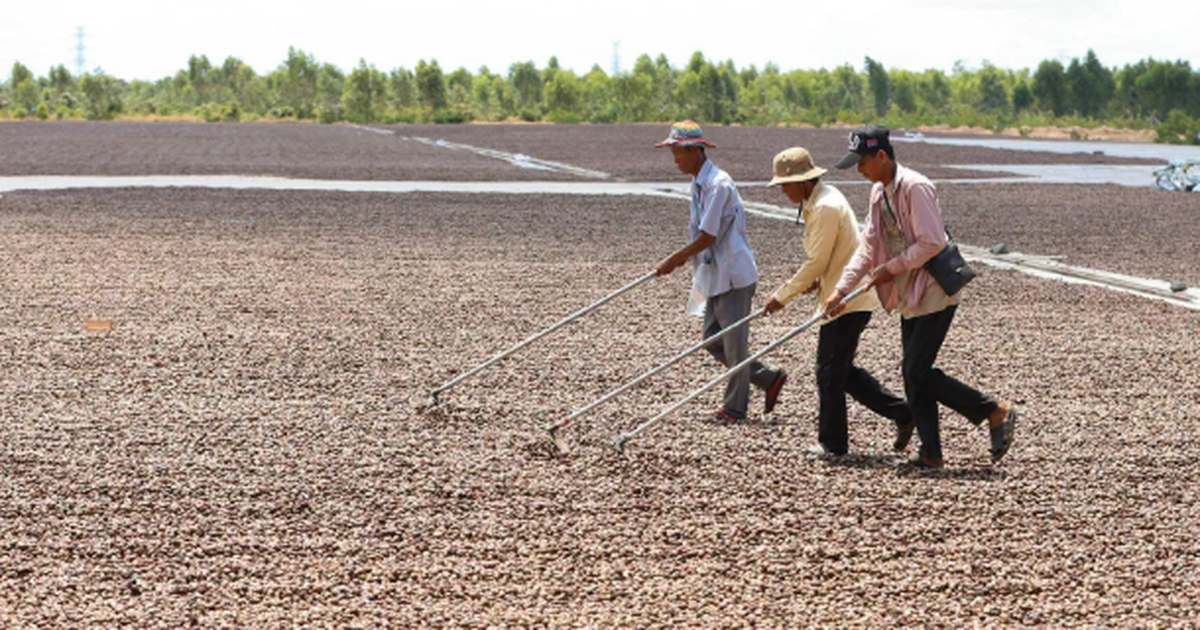
Korean-backed project targets local processing
A $5 million cashew processing plant backed by a South Korean investor is planned for Kampong Thom province in Cambodia. According to Kenh14, the facility will have capacity to process about 20 tonnes of cashew nuts per day and is expected to be developed between September 2026 and 2029.
The project is a collaboration between Cambodia’s Council for Agricultural and Rural Development, known as CARD, and the Korea Agro-Industrial Resource Development Corporation, or KOAA. CARD Chairman Ouk Rabun and KOAA Chairman Lee Sang Mu discussed the initiative at a meeting on April 22.
The plan extends beyond construction of the plant. It includes training for workers in post-harvest handling, drying, storage, processing and marketing. The stated objectives are to improve product quality, strengthen workforce skills and make Cambodia’s cashew sector more competitive in international markets.
Existing factories struggle to secure supplies
The additional capacity will enter an industry that already has substantial processing infrastructure but cannot always keep it running. Uon Silot, president of the Cashew Nut Association of Cambodia, said the country has about 50 processing plants, although only a small number operate at a relatively large scale.
About six medium-sized factories can each process between 7,000 and 14,000 tonnes of cashew nuts annually. Many plants, however, operate for only about three months before suspending production because they run out of raw material. Some companies have stopped processing and instead buy and store raw cashew nuts for resale.
This makes feedstock procurement and operating economics central to the Korean-backed project. A plant processing 20 tonnes per day would require dependable deliveries, while Cambodia’s existing factories are already competing for available crops. Training and improved storage could reduce post-harvest losses, but they will not by themselves resolve seasonal shortages or high procurement costs.
Raw cashew prices rise as output tightens
Raw cashew prices in Cambodia exceeded 7,000 riel per kilogram, or about $1.70 per kilogram, by April 2026. That was well above the 4,000-5,000 riel per kilogram, equivalent to $0.98-$1.22, recorded in 2025. Silot said the current level remained favorable for farmers compared with the price of fresh cashews, which was about 4,500 riel per kilogram, or $1.10.
The increase was linked to lower Cambodian production caused by climate change and tighter global supplies as some African countries restricted exports to encourage domestic processing. Higher prices support growers, but they also compress processors’ margins and can make year-round operation more difficult.
A 2024 report put Cambodia’s cashew-growing area at more than 580,000 hectares and its potential annual output above 816,000 tonnes, placing it among the world’s three largest producing countries. Cambodia exported about 1 million tonnes of raw cashew nuts worth $1.5 billion in 2025, up 27% from 2024. The scale of that trade shows the opportunity for local value addition, but the new plant’s prospects will depend on whether it can secure raw nuts at prices that allow processed products to compete abroad.