South Korean dairy groups shift beyond white milk as domestic demand declines
Seoul Milk Cooperative, Maeil Dairies and Namyang Dairy Products are expanding into bakery, frozen desserts, functional nutrition, B2B products and exports. The restructuring responds to declining domestic milk consumption and a prolonged imbalance in raw-milk supply and demand.
White-milk demand weakens
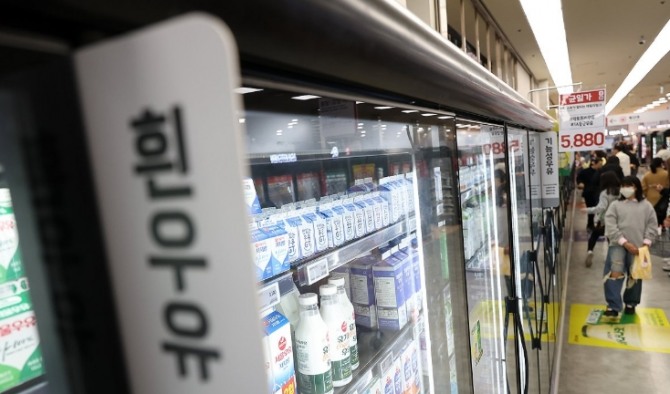
South Korea’s leading dairy groups are reducing their dependence on white milk as demographic and dietary changes erode demand in their home market. Seoul Milk Cooperative, Maeil Dairies and Namyang Dairy Products are redirecting growth toward higher-value consumer products, business-to-business sales and overseas markets.
Global Economic reported that the industry is expanding beyond drinking milk into bakery products, frozen desserts, care food and health-functional products. The move reflects a search for new demand as a falling birth rate and changing eating habits reduce domestic milk consumption.
Korea Economic and Political News also identified a prolonged imbalance between raw-milk supply and demand as a driver of the restructuring. For processors, weaker consumption of a core product makes it more difficult to absorb domestic raw milk through established retail channels.
Companies broaden their product portfolios
The three companies are strengthening functional and nutritional offerings while developing additional uses for domestically produced raw milk. This gives them a route into categories where formulation, processing and branding can create more value than conventional white milk.
The product expansion covers several distinct markets. Bakery and frozen-dessert operations can use dairy ingredients in processed foods, while care food and functional nutrition address consumers seeking products designed around health or specific nutritional needs. These categories also reduce reliance on the volume of plain milk sold through household retail channels.
B2B sales form another part of the strategy. Supplying dairy ingredients or finished products to food manufacturers, bakeries and other commercial customers can open demand outside the traditional consumer milk aisle. The source material does not disclose individual capacity targets, investment budgets or expected revenue contributions for the companies’ new business areas.
Exports become a second growth route
Seoul Milk Cooperative, Maeil Dairies and Namyang Dairy Products are also accelerating efforts to reach overseas markets. Exports offer another outlet for domestic raw milk and processed dairy products at a time when population decline is limiting the potential of South Korea’s consumer market.
The shift does not mean that white milk is disappearing from the companies’ portfolios. It instead changes the role of the category: drinking milk remains a core operation, but future growth is expected to come from a wider range of products, customers and markets.
Execution will depend on whether the companies can build durable demand in categories that differ from their traditional business. Functional nutrition requires product development and consumer trust, B2B operations depend on stable commercial relationships, and exports require products suited to overseas buyers. For South Korean milk producers and processors, the outcome will influence how effectively the domestic industry can manage raw-milk supply while household demand for white milk continues to contract.