South Korea’s Shine Muscat prices collapse as oversupply and quality failures hit growers
South Korean Shine Muscat prices have fallen by more than 70% from their peak as rapid acreage expansion overwhelms demand. Growers face rising costs, weaker consumer confidence and the risk of heavier supply pressure during the September harvest.
Wholesale and retail prices sink
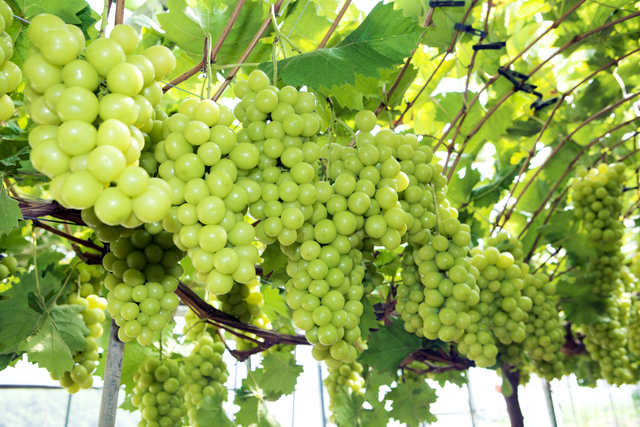
South Korea’s Shine Muscat boom has reversed into a severe price downturn, exposing the risks created by rapid production growth and dependence on a single grape variety. WithBuyer reports that fruit once sold for 30,000–40,000 won per bunch, while the retail price for 2 kg previously reached 40,000–50,000 won. It has recently fallen to the low 10,000-won range, a decline of more than 70% from the peak.
Wholesale data show similar pressure. According to the Daegu Ilbo, the average shipment price for a 2 kg box of greenhouse-grown Shine Muscat at Seoul’s Garak agricultural wholesale market fell from 32,142 won in 2022 to 20,677 won in 2024 and 13,307 won at the end of July this year. The variety is now reportedly trading below traditional grapes such as Campbell Early and Kyoho.
Expansion outpaced demand
High returns during the premium phase encouraged growers to expand Shine Muscat plantings. The variety’s share of South Korea’s total grape area approached half within a few years, according to WithBuyer. Annual supply subsequently exceeded market demand, placing sustained downward pressure on prices just as heating, materials and labor costs were rising.
The Daegu Ilbo says growers are particularly concerned about September, when grapes cultivated under rain shelters and in open fields enter the market in larger volumes. A concentration of shipments before Chuseok could deepen the price decline. Greenhouse Shine Muscat shipments had already been under way since mid-July.
Quality problems have compounded the surplus. Some farms shipped immature fruit before it reached adequate sweetness, while production focused on high yields weakened the variety’s characteristic aroma and crisp texture, WithBuyer reported. Inconsistent fruit damaged consumer confidence in the entire category, reducing demand even for growers maintaining higher standards.
Gyeongbuk seeks a research response
The crisis is concentrated in Gyeongbuk, which accounts for 56.3% of South Korea’s grape-growing area, 60.3% of production and 89.8% of national grape exports, according to the Daegu Ilbo. Gimcheon alone has 2,478 hectares under grapes and 6,695 farms. Despite that concentration, Gyeongbuk has no dedicated research institution focused exclusively on grapes.
Gimcheon is campaigning to host a proposed Gyeongbuk Provincial Grape Research Institute. The institution would integrate work on new varieties, cultivation technology, climate adaptation, distribution management and supply control. Industry proposals also include shipment restrictions for fruit below sweetness standards and voluntary certification for farms meeting quality requirements. Diversifying away from Shine Muscat would reduce exposure to another single-variety glut, but the immediate challenge is restoring consistent quality while the market absorbs excess supply.