South Korean Consumer Group Seeks Swift Standards for Blended Soy Sauce
A South Korean consumer group is urging the government to establish formulation and front-labeling standards for blended soy sauce as acid-hydrolyzed soy sauce moves into the sauce category. It proposes requiring blended products sold as soy sauce to contain at least 50% brewed soy sauce.
Reclassification creates a regulatory gap
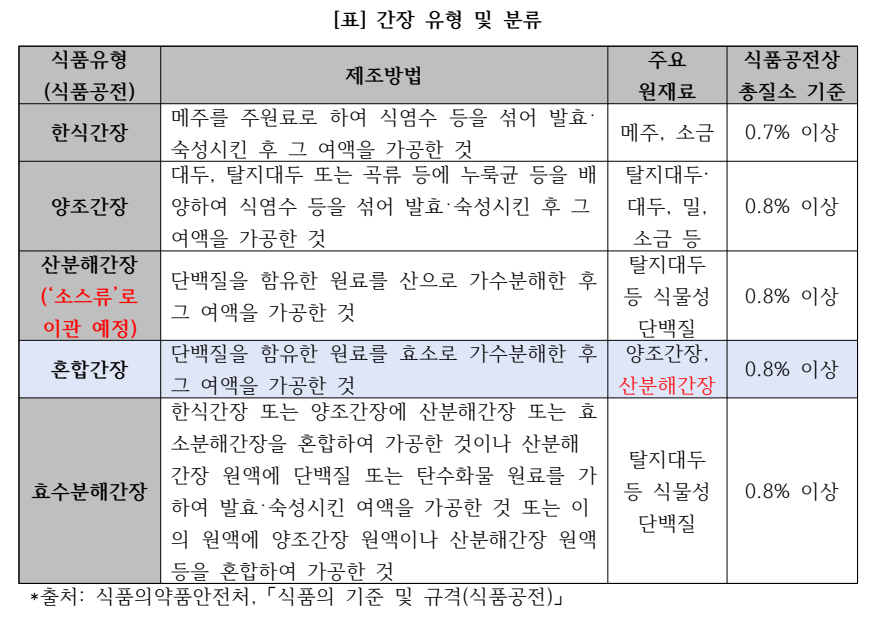
South Korea is facing calls to introduce new formulation and labeling standards for blended soy sauce as the government revises the classification system in its Food Code. The overhaul, the first in about 10 years, is expected to remove acid-hydrolyzed soy sauce from the fermented paste and sauce category and transfer it to the general sauce category under the name “amino acid liquid,” or “acid-hydrolyzed amino acid liquid.”
The Citizens’ Coalition for Consumer Sovereignty says the change makes a separate review of blended soy sauce necessary. These products combine brewed soy sauce, which is fermented, with acid-hydrolyzed soy sauce. Once the latter is reclassified as a sauce ingredient, blended soy sauce will sit across two regulatory categories without clearly defined new manufacturing or labeling rules, according to KAIR News.
The group has asked the government to establish a formal definition and composition standard for blended soy sauce within the Food Code. It also wants products using the word “soy sauce” to retain the characteristics consumers generally associate with fermented soy sauce.
Proposal sets a 50% brewed-soy-sauce threshold
The coalition proposes that brewed soy sauce account for at least 50% of any product marketed as blended soy sauce. It argues that this would provide a clear dividing line between products based primarily on fermented soy sauce and those dominated by acid-hydrolyzed ingredients.
Products falling below the proposed threshold should be assigned a separate food type or product name, the group said. It also called for the presence and proportions of brewed soy sauce and amino acid liquid to be displayed prominently on the front of the package, allowing buyers to compare products without having to interpret technical ingredient lists.
The current Food Code distinguishes Korean-style soy sauce, brewed soy sauce, acid-hydrolyzed soy sauce, enzyme-hydrolyzed soy sauce and blended soy sauce. The coalition says these administrative categories reflect production methods but do not necessarily help consumers understand whether an individual product is primarily fermented or primarily made with hydrolyzed material.
Products vary widely in composition and price
The issue affects a major segment of the South Korean market. Citing Mordor Intelligence, the coalition said blended soy sauce represented 54.62% of domestic soy sauce market revenue in 2025. That makes the proposed rules relevant to the category most widely purchased by consumers rather than to a small specialty segment.
A retail survey conducted by the coalition found that acid-hydrolyzed soy sauce content ranged from 25% to as much as 93% among products carrying the same blended-soy-sauce designation. The group said these large differences were difficult to identify from the front of existing packages.
Price ranges also differed. Brewed soy sauce was priced at about 636–1,988 won per 100 mL, while blended soy sauce cost about 178–1,151 won per 100 mL. The coalition said product names alone do not explain how ingredients and manufacturing methods contribute to that price gap.
Manufacturers may need formulation and packaging changes
If adopted, a 50% minimum would have direct consequences for manufacturers whose products contain high proportions of acid-hydrolyzed soy sauce. Companies could need to increase brewed soy sauce content, move affected products into a different regulatory category or change their product names. Front-of-pack disclosure requirements would also require packaging revisions and more visible composition data.
For producers and processors, the central question is whether the Food Code revision will merely reclassify acid-hydrolyzed soy sauce or also redefine products that use it. Clear transition rules would determine which formulations can continue to use the blended-soy-sauce name and how quickly labels must change.
The coalition argues that separating acid-hydrolyzed soy sauce from fermented products will not achieve the intended clarity unless blended soy sauce is addressed at the same time. It is therefore seeking composition and labeling rules before the broader classification reform takes effect, with the stated aim of reducing consumer confusion and enabling more direct comparisons of quality, manufacturing method and price.