South Korean scholars question sugary-drink levy over burden on low-income consumers
South Korean academics have urged caution over a proposed levy on sugar-sweetened beverages, citing evidence that the burden relative to income could be 8.4 times higher for the lowest-income group than for the highest. They recommend stronger nutrition disclosure, targeted education and incentives for voluntary sugar reduction before broad price regulation.
Researchers identify a regressive burden
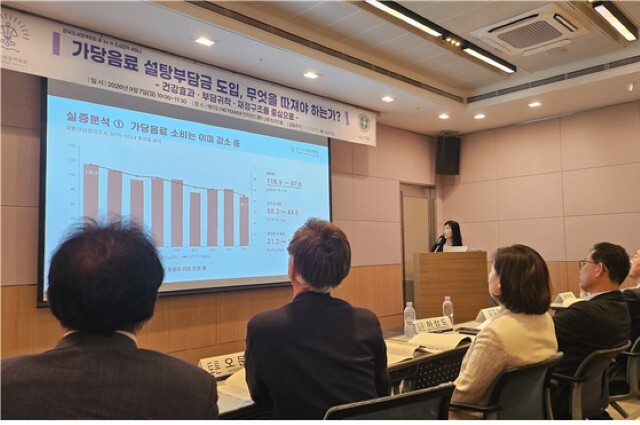
South Korean academics and tax specialists have called for a cautious approach to a proposed levy on sugar-sweetened beverages, arguing that it could impose a disproportionate burden on low-income and younger consumers. The issue was examined at the 34th Tax Policy Seminar, held in Seoul’s Yeouido district on the 7th by the Korean Association of Tax Policy and the Korea Taxpayers’ Association.
The proposal covers beverages containing added sugars such as sugar or syrup. According to The Fact and Financial News, Myongji University professor Noh Jeong-ran presented an empirical analysis of raw data from the Korea National Health and Nutrition Examination Survey for 2016–2024, together with a simulation of how the proposed charge would be distributed among consumers.
Noh’s analysis found that the levy burden as a share of income would be approximately 8.4 times higher for households in the first income quintile than for those in the fifth quintile. A combined analysis of age and income also indicated that the burden would be concentrated among low-income young adults and adolescents. The researchers said this outcome could conflict with the public-health objective of the policy.
Consumption has already declined
The seminar also considered changes already taking place in the beverage market. Average daily consumption of sugar-sweetened beverages per person fell from 116.9 grams in 2016 to 87.0 grams in 2024, a decline of 25.6%, according to the analysis reported by both publications. The share of these drinks in total sugar intake also continued to fall.
Noh attributed the decline in part to the wider availability of zero-sugar beverages and reduced-sugar products. She argued that manufacturers and consumers were already supporting sugar reduction through market-led adjustments, without a levy. For beverage producers, this trend points to continuing demand for reformulation and a broader portfolio of low- and zero-sugar products.
Health benefits and fiscal design questioned
Participants also questioned whether higher beverage prices would necessarily reduce total calorie intake or improve health. Ha Sang-do, a Chung-Ang University professor and president of the Korean Society of Food Hygiene and Safety, said South Korea’s adult obesity rate under the OECD standard was 5.1%, while insufficient physical activity affected 61% of adults. He argued that obesity has multiple causes and that evidence on total calorie reduction and possible side effects should be assessed before introducing a tax or levy.
The proposed fiscal mechanism drew separate criticism. If the charge were collected for the National Health Promotion Fund rather than treated as a tax, Noh said it could bypass stricter parliamentary budget scrutiny. She also identified a policy contradiction: if consumption falls and the health objective is achieved, fund revenue declines; if revenue remains stable, the intended reduction in consumption has not occurred.
Nam Hye-jeong of Dongguk University said policymakers should examine substitution into other beverages and study how much of similar charges in overseas markets has been passed through to retail prices. She also called for an assessment that includes potential health benefits, rather than considering only the monetary burden on households.
Disclosure, education and producer incentives proposed
Speakers recommended non-price measures before a uniform charge. These included stronger nutrition labelling, health education targeted at adolescents and incentives for companies that voluntarily shift toward zero- and reduced-sugar products. Hong Ki-yong of Incheon National University supported an approach combining better consumer information with incentives for reformulation.
The discussion leaves beverage manufacturers, retailers and ingredient suppliers facing regulatory uncertainty, but it also clarifies the alternatives under consideration. A levy would directly affect pricing and potentially product demand, while disclosure rules and producer incentives would place more emphasis on reformulation, labelling and portfolio strategy. Seminar participants broadly supported the objective of improving public health, but said the distributional impact, substitution effects, price pass-through and fiscal oversight should be tested before South Korea adopts a nationwide levy.