South Korea sets up rice-processed food policy committee to fix processing-rice supply
The Korea Rice Processed Food Association has launched a Rice Processed Food Industry Policy Committee, chaired by former lawmaker Kim Choon-jin, and held its first meeting on the 29th of last month in Seoul. The body will work on the supply system for processing-use rice, domestic demand, K-Rice Food exports and the link to national food security. Processors say they cannot reliably obtain the rice quality they need despite a domestic surplus.
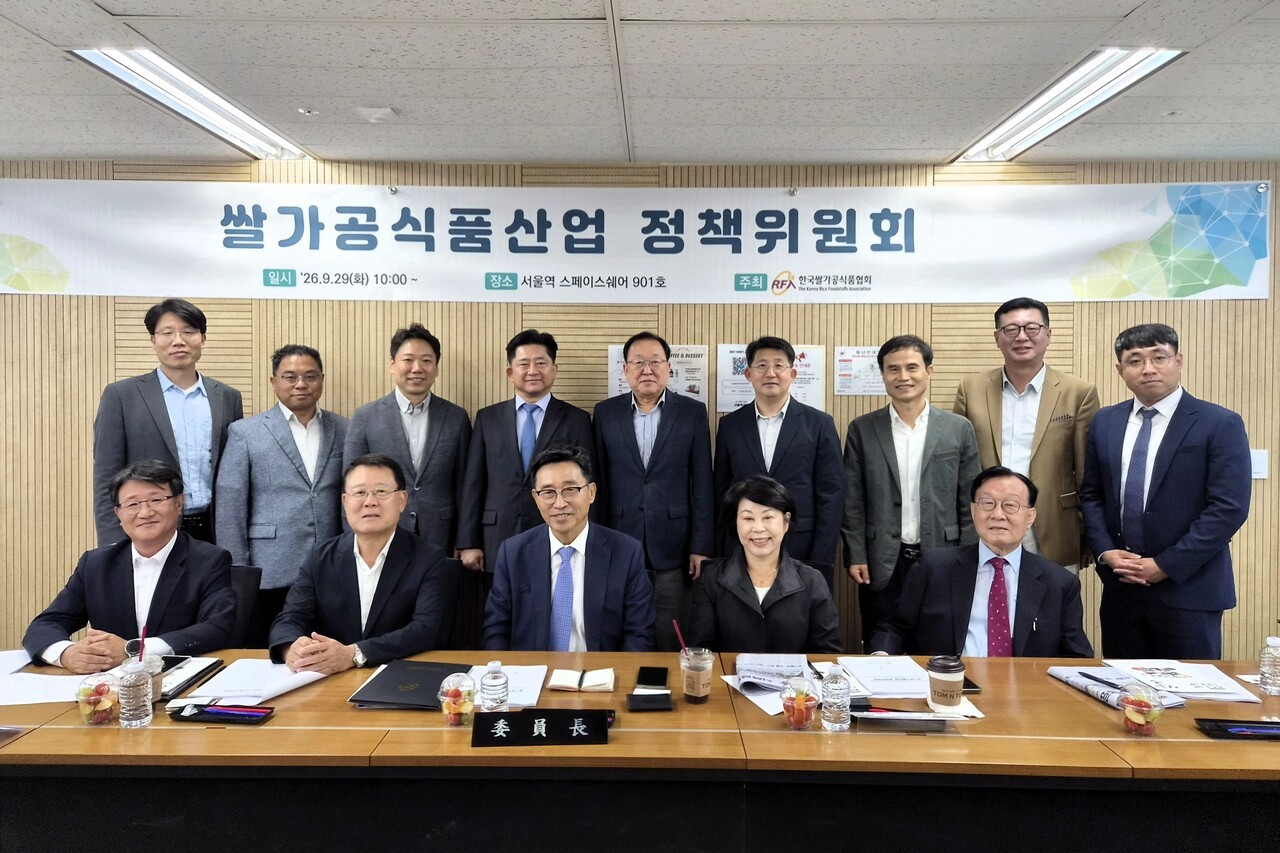
The Korea Rice Processed Food Association has launched a Rice Processed Food Industry Policy Committee to draft medium- and long-term industrial policy for a sector that is expanding on domestic shelves and in export markets while its members report difficulty securing processing-grade rice. The association held the committee's first meeting on the 29th of last month at Space Share near Seoul Station, Thinkfood reported.
According to Agrinet, the committee was formed out of the need for a framework that links rice production, supply and demand, processing, distribution, consumption, exports and food security organically, instead of responding to each issue separately as it arises. The same report lists stable raw material procurement for processing-use rice, quality improvement, expansion of the domestic consumption market and stronger export competitiveness as the reasons behind the launch.
Raw material supply named as the starting point
Participants at the first meeting agreed that industrial competitiveness begins with a system able to deliver rice of the quality processors need at the time they need it, and that the current supply system for processing-use rice has to be improved. Thinkfood reported that the association presented the state of the industry and its main pending issues, after which members discussed the policy tasks they consider most urgent.
The committee is chaired by Kim Choon-jin, a former member of the National Assembly who sat on its Agriculture, Food, Rural Affairs, Oceans and Fisheries Committee. Its members are drawn from academia and research institutes in agriculture, food, economics and food security, as well as from industry, distribution, consumer organisations and the media. Both outlets report that the body is designed to work as a private-sector policy platform rather than an advisory panel, identifying problems on the ground and developing them into specific proposals for the government and the National Assembly. Its five stated areas of discussion are:
- stable procurement of processing-use rice and improvement of the supply system
- expansion of the domestic market for rice-based processed foods
- wider K-Rice Food exports and a stronger base for entering overseas markets
- alignment between national food security policy and the rice processing industry
- reform of the laws and institutions governing the industry
“For the rice processing industry to keep growing, we have to address stable supply and quality improvement of processing-use rice, a broader domestic consumption base, export competitiveness and the link with food security together,” Kim said in remarks carried by both publications. He added that the committee would gather the views of specialists and of companies on the ground to identify the policies the industry needs and present practical alternatives to the government and parliament.
Exports: K-food popularity has yet to convert
Rice consumption patterns in Korea are changing quickly, and the market for processed rice products — tteok rice cakes, instant cooked rice, rice snacks and rice beverages — has been growing, Thinkfood reported, with the spread of K-food widening opportunities abroad. Companies nonetheless continue to raise raw material security, quality, domestic demand and export competitiveness as unresolved problems.
Members argued at the first meeting that turning K-food's popularity into actual export growth requires government export support programmes to be connected with companies' own overseas market development, alongside export market diversification and stronger local distribution networks in destination markets.
From surplus outlet to strategic industry
Committee members pressed for the sector to be treated as more than an industry that consumes leftover rice. In the framing reported by Thinkfood, rice processing should be positioned as a strategic industry connecting supply-and-demand stabilisation, stockpiling, processing, consumption and exports, and supporting the country's capacity to respond in a national food crisis. Agrinet reported the same point of agreement at the meeting.
Next steps
The association said it will use the input from the first meeting to define core policy tasks by area and prepare implementation plans, collecting further industry views through expert roundtables and policy debates and channelling the resulting agenda into government policy recommendations and legislative or institutional change in the National Assembly. Yoon Jae-don, the association's standing executive director, said the industry's issues run from raw material supply through production, distribution, consumption and exports and are interlocked, so no single area can resolve them alone; the committee, he said, would keep collecting views from the field and turn them into policy and institutional changes that companies can feel.