South Korea resumes chicken and egg exports to Hong Kong after avian influenza suspension
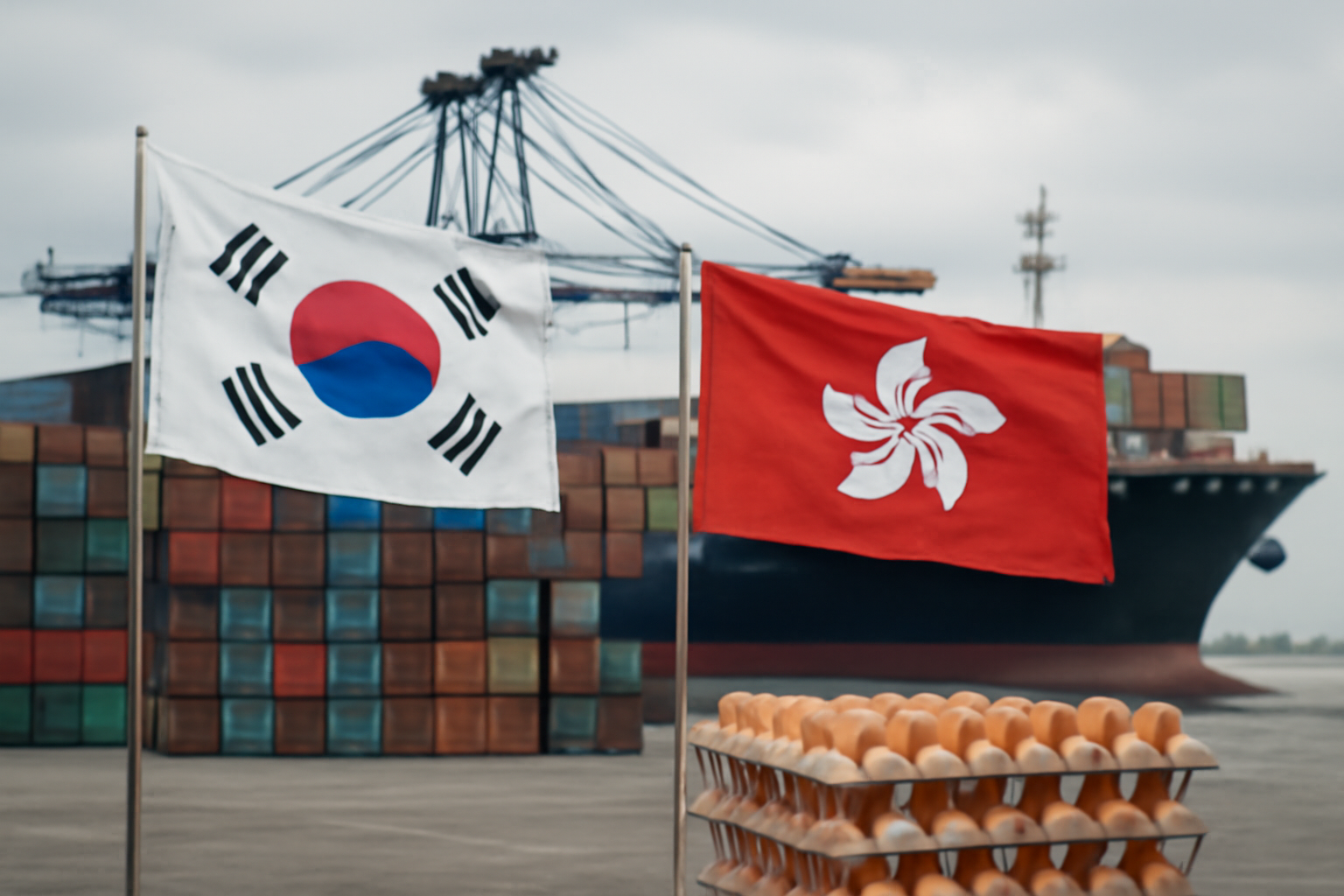
Hong Kong has fully reopened its market to fresh poultry products from South Korea following an avian influenza-related suspension. Chicken and egg exports from 36 affected cities and counties can resume after the two governments completed quarantine negotiations.
Hong Kong removes remaining poultry restrictions
South Korea has regained full access to the Hong Kong market for fresh poultry products after completing quarantine negotiations related to highly pathogenic avian influenza. The reopening covers chicken, eggs and other fresh poultry products whose shipments had been suspended following outbreaks in South Korea.
South Korea’s Ministry of Agriculture, Food and Rural Affairs said it had concluded talks with the Hong Kong government and that exports could resume from the 20th. The agreement restores eligibility for 36 South Korean cities and counties that had been unable to ship fresh poultry products to Hong Kong since June last year.
The measure represents a full reopening rather than a limited relaxation for selected products. Poultry businesses in all 36 affected administrative areas can again use the Hong Kong channel, subject to the applicable veterinary and export procedures.
A year-long disruption for poultry suppliers
The suspension removed an overseas outlet for South Korean chicken and egg suppliers for roughly a year. Highly pathogenic avian influenza commonly leads importing markets to restrict products from affected areas while veterinary authorities assess disease risks and negotiate the conditions required for trade to restart.
In this case, the conclusion of government-to-government quarantine negotiations was essential. Fresh chicken and eggs are sensitive products in animal-health regulation, and access depends on the importing authority accepting the exporting country’s disease-control and certification arrangements.
The reopening does not itself guarantee an immediate return to previous shipment levels. Exporters must reconnect with buyers, schedule production and logistics, and comply with Hong Kong’s import requirements. The decision nevertheless removes the central regulatory barrier that had prevented suppliers in the 36 cities and counties from serving the market.
Export recovery opportunity for South Korean producers
For South Korea’s poultry industry, restored access creates an opportunity to rebuild sales of both chicken and eggs. The inclusion of multiple fresh poultry categories gives processors, farms and trading companies a broader route back into Hong Kong than a product-specific reopening would have provided.
The commercial effect will depend on how quickly Hong Kong importers renew orders and how much supply South Korean companies can allocate to exports. Companies must also manage the continuing risk that new animal-disease events could again affect market access. Disease surveillance, farm biosecurity and reliable veterinary documentation therefore remain directly connected to export continuity.
Hong Kong buyers gain another eligible source of fresh poultry products, while South Korean suppliers regain access to a market that had been closed to the affected regions since June last year. The reopening may also support the poultry industry’s wider export recovery by demonstrating that the two authorities were able to settle the required quarantine conditions.
Market access remains tied to animal health
The episode shows how quickly animal-health events can interrupt trade in fresh food products. Even when production continues, exporters can lose access until importing and exporting authorities agree that sanitary risks are adequately controlled.
With the negotiations completed, the immediate task shifts from diplomacy to commercial execution. Producers and exporters can approach Hong Kong customers again, but stable trade will depend on compliance, disease prevention and the absence of further restrictions. For the 36 cities and counties covered by the decision, the reopening restores an export option that had remained unavailable for about a year.