South Korea to replace renewable certificates with long-term power contracts
South Korea will phase out its renewable portfolio standard and shift new solar and wind projects to competitive tenders from 2027. Winning projects will sell electricity to Korea Electric Power Corporation under long-term fixed-price contracts, while the existing REC market will remain temporarily in place.
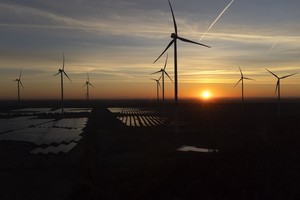
A 15-year support system gives way to tenders
South Korea will phase out the renewable portfolio standard, or RPS, that has supported its renewable energy market since 2012. Under the revised Act on the Promotion of the Development, Use and Diffusion of New and Renewable Energy, the replacement system will take effect on January 1, 2027, ESG Economy reported. New solar and wind projects will compete for government-defined volumes rather than depend on sales of renewable energy certificates, or RECs.
Under the RPS, large power producers had to supply a specified share of their electricity from renewable sources. They could meet the obligation by building their own projects or buying RECs issued to other renewable generators. Solar operators consequently earned revenue from both the system marginal price, or SMP, for electricity and REC sales. The government credits this system with expanding renewable deployment, but says volatile REC prices, complex trading arrangements and limited pressure on generation costs made reform necessary.
Fixed prices could improve project financing
In the new contract market, the government will set procurement volumes and ceiling prices for individual technologies. Developers will submit bids at or below the ceiling, and successful projects will sign long-term fixed-price power purchase agreements with Korea Electric Power Corporation. The source notes that contracts could run for periods such as 15 or 20 years, allowing banks and investors to estimate future cash flow more reliably than under exposure to both SMP and REC prices.
This change is especially significant for capital-intensive offshore wind projects, which often rely heavily on project finance. Stable contracted revenue could reduce lenders’ risk, financing costs and developers’ required returns. However, access to that certainty will depend on winning a tender. For new solar projects, the commercial model will shift from building capacity and selling RECs to securing a competitively priced contract before construction. Smaller developers may struggle against large bidders, so the government plans a separate contract market for small installations; detailed eligibility and operating rules remain to be set.
Price will not be the only selection criterion
Bids will also be assessed on non-price factors, including contributions to domestic industry, supply chains and energy security. This could give South Korean manufacturers some protection from competition with Chinese solar companies that combine large production capacity with low prices. The approach also aligns renewable procurement with government efforts to strengthen domestic supply chains and develop technologies including perovskite-silicon tandem solar cells. The final weighting between price and industrial criteria could materially affect equipment suppliers and project costs.
The transition will not eliminate RECs immediately. Existing projects can generally continue receiving certificates for up to 20 years under their current arrangements, while the REC spot market will operate for three years after the revised law takes effect, through December 31, 2029. The two systems will therefore coexist, creating a risk of price distortions between legacy projects and new tenders. After a public hearing on September 30, the government plans to complete secondary regulations by year-end and announce the first solar and wind tenders after the law takes effect. For developers and financiers, the key market signal will move from the daily REC price to ceiling prices, competition levels and awarded contract prices.