South Korea Removes Sales Threshold for Online Agricultural Wholesale Market
South Korea will abolish the minimum annual transaction requirement for sellers joining its online agricultural wholesale market. The wider access will be accompanied by inspections, standardized product information and a seller certification system.
Transaction threshold to be abolished
South Korea is removing the transaction-size requirement for sellers seeking access to the country’s online agricultural wholesale market, a step expected to bring more small and medium-sized producer organizations and distributors onto the platform. Agriculture, Fisheries and Livestock News reported that the Ministry of Agriculture, Food and Rural Affairs and Korea Agro-Fisheries & Food Trade Corporation, known as aT, approved the change at the second Market Management and Operations Committee meeting of 2026.
The meeting was held on the 18th at the aT Center in Yangjae-dong, Seoul. Under the decision, the eligibility rule requiring prospective sellers to have recorded at least KRW 1 billion in transactions during the previous year will be abolished from the first day of the following month.
The measure completes a two-stage relaxation of the market’s entry rules. At a committee meeting in September last year, the ministry and aT had already reduced the qualifying threshold from KRW 2 billion to KRW 1 billion. Removing it entirely shifts the focus from a seller’s historical turnover to its ability to meet the market’s operating and quality requirements.
Quality controls expand as access widens
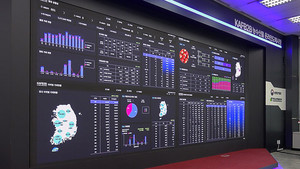
aT is strengthening oversight in parallel with the removal of the turnover test. Because transactions take place without buyers physically examining goods before purchase, the agency is seeking to improve the consistency of product descriptions and reinforce confidence in the quality delivered by sellers.
This year, aT established a cooperation framework with the National Agricultural Products Quality Management Service and appointed 49 quality managers for the online wholesale market. The managers are visiting approximately 700 seller locations to assess their quality-control practices directly. This approach gives the authorities a way to monitor a larger seller base without continuing to use company size as a proxy for reliability.
The agency also plans to distribute standardized guidelines for entering product information, helping buyers receive sufficient and more consistent details before completing a transaction. A separate evaluation system will assess sellers’ quality-management standards, with certification to be awarded to businesses that pass the verification process. The controls are intended to reduce information gaps that can be particularly significant in remote trade in perishable agricultural products.
More competition for agricultural distribution
The policy could broaden competition in a wholesale channel that previously excluded businesses unable to demonstrate the required annual turnover, regardless of their product quality or commercial readiness. Competitive regional producer groups and smaller distributors may now gain a new route to buyers, while established sellers will face a wider field of suppliers. For buyers, the practical benefit will depend on whether the new inspection, information and certification measures produce comparable quality signals across the expanded marketplace.
aT Vice President Kim Chang-guk said the removal of the transaction requirement was expected to expand participation by competitive small and medium-sized production-area organizations and distributors and help them secure new sales channels. He added that aT aims to lower entry barriers while raising transaction confidence. The next test for the platform will be whether it can convert broader participation into sustained trading activity while keeping product disputes and quality inconsistencies under control.