South Korea Targets Premium Oil Market With High-Lignan Sesame and Omega-3 Perilla Varieties
South Korea's National Institute of Crop Science has developed sesame varieties with about three times the lignan content of conventional seed and a perilla variety with roughly 66% alpha-linolenic acid. Sesame oil exports rose 28% last year and reached $8.43 million in the first half of this year. Pilot production complexes are being set up in Andong, Jinju and Gochang ahead of commercial launches.
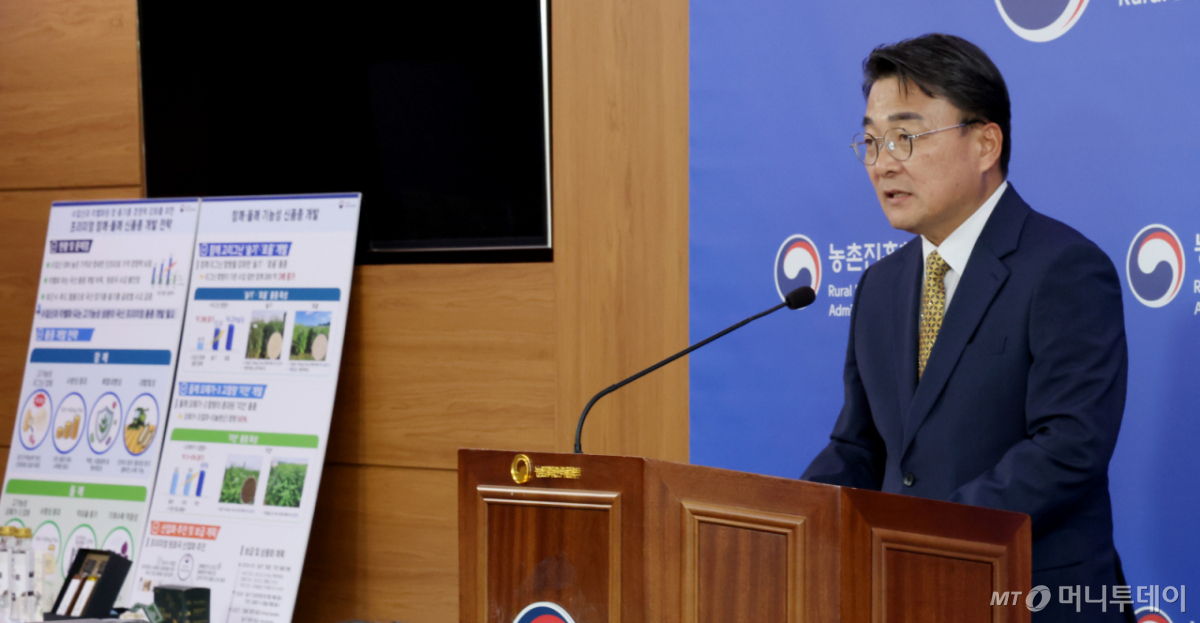
South Korea is attempting to move its sesame and perilla oils out of price competition with cheap imports and into a functional-food premium segment. The Rural Development Administration’s National Institute of Crop Science said on 16 September that it had developed two sesame varieties, “Seulgi” and “Roum”, and one perilla variety, “Jian”, and is now proceeding with seed distribution and commercialisation, according to Money Today.
The export record behind the push is small but growing. Sesame oil export revenue rose 28% last year from the previous year, and first-half earnings this year came to $8.43 million, the highest for that period on record, Money Today reported. The institute’s stated view is that raw material, not branding, decides competitiveness in global markets, and that undercutting cheaper foreign seed on price has a ceiling.
Lignan content about three times higher
“Seulgi” and “Roum” carry 13 to 14 milligrammes of lignan per gramme of seed, against 4 to 5 milligrammes in imported and conventional sesame — roughly a threefold difference. Lignan is sesame’s principal antioxidant compound. Institute research reported improvement in long-term memory, protection and regeneration of nerve cells, and liver protection. Because lignan is fat-soluble, it remains in the product after pressing, which matters for processors selling on composition rather than flavour alone.
Agronomic performance was lifted alongside composition. Both varieties yield 130 to 150 kilogrammes per 10 ares (1,000 square metres), 6 to 8% above the reference variety “Geonbaek”. “Roum” also resists pod shattering at harvest, making mechanical harvesting feasible — a direct response to labour shortages in farming areas and to production costs.
Perilla bred for omega-3 and extraction rate
The perilla variety “Jian” is built around alpha-linolenic acid, the plant-based omega-3 fatty acid, at about 66%, compared with 63 to 64% in the existing varieties “Dayu” and “Deulsaem”. The institute said its research established effects on the protection of damaged brain cells and on learning and memory.
“Jian” produces 142 kilogrammes per 10 ares, 8% more than “Dayu”, and has an oil extraction rate of 33.3%, reported as 3.4 points higher. The combination gives growers more volume per unit of land and processors more oil from the same weight of seed.
Production bases and first products
Demonstration cultivation complexes are being established this year in Andong in North Gyeongsang Province, Jinju in South Gyeongsang Province and Gochang in North Jeolla Province, with the institute working alongside processors on commercial products. In July it signed a three-way agreement with Andong City and a large oils and fats processor. A premium sesame oil using “Seulgi” as its raw material is scheduled for the second half of this year, and “Jian” is being developed into plant-based omega-3 capsules.
- Sesame “Seulgi” and “Roum”: lignan 13-14 mg per gramme; yield 130-150 kg per 10 ares
- Perilla “Jian”: alpha-linolenic acid about 66%; yield 142 kg per 10 ares; extraction rate 33.3%
- Pilot production sites: Andong, Jinju, Gochang
Seed supply and breeding priorities
Seed distribution will be widened to match demand from the field. “Roum”, the machine-harvestable variety, will be supplied from 2027 through the Korea Agriculture Technology Promotion Agency, while “Seulgi” and “Jian” are to be expanded around main growing regions and processor requirements. The institute is also developing varieties suited to paddy-field cultivation and perilla lines with slower rancidity, aimed at longer distribution chains and export.
The institute framed the programme as a change in breeding objectives: from varieties that are easy to grow, selected mainly for yield and pest resistance, to varieties that sell, combining functional content, mechanisation and processing suitability.
Kim Byung-seok, director of the National Institute of Crop Science, said industrialising the new sesame and perilla varieties strengthens differentiation from low-priced foreign products and lays a basis for raising the value of Korea’s traditional oils, adding that seed distribution, larger production complexes and cooperation with industry would be used to raise farm incomes and strengthen the global competitiveness of Korean oils.