South Korea’s pork imports rise 18.1% as Spanish supply and frozen belly gain
South Korea imported 343,000 tonnes of pork in the first half of 2026, up 18.1% year on year. Spanish supply rose 49.2% and frozen pork belly volumes increased 37.4%, while domestic carcass prices also remained above last year’s level.
First-half imports reach 343,000 tonnes
South Korea’s pork imports increased sharply in the first half of 2026, with the expansion concentrated in European supply and pork belly. According to CWON Economy, citing a Korea Rural Economic Institute report issued on July 31, imports reached 343,000 tonnes between January and June. That was 18.1% more than in the same period of 2025.
Imports from the European Union rose 49.2%, while shipments from Spain recorded the same 49.2% growth rate. By contrast, volumes originating in the United States declined 5.5%. The figures point to a significant change in the composition of South Korean sourcing, even though the available data do not provide absolute tonnage for each supplying country.
The average import unit value was $3.65 per kilogram, broadly unchanged from the previous year. South Korea also applied a 0% tariff-rate quota to 12,000 tonnes of pork in 2026, creating additional room for importers to bring in foreign product without the normal tariff burden.
Frozen pork belly leads growth
The increase was particularly strong in pork belly, a central product for both South Korean restaurants and meat retailers. Total frozen pork imports rose 11.9%, but frozen pork belly imports climbed 37.4%. Chilled pork belly volumes increased by a more moderate 10.6%.
Frozen belly accounted for 22.9% of all imported pork during the first half, while chilled belly represented 4.0%. This product mix matters for processors, distributors and food-service buyers because frozen imported belly does not compete with every domestic cut or sales channel on equal terms. Origin, quality, storage format and target customers can all affect how additional supply reaches the market.
The data therefore do not show that higher imports caused domestic prices to rise, nor do they prove that imports failed to contain prices. They establish only that import volumes and domestic carcass prices increased during the same period. Assessing the competitive effect requires cut-level import data alongside regional retail prices and point-of-sale volumes.
Domestic carcass and restaurant prices remain firm
Despite greater foreign supply, South Korea’s average domestic pig carcass price reached 6,155 won per kilogram in the first half, CWON Economy reported. That was 9.0% above the 5,645 won recorded a year earlier and 14.4% higher than the normal-year average of 5,381 won. In the second quarter alone, the price averaged 6,567 won per kilogram, up 8.4% year on year.
The quoted benchmark covers hot-water-dehaired carcasses excluding off-grade animals. It is therefore a wholesale production indicator rather than a direct measure of the price consumers pay for a specific cut. Domestic and imported pork can serve different buyers, particularly when the imported product is frozen belly and the domestic benchmark covers the full carcass.
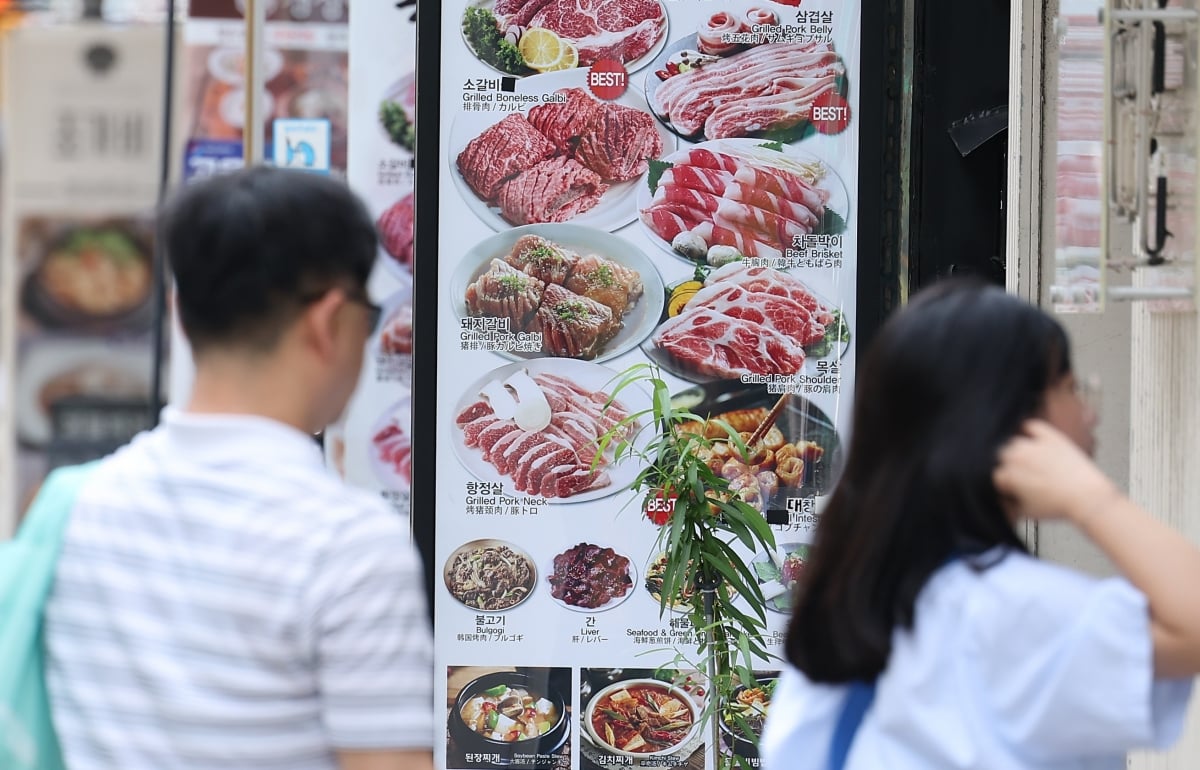
Hankyung reported that domestic belly sold in supermarkets for slightly more than 5,000 won per 200 grams but could cost well above 20,000 won when served in restaurants. Although farmgate and retail pork prices had begun to ease as supply increased, restaurant samgyeopsal prices remained elevated. The publication attributed the gap not only to raw meat costs but also to accumulated increases in wages, rent, electricity and gas. For restaurant operators and suppliers, this means cheaper or more plentiful raw material may not translate quickly into lower menu prices.