South Korea and Mexico to Adapt Small Farm Machinery and Drought-Resistant Rice
South Korea’s Rural Development Administration and Mexico’s INIFAP will begin joint research in 2027 to adapt Korean small and midsize agricultural machinery for Mexican farms. The partnership will also develop drought-resistant rice varieties and cultivation methods, while sharing field-testing data with Korean manufacturers seeking access to Latin America.
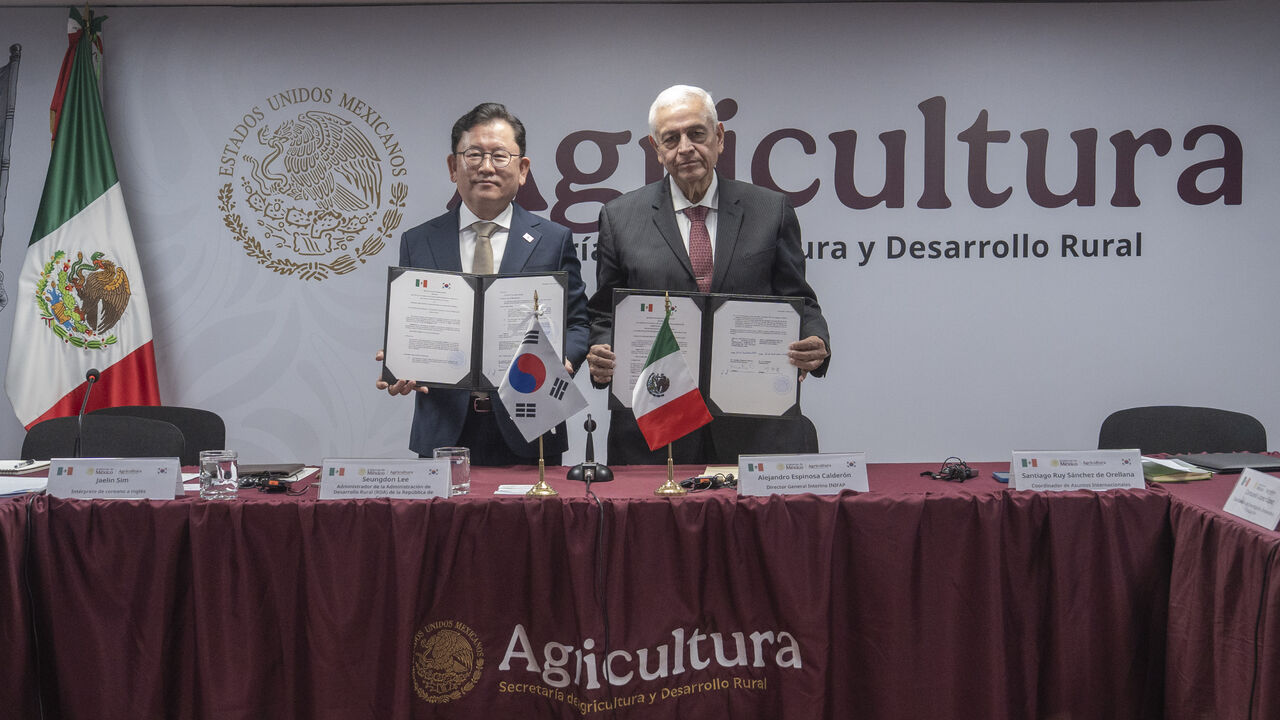
Joint research scheduled to begin in 2027
South Korea and Mexico are establishing a joint research program to adapt Korean small and midsize agricultural machinery to Mexican farming conditions. The work is intended to support smaller Mexican farms while giving Korean equipment manufacturers a practical route to test technology for Mexico and other Latin American markets.
South Korea’s Rural Development Administration, or RDA, signed a memorandum of understanding with Mexico’s National Institute of Forestry, Agricultural and Livestock Research, known as INIFAP, at the Ministry of Agriculture and Rural Development in Mexico City on the 23rd. The RDA announced the agreement on the 28th, according to South Korean agricultural newspaper Nongmin.
The agreement follows discussions with a Mexican delegation that attended a meeting of the Asia-Pacific Economic Cooperation Agricultural Technical Cooperation Working Group in South Korea in August last year. The two sides agreed at that meeting to pursue the memorandum, providing the basis for a more formal agricultural research partnership.
Machinery will be tested under local conditions
From 2027, the RDA and INIFAP plan to conduct two joint projects. The first will focus on localizing Korean small and midsize farm machinery for Mexico’s smallholder and medium-scale producers. The second will develop drought-resistant rice varieties and cultivation technologies designed to improve Mexico’s food security.
The machinery project goes beyond promoting existing Korean models. The RDA said it would incorporate obstacles encountered by South Korean agricultural machinery companies seeking to enter the Mexican market into the research program. Equipment and related technologies can therefore be evaluated against local production conditions, farm requirements and operating constraints before manufacturers pursue wider commercial deployment.
Information and technical findings collected during field verification will be shared with participating Korean companies. That arrangement could reduce uncertainty for manufacturers that lack direct operating experience in Mexico. It may also help them determine which machines require modification, rather than assuming equipment developed for South Korean farms can be transferred without changes.
Mexico becomes a testing point for Latin America
The cooperation gives Korean machinery companies an institutional partner for local validation. INIFAP’s participation links equipment development to Mexico’s public agricultural research system, while the RDA can connect the findings with manufacturers already considering overseas expansion. Nongmin reported that the agency intends to use the project to support entry not only into Mexico but also into the broader Latin American market.
The rice project adds a crop-production component to the machinery partnership. The two research agencies will jointly develop rice varieties able to withstand drought and will work on cultivation practices suited to those varieties. The initiative connects agricultural mechanization with resilience to water stress, although the agreement does not specify target yields, project budgets, participating companies or a timetable for commercial introduction.
RDA Administrator Lee Seung-don said the memorandum had created a foundation for practical agricultural research between South Korea and Mexico. He said developing and verifying technology suited to local demand would support Mexican agriculture and help South Korean agricultural companies expand into Latin America. The commercial impact will depend on the results of field testing and on whether manufacturers can turn the research findings into equipment suited to Mexican producers’ needs and operating conditions.