South Korea Forecasts Lower Cattle and Hog Supply and Higher Meat Prices
South Korea’s cattle and hog inventories have declined, and slaughter volumes are forecast to fall. KREI expects tighter supply to lift annual wholesale prices for Hanwoo beef by about 14.5% and pork by about 2.4%.
Livestock inventories contract
South Korea is heading into a period of tighter domestic beef and pork supply as cattle and hog inventories decline. According to Newsis, citing the Korea Rural Economic Institute’s Agricultural Outlook Center, annual slaughter volumes are expected to fall from the previous year, supporting higher wholesale meat prices.
The combined inventory of Korean native and beef cattle stood at 3.289 million head in June, down 4.9% year on year. The Hanwoo herd fell 5.2% to 3.154 million head, while the number of breeding cows declined 2.7% to 1.538 million. These figures point to a smaller production base, with the reduction expected to continue through the end of the year.
Hanwoo beef prices expected to rise sharply
KREI forecasts the Hanwoo inventory at 3.218 million head in September, 3.3% below the previous year, before declining to 3.156 million in December, a year-on-year decrease of 2.2%. The contraction will limit the number of animals available to processors and keep procurement competition firm.
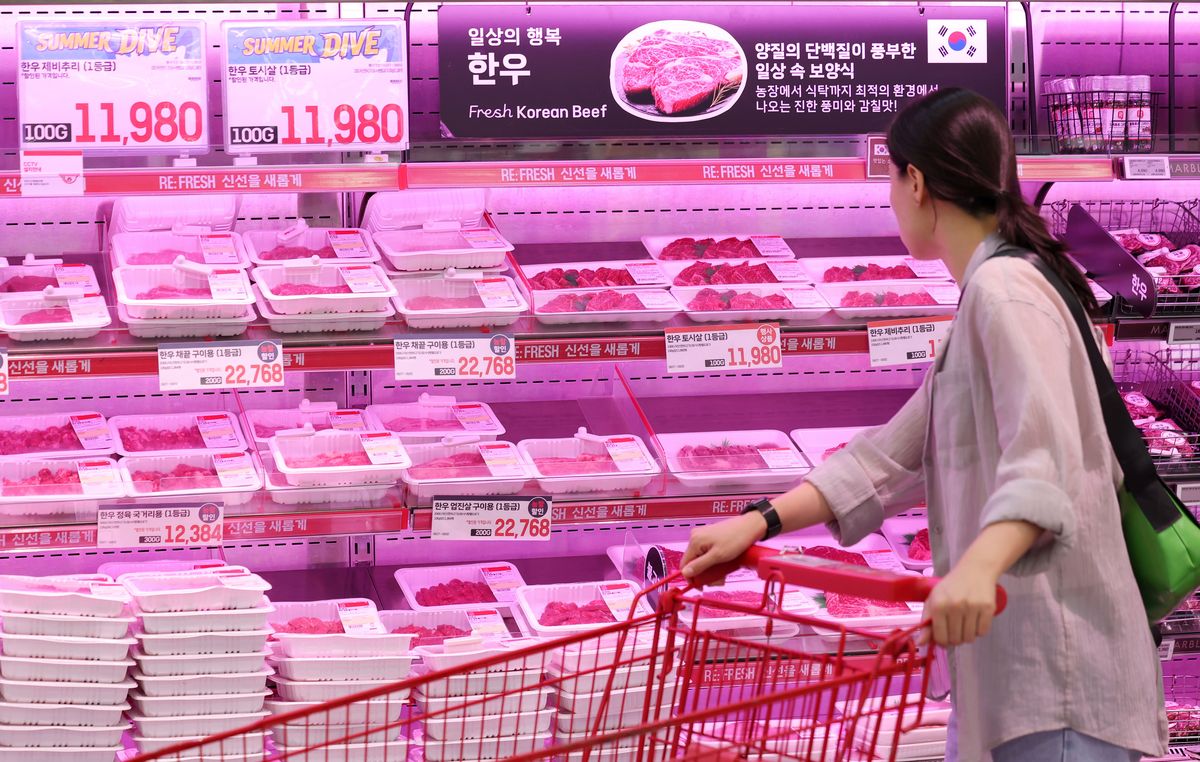
Average Hanwoo wholesale prices for the year are forecast at around 22,500 won per kilogram, approximately 14.5% higher than last year. During the four weeks before Chuseok, slaughter is expected to total about 96,000 head, compared with 112,000 a year earlier. Average wholesale prices during that period are projected at 24,000–25,000 won per kilogram, increasing costs for processors and retailers during an important seasonal demand window.
Hog slaughter also set to decline
South Korea’s hog inventory reached 11.70 million head in June, down 1.0% from 11.82 million a year earlier. Numbers of breeding sows, growing pigs and finishing hogs all declined. The September inventory is forecast at 11.75 million–11.99 million head, 0.7% lower than the previous year.
September hog slaughter is projected at 1.48 million–1.52 million head, a year-on-year decline of 7.8%. Wholesale pork prices for the month are expected at 6,400–6,600 won per kilogram, broadly in line with last year’s 6,499 won. For the full year, however, the average is forecast at 5,800–6,000 won per kilogram, about 2.4% above the previous year.
Feed costs add pressure to producer margins
The supply contraction coincides with higher livestock feed costs. KREI expects the import unit-price index for feed grains to be 8.9% higher year on year in the third quarter. In July, compound feed for beef cattle cost 551 won per kilogram, up 4.4% from a year earlier.
The center forecasts the international grain futures price index at 127.1 in the third quarter, an increase of 6.2% from the previous quarter and 20.2% from the same period last year. It identified concern about grain export disruptions linked to military tensions in the Black Sea region and crop risks caused by high temperatures in the US Midwest. For Korean livestock producers, higher feed expenses and smaller herds could constrain output, while processors, retailers and institutional meat buyers face firmer domestic procurement prices.