South Korea Moves to Merge KEPCO's Five Power Generators, Raising Competition Concerns
The South Korean government is pursuing a consolidation of the five power generation companies held under state utility KEPCO into a single enlarged entity referred to in Korean coverage as Korea Power Generation. Energy specialists warn the merged company's market power would weaken competition in the wholesale electricity market. Independent power producers are described as the most exposed group.
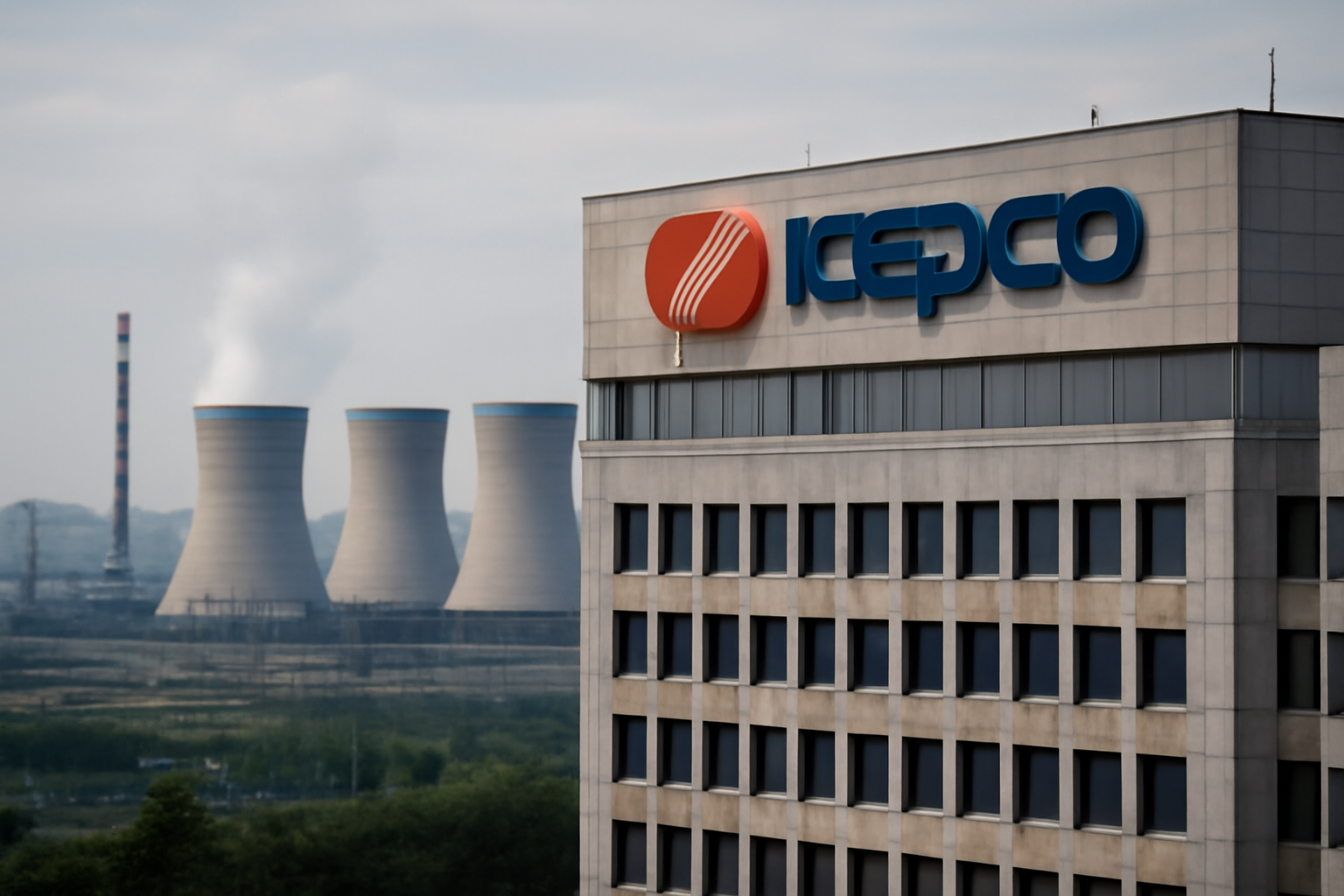
The South Korean government is pursuing the consolidation of the five power generation companies held under state-run Korea Electric Power Corporation (KEPCO) into a single enlarged entity, identified in Korean-language coverage as Korea Power Generation. Energy specialists have warned that concentrating the country's largest block of generating assets inside one company would expand its market power and damage the fairness of the electricity market.
One company in place of five
KEPCO's generation business is currently divided among five separate public companies, each with its own fleet, balance sheet and management. The restructuring under discussion would fold those units into one corporate entity. Whatever separation exists today between the five — in bidding behaviour, fuel procurement, investment planning and cost structures — ends when they answer to a single board.
The objection raised by energy experts is that the merged company would face the wholesale market as one participant rather than five. Scale of that kind affects more than negotiating leverage. It determines how much of total national generation sits behind a single set of commercial decisions, and how much of the market's output is priced by entities outside that perimeter.
The squeeze on private generators
Korean coverage frames the plan in stark terms for independent power producers, describing the merger as putting private generators on a death course. Private generators operate alongside the state fleet in the same wholesale market. Their economics depend on dispatch outcomes, on how prices are formed, and on the terms under which fuel is secured. A larger state counterparty with consolidated procurement and a single dispatch strategy moves all three of those variables at once.
For investors holding Korean independent generation assets, the practical question is sequencing: whether the rules governing dispatch and price formation are revised alongside the merger, or whether those rules remain unchanged while the composition of market participants shifts underneath them. The second outcome would leave private operators competing against a counterparty of a different order of size under a framework written for a more fragmented market.
Questions the plan leaves open
- Timetable — when the consolidation would take legal effect and in how many stages.
- Corporate structure — whether the five units become divisions of one company or subsidiaries of a holding structure.
- Competition review — whether the merger is subject to antitrust scrutiny and on what conditions it could be cleared.
- Market rules — whether dispatch, bidding and price-formation rules are amended in parallel.
- Treatment of private generators — what happens to existing contractual positions and to future entry.
None of these points has been settled in the reporting available, and each of them changes the commercial outcome materially. Until they are, capital allocation decisions in Korean generation are effectively on hold.
Why the fuel side matters
Korea's thermal power fleet runs on imported fuel, principally liquefied natural gas and coal. Procurement for that fleet is currently spread across five buyers with separate tender calendars and separate contract books. A single state buyer would concentrate that demand into fewer processes and fewer negotiating positions.
For suppliers selling into Korea, that consolidation cuts both ways. Fewer counterparties means fewer chances to place cargoes, and a larger counterparty negotiates from a stronger position on price and contract terms. For the Korean side, centralised purchasing is one of the clearest sources of cost saving in the merger case — and also one of the reasons private generators, which buy fuel on their own account, expect their relative position to worsen.