South Korea’s Frozen Bakery Market Reaches an Estimated 1 Trillion Won
South Korea’s frozen dough and frozen bakery market is estimated at about 1 trillion won as higher prices, labor costs and baker shortages reshape production. Food manufacturers are adding capacity while cafés and bakeries increasingly finish factory-prepared products in their own ovens.
Higher prices accelerate the shift to frozen bakery
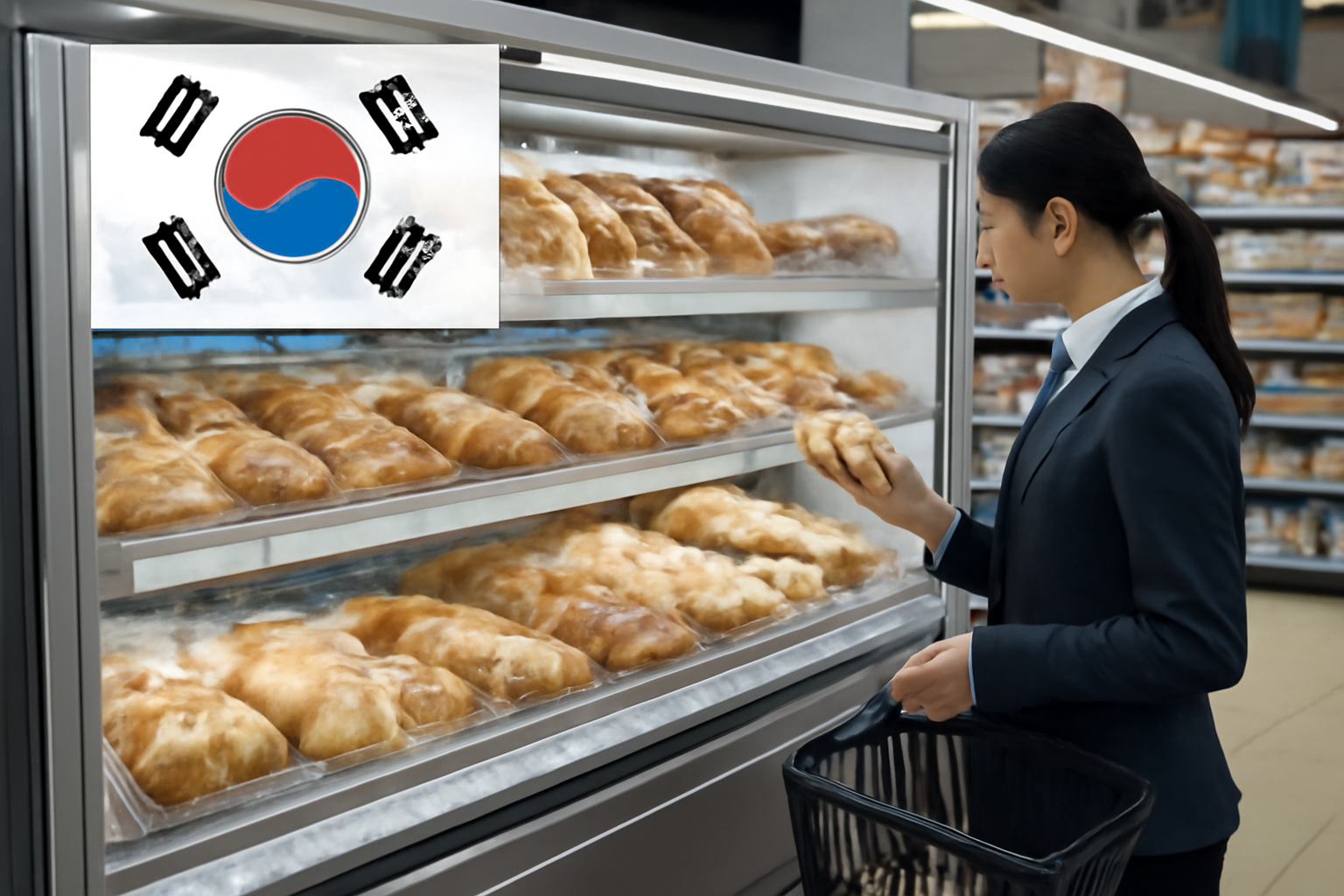
South Korea’s frozen dough and frozen bakery market has grown to an estimated 1 trillion won, as rising bread prices, labor costs and difficulties recruiting skilled bakers change how products are made and sold. Consumers are buying frozen sandwiches and croissants through supermarkets and online stores, while cafés and bakeries increasingly receive dough that has already been mixed, shaped and, in some cases, fermented at a factory.
The Korea Economic Daily reported that Paris Baguette recently raised prices on 127 products by an average of 5.0%. The increase covered 86 breads and 41 cakes and desserts. Its Sangmidang fresh bread rose from 3,900 won to 4,100 won, while castella increased from 2,400 won to 2,500 won. Tous les Jours raised prices on 76 bread and cake products by an average of 8.2%, and Samlip increased prices on 59 breads by an average of 9.4%.
Frozen dough offers operators a way to reduce the work performed in each store. Depending on the product, manufacturers mix flour into dough and complete shaping or fermentation before freezing it. Store employees then thaw or ferment the product and bake it. This allows outlets without a dedicated baker to offer croissants and pastries with a consistent appearance and taste, while baking only the required quantity can reduce waste.
Samyangsa expands ready-to-bake capacity
Manufacturers are increasing production capacity in response to the shift. Samyangsa invested 30.8 billion won in a 5,280-square-metre dedicated frozen-dough facility in Incheon and began operating it this year, according to The Korea Economic Daily. The plant can produce 5,000 tonnes annually, more than four times the capacity of the company’s previous pilot factory.
Samyangsa plans to expand output of ready-to-bake products during the second half of the year. As much as 95% of the baking process is completed at the factory before the goods are supplied frozen. Cafés and bakeries need to handle only limited final steps, such as the last fermentation and baking.
Compared with a conventional bakery process, the ready-to-bake system can reduce preparation time by as much as 95% and process costs by 40% to 50%, the report said. The economics are particularly relevant for independent cafés and larger chains that cannot easily employ skilled bakers. Centralized preparation also gives suppliers greater control over product consistency across multiple outlets.
Retail demand creates a second growth channel
Household demand is expanding alongside business-to-business sales. Sales volume for Shinsegae Food’s Vecchia & Nuovo frozen sandwich brand increased 195% last year and exceeded 5 million units. Its basil cheese ciabatta sandwich sold more than 40,000 units per month on average at Emart Traders. Frozen sandwich revenue increased another 58% year on year in the first quarter.
Samlip’s frozen bakery revenue rose 16% in the first quarter. CJ CheilJedang and other food companies are also expanding related product lines, intensifying competition for an early position in the market. Shinsegae Food plans to grow its frozen sandwich operation through café franchises and original development manufacturing. It has set an annual frozen sandwich sales target of 61 billion won for this year and aims to reach 73 billion won in 2028.
The change also complicates the meaning of “freshly baked” for customers. A product may come directly from a store oven without having been mixed or shaped on site. For producers and food-service operators, the 1 trillion won estimate signals a sizable supply market built around industrial preparation, frozen logistics and final baking close to the consumer. For traditional bakeries, it raises competition from outlets able to serve standardized baked goods with less labor, shorter preparation times and potentially lower waste.
Full market analysis