South Korean farmers shift from onions to garlic after spring price collapse
South Korean farmers plan to reduce onion planting after prices fell to 548 won per kilogram this spring. Intended onion acreage is down 6.3% and 10.8% below the historical average, while garlic planting intentions have increased 0.6%.
Onion prices fall to 548 won per kilogram
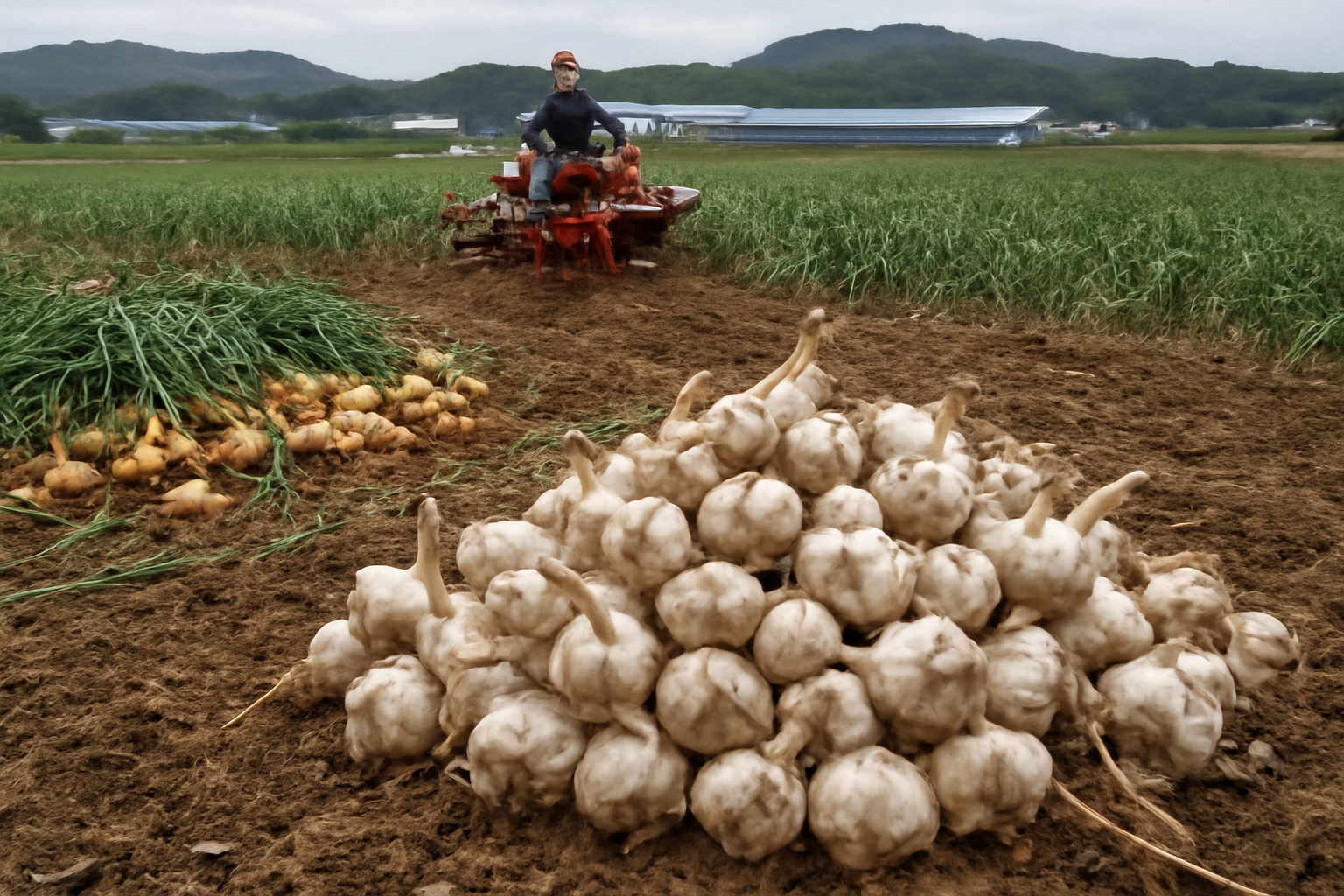
South Korean farmers are preparing to plant fewer onions after a sharp price collapse this spring pushed the crop’s value down to 548 won per kilogram. Some growers ploughed under onion fields rather than continue bringing the crop to market, illustrating the severity of the pressure on farm revenues.
The government responded by isolating 223 hectares from the market. Such measures restrict available supply, but the intervention has not prevented farmers from reconsidering their planting plans for the next production cycle. The consequences of the spring decline are therefore moving from immediate price management into longer-term decisions about land use.
For onion producers, the calculation involves more than the price of a single harvest. A collapse severe enough to make field destruction necessary raises questions about whether expected revenue can cover planting, crop care and harvesting costs. Reducing acreage is one way to limit exposure to another period of oversupply.
Planned onion acreage declines 6.3%
Farmers’ intended onion area is now 6.3% lower and stands 10.8% below the historical average. The figures indicate that the adjustment is not limited to a few farms affected by local conditions. It could materially reduce the planted area available for the country’s next onion crop.
Lower acreage may help bring production closer to demand if yields and weather conditions remain broadly comparable. However, the final effect on supply cannot be determined from planting intentions alone. Actual sowing, crop development, yields and the volume released from storage will also shape market availability.
The planned reduction creates different risks across the supply chain. Growers need protection from another glut, while processors, wholesalers and food-service buyers need sufficient and predictable volumes. If too many farms leave onions at the same time, the market could move from surplus toward tighter supply, particularly if the crop faces adverse growing conditions.
Higher garlic prices attract growers
Garlic is emerging as the main alternative. Planting intentions for garlic have risen 0.6% following stronger prices, and even farmers who previously concentrated on onions are considering changing crops. The increase is modest, but it points to a broader reallocation of land in response to the relative returns offered by the two markets.
The switch may support garlic availability, although a 0.6% increase in intended area does not by itself guarantee a comparable rise in output. Yields, input use and weather will determine how much additional garlic reaches the market. A concentration of new planting could also weigh on prices if production expands faster than demand.
For market participants, the central issue is the timing of the acreage response. The onion price collapse has already triggered government intervention and field destruction; the next phase will be visible in actual planting. Onion buyers will watch whether the 6.3% planned cut tightens supply, while garlic producers and traders will assess whether incoming acreage changes the balance of their market.