South Korea to expand soybean tariff quota by 10,000 tons to steady prices
South Korea plans to raise its concession-tariff market access volume for soybeans by 10,000 tons, according to Food News. The Ministry of Finance and Economy issued the draft amendment as a legislative notice on the 13th, aiming to stabilize consumer prices and protect domestic industry.
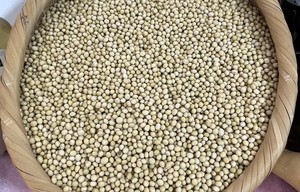
Seoul lifts soybean tariff-quota by 10,000 tons
South Korea plans to expand the tariff-concession market access volume for soybeans by 10,000 tons, aimed at stabilizing consumer prices and protecting related domestic industry. According to Food News (foodnews.co.kr), the government set out the plan in a partial amendment to the rules on increasing market access volume, issued as a legislative notice on the 13th.
The amendment was advanced by the Ministry of Finance and Economy, which put the draft out for public comment. The additional volume falls under the concession-tariff quota, meaning it enters at the lower in-quota duty rather than the higher rate applied to shipments beyond the quota. Food News reports the government's aim is to steady the cost of living for ordinary households and to protect the domestic industry tied to soybeans.
Why the quota is being raised
South Korea sources a large share of the soybeans it consumes for food from abroad, and the tariff-rate quota remains the main tool the government uses to manage how much product reaches the market at the reduced rate. Raising the market access volume by 10,000 tons increases the share of imports that clear customs at the preferential rate.
Under the concession-tariff regime, Food News notes, tariff concessions are used to resolve supply-demand imbalances in agricultural, forestry and livestock products, to protect the relevant domestic industry, and to secure a smooth supply of raw materials needed to earn foreign currency. The soybean adjustment is being made within that WTO-linked framework.
What it means for traders
For exporters, the change opens incremental room to ship soybeans into South Korea at the in-quota tariff, which is more competitive than the out-of-quota rate. The practical timing depends on completion of the legislative notice process before the higher volume takes effect.
For importers and processors, a larger low-duty quota lowers the landed cost of the marginal ton and supports margins on soybean-based products. As a supply-side measure rather than a price cap, the expansion works by adding volume at the preferential rate and leaves the market to set final prices.