South Korea to Merge Five Power Generators and Combine State Oil and Gas Companies
South Korea plans to combine five state-owned power generators into a single company and merge its national oil and gas corporations. The restructuring also provides for the liquidation of Korea Coal Corporation after its final mine closed, with the government seeking funds to address the company’s accumulated debt.
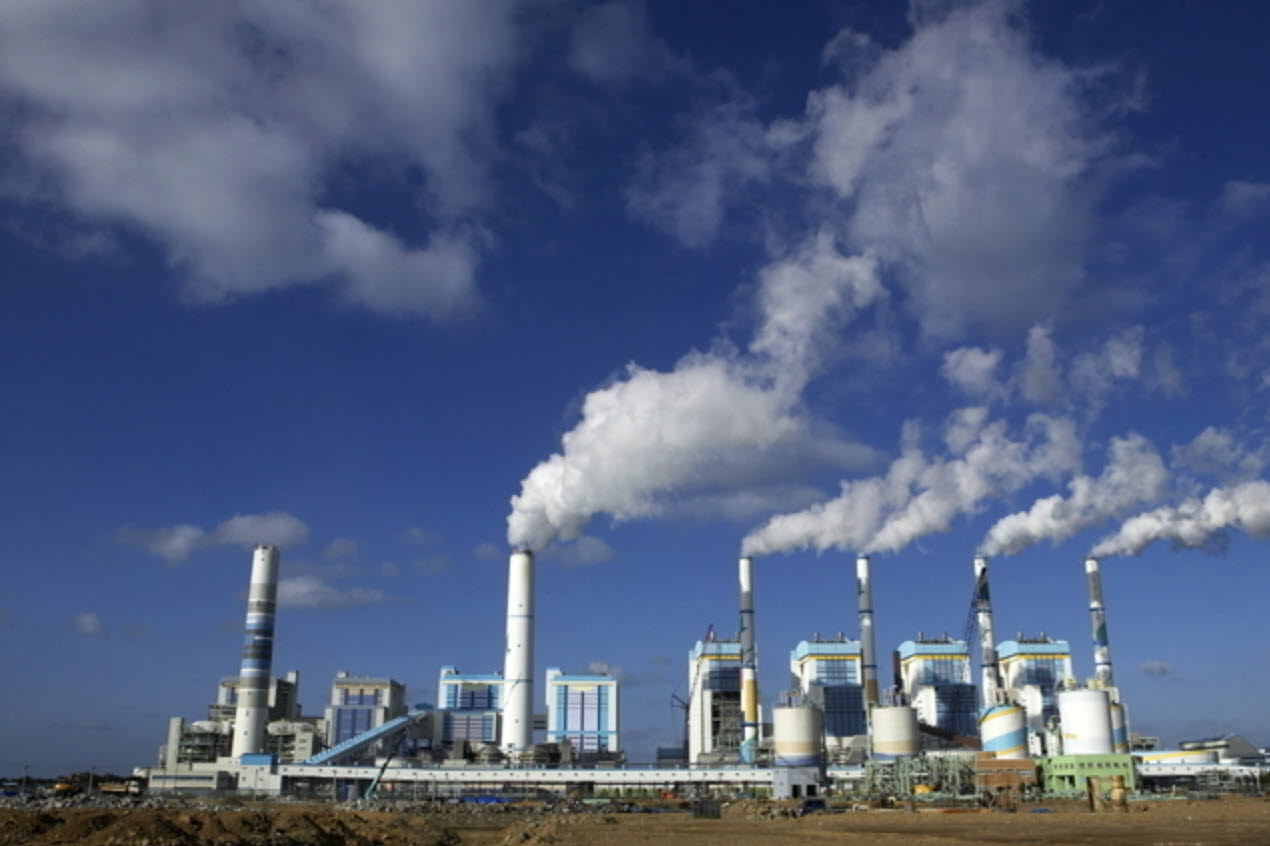
Government redraws state energy sector
South Korea’s government has announced a broad restructuring of state-owned energy institutions, including the consolidation of five power-generation companies and the combination of the country’s national oil and gas corporations. The plan would unwind part of the electricity-sector structure established in 2001 and create larger organizations responsible for power generation and energy-resource security.
According to Edaily, the measures form part of a government program to reduce overlapping functions and redirect public-sector capabilities. The wider reform is intended to reduce the number of public institutions by 109, including 15 organizations removed through strategic restructuring.
The five generators affected are Korea South-East Power, Korea Midland Power, Korea Western Power, Korea Southern Power and Korea East-West Power. They would be combined into a single entity provisionally named Korea Power Generation. The companies were separated in April 2001 as South Korea sought to introduce competition into electricity generation.
Power investment and procurement to be centralized
The five generators currently undertake plant construction and operation, fuel procurement, renewable-energy development and research separately. Edaily reported that each company invests about 50 billion won annually in research and development and approximately 200 billion won in renewable-energy construction projects.
The government expects a consolidated balance sheet to provide greater investment capacity. Joint purchases of fuel and maintenance materials, together with the rationalization of overlapping staffing functions, are also intended to improve profitability. For fuel suppliers and equipment vendors, the merger could concentrate purchasing decisions in a single counterparty and change the structure of tenders previously conducted by five companies.
The proposed generator would establish dedicated units for renewable-energy expansion and the retirement of coal-fired generation. A renewable-energy headquarters would oversee large projects such as offshore wind, while a just-transition headquarters would manage coal-plant closures. Three or four regional renewable-energy divisions are planned to support solar and onshore wind development.
The government said the new structure is needed to strengthen climate action and energy security and to provide stable electricity for large projects. Edaily separately reported concerns about workforce allocation, regional economic effects and reduced competition. The government plans to guarantee employment succession for staff other than executives and says pay and employment conditions will not deteriorate because of the integrations.
Oil and gas companies set for combination
Korea National Oil Corporation and Korea Gas Corporation would be merged into a new organization provisionally called the Energy Resources Corporation. The government argues that geopolitical risks and supply-chain disruptions require an integrated national strategy covering both oil and gas.
According to Edaily, officials expect the larger entity to gain economies of scale and stronger bargaining power with producing countries and global energy companies. The government also believes consolidation could improve South Korea’s position in bidding and negotiations for overseas resource blocks. Korea National Oil Corporation’s oil-stockpiling operations and its limited exploration and production functions would move to the combined corporation.
Functions related to improving the domestic distribution structure, including Korea’s lower-cost fuel-station program, would instead transfer to the Korea Petroleum Quality and Distribution Authority. The separation indicates that the merged resource company will concentrate on strategic stocks, upstream activity and national supply security rather than fuel retail policy.
Coal corporation faces liquidation
Korea Coal Corporation will be liquidated after the closure of all its mines effectively ended its operating role. Its last mine, the Dogye operation in Samcheok, closed in June 2025. Declining coal demand and persistent losses had pushed the corporation’s debt to 2.59 trillion won by the end of 2025, Edaily reported.
Although the company now performs little beyond residual work such as litigation and refinancing, the government said it incurs more than 75 billion won in annual interest costs. Authorities plan to arrange funding for the debt settlement through consultations among relevant ministries and amend applicable legislation to complete the liquidation.
The restructuring also calls for the Korea Energy Agency to absorb the Korea Energy Foundation and the Korea Energy Information Culture Agency. That consolidation is designed to centralize energy-policy programs and eliminate duplicated institutional functions. Implementation will nevertheless require decisions on organizational design, debt treatment and the allocation of staff and regional operations across the new entities.