South Korea destroys more than 32,000 tonnes of stockpiled vegetables after demand-forecast failure
Data submitted by state agency aT to a National Assembly office show that more than 32,000 tonnes of publicly held onions, radish and napa cabbage were destroyed rather than sold, including 20,000 tonnes of onions. More than 80% of the onions bought last year were discarded, and disposal of the reserve cost 6.9 billion won. The write-off puts the sizing and timing of Korea's vegetable price-stabilisation reserve under scrutiny.
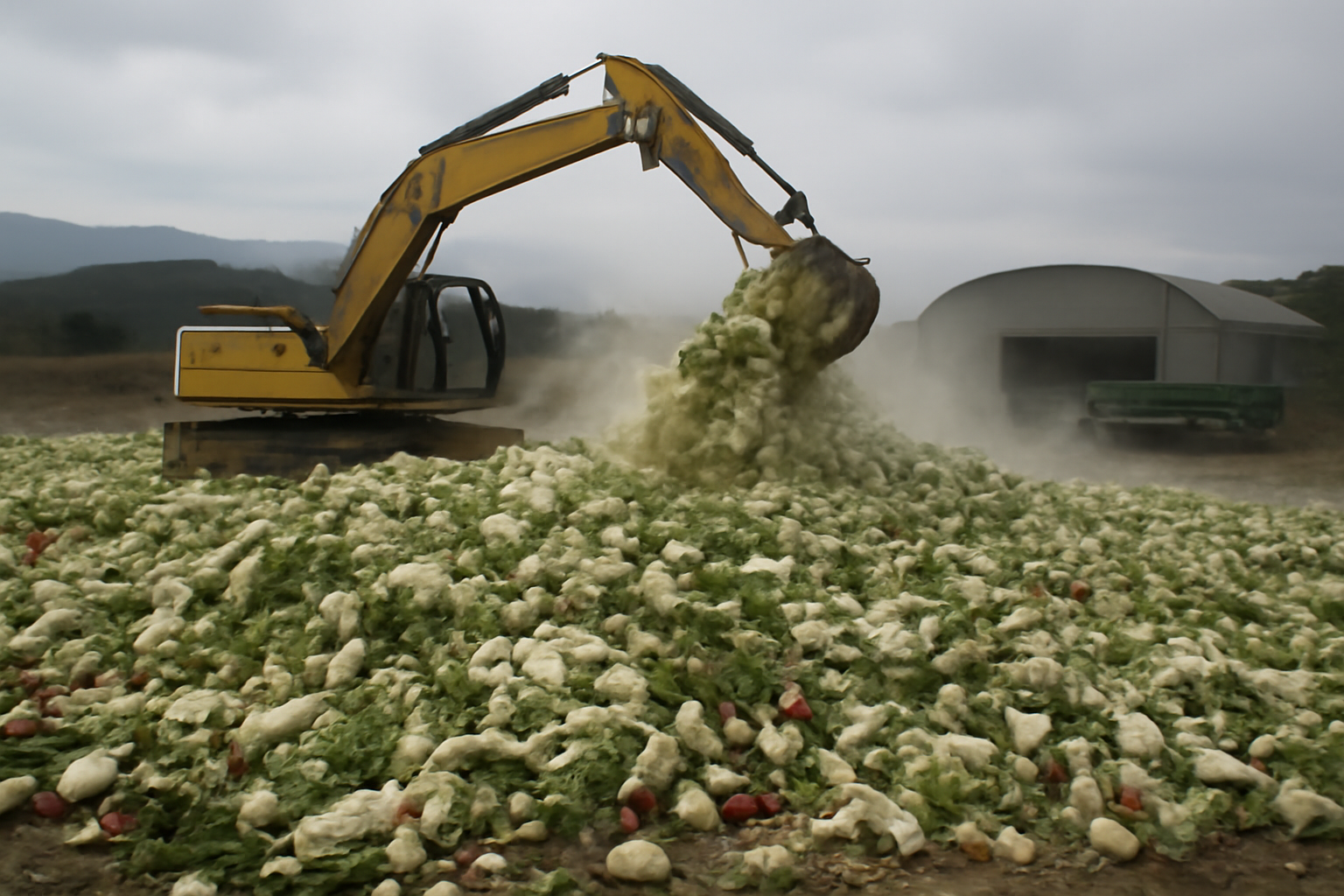
More than 32,000 tonnes of vegetables bought by the South Korean state to hold down consumer prices have been destroyed rather than sold, according to data the Korea Agro-Fisheries & Food Trade Corporation (aT) submitted to the office of People Power Party lawmaker Lee Sung-kwon. Onions accounted for 20,000 tonnes of that total, and disposal of the stockpiled produce cost 6.9 billion won.
The figures, disclosed on 25 September, cover the public reserve as of the end of last month and involve three staples of the Korean table: onions, radish and napa cabbage. According to the data, the write-offs followed a failure to forecast market prices and the balance of supply and demand. More than 80% of the onions purchased last year were ultimately thrown away rather than released into the market they were bought to cool.
What the aT data shows
- More than 32,000 tonnes of stockpiled produce destroyed as of the end of last month.
- 20,000 tonnes of onions within that volume.
- More than 80% of the onions bought last year discarded.
- 6.9 billion won spent on disposal of the reserve.
- Onions, radish and napa cabbage all affected.
How a buffer stock becomes a write-off
The mechanics are unforgiving. aT buys produce when harvests are heavy and farmgate prices are weak, stores it, and releases it when a shortage pushes retail prices up. The purchase supports growers; the release is meant to cap consumer prices and recover part of the outlay. Onions, radish and cabbage are all perishable, and cold storage only postpones deterioration, so the window in which reserve stock remains marketable is measured in months, not years.
When the anticipated shortage does not arrive, the agency faces a choice with no good options. Pushing the reserve into a market that is already well supplied drives prices below production costs and undercuts the growers the programme exists to protect. Holding the stock means paying for storage until the produce is no longer saleable. The third outcome is the one recorded in the aT data: destruction, with the purchase price written off and a disposal bill on top.
Questions for price-stabilisation policy
The scale of the onion loss — more than 80% of a single year's purchases — puts the sizing of the reserve, not only its timing, under scrutiny. Procurement volumes are set against a projected deficit; when the projection is wrong, the state ends up as the largest holder of a commodity nobody needs. For producers of onions, radish and cabbage that history carries commercial weight: an agency that has just absorbed 32,000 tonnes of losses tends to buy more cautiously in the next season, which removes part of the floor under farmgate prices in a heavy harvest.
It matters on the buying side as well. Reserve releases are the main instrument that caps Korean domestic spot prices for these vegetables during a shortage, and processors, kimchi manufacturers, retail chains and importers filling gaps when local supply falls short price that intervention into their planning. A reserve shown to have mistimed its purchases is a weaker anchor for those expectations.
The disposal figures also sharpen an old question about what happens to surplus public stock before it becomes waste. Processing into frozen, dried or paste products, channelling volumes into food aid, or moving them abroad all extend the usable life of produce the domestic fresh market cannot absorb. None of that applied to the 32,000 tonnes destroyed as of the end of last month, and the 6.9 billion won spent to get rid of it is the measure of that gap.