South Korea’s Leading Chestnut Region Starts Ten-Year Industry Overhaul
South Chungcheong Province is preparing a ten-year program to address aging growers, aging trees and soil acidification in South Korea’s largest chestnut-producing region. The four-part strategy links production renewal, workforce development, processing and distribution, and field-based research.
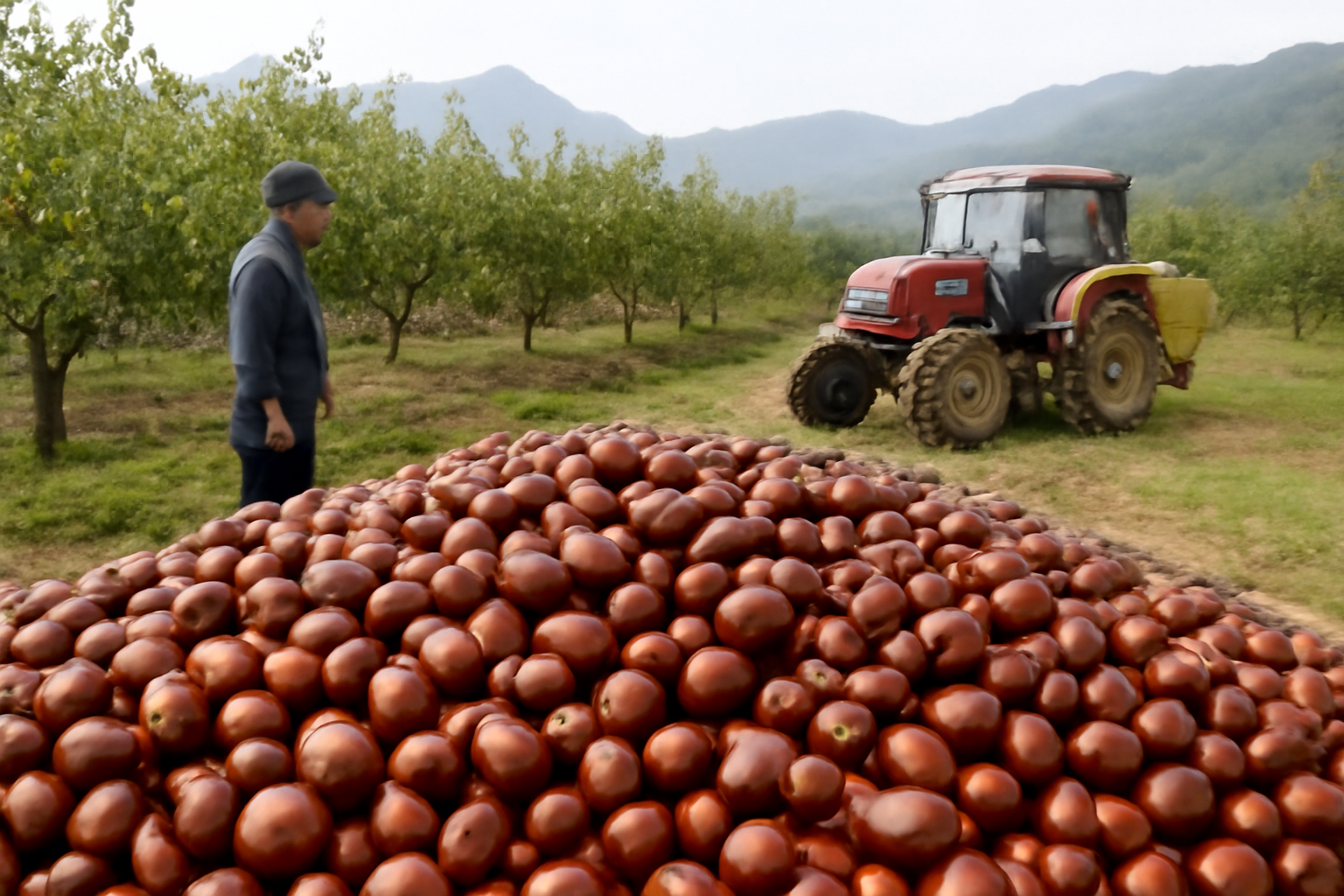
Province targets three pressures on production
South Chungcheong Province, which accounts for more than half of South Korea’s chestnut production, has begun preparing a ten-year overhaul of the regional industry. The initiative is intended to address three immediate pressures: an aging grower population, aging chestnut trees and increasingly acidic soils. Climate change and declining productivity add to the challenge facing farms.
Chungcheong Times reported that the provincial government convened a discussion at its headquarters on September 28. More than 50 people attended, including Governor Park Soo-hyun, university professors, industry specialists, forestry officials and forestry cooperative leaders from Gongju, Buyeo and Cheongyang, and representatives of the Korea Chestnut Growers Association.
The meeting treated the problems as an interconnected industry issue rather than a collection of difficulties that individual farms could resolve independently. Asia Times described Chungnam chestnuts as a core regional specialty that represents the standing of South Korea’s forestry sector.
Four areas form the renewal program
The proposed strategy covers production and infrastructure, young growers and labor, distribution and processing, and policy and research and development. On farms, the province is considering support for the efficient, phased replacement of aging trees and for soil improvement. Mechanization of mowing, crop protection and harvesting is also under discussion as a response to labor shortages.
The workforce component would seek to attract young forestry operators and establish mentoring for the transfer of existing farms. This is important because orchard renewal alone cannot stabilize output if experienced operators retire without successors. A coordinated succession system could preserve production knowledge while giving new entrants access to established farms.
Downstream measures include expanding shared grading, storage and processing facilities and developing higher-value brands. Shared infrastructure could help growers handle crops more consistently and move beyond sales of unprocessed chestnuts. However, the reports did not disclose a budget, capacity target, implementation timetable for individual projects or expected changes in producer income.
Research is intended to connect with farm conditions
The fourth area centers on distributing improved varieties suited to climate change and strengthening field trials and applied research. The objective is to create a cycle linking production, labor, distribution and research rather than operating each support program separately. Hwang Myung-soo, an adviser to the Korea Chestnut Growers Association, presented farm-focused innovation proposals during the meeting.
Park said the province would incorporate problems and recommendations raised by growers into its policies. For producers, the practical test will be whether support reaches orchards quickly enough to renew trees, improve soils and reduce labor dependence. Processors and distributors will watch whether shared facilities produce more reliable volumes and quality. The ten-year horizon gives Chungnam time to coordinate these elements, but the absence of published funding and performance targets means the scale of the program remains to be defined.