South Korea’s semiconductor buildout widens construction pipeline beyond fabs
Government-backed semiconductor and AI investment is generating contracts for factories, substations and other support infrastructure in South Korea. Midsized builders are gaining opportunities outside core fabs, although long project lead times and intense price competition remain obstacles.
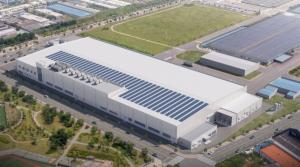
Samsung HVAC plant adds to industrial workload
South Korea’s planned expansion of semiconductor and artificial intelligence infrastructure is widening the construction pipeline beyond core fabrication plants. Opinion News reports that midsized and regional contractors are beginning to secure work on production buildings, substations and supporting facilities, while the largest builders remain best placed to deliver technically demanding fabs and hyperscale data centers.
Kumho Engineering & Construction said it signed a contract with Samsung Electronics to build a Korean factory for FläktGroup, the German company described by Opinion News as Europe’s largest air-conditioning equipment supplier and acquired by Samsung. The plant will be built at 70 Amco-ro in Buk-gu, Gwangju. It will have one above-ground floor and a total floor area of 23,588 square meters, with completion scheduled for February 2028.
The project includes a main heating, ventilation and air-conditioning plant, offices, a warehouse, a laboratory and employee rest areas. HVAC systems integrate cooling, heating, ventilation and air-quality management. Their importance is rising because AI data centers and semiconductor plants require extensive cooling and environmental controls. Samsung plans to develop its Gwangju operations into a global production base covering AI appliances and HVAC equipment.
Midsized contractors secure support-facility contracts
Other builders are already participating in the semiconductor investment cycle. IS Dongseo recently signed a construction contract worth KRW63.5 billion with SK Ecoplant for SK hynix’s Cheongju P&T7 project. The packaging and testing factory is intended to address growing demand for AI memory, and IS Dongseo reportedly secured subcontracted work for precast-concrete wall installation.
Dongbu Corporation won a prime contract worth about KRW192.4 billion for a shared-growth facility at SK hynix’s Yongin campus. HL D&I Halla is also working under a direct contract with Samsung Electronics on a 345-kilovolt substation in Pyeongtaek. These projects illustrate how semiconductor spending is spreading into electrical infrastructure, ancillary buildings and specialist construction packages.
Major contractors such as Samsung C&T, Hyundai E&C, Daewoo E&C, DL E&C, GS E&C, POSCO E&C, SK Ecoplant and Samsung E&A are potential bidders for fabs, battery plants, data centers and associated infrastructure. Core facilities require experience in security, process stability, precision construction, power connections, cooling, communications and cleanrooms. Midsized and local firms are more likely to compete for power plants, transmission networks, substations, water pipelines, wastewater facilities, access roads, logistics buildings, dormitories and offices.
National projects promise scale but not immediate relief
The pipeline follows a government plan announced in June to distribute semiconductor production more broadly across the country. According to Opinion News, the plan envisages KRW800 trillion of investment in Gwangju, where Samsung Electronics and SK hynix would each build two memory fabs. Busan and Gumi are designated as semiconductor materials, components and equipment centers, while the Chungcheong region is intended to become an HBM packaging hub.
Investment around the capital will also expand. Samsung plans to invest KRW360 trillion in six system-semiconductor factories at the Yongin national industrial complex and move the completion target forward from 2047 to 2040. SK hynix plans to increase investment in the Yongin semiconductor cluster from KRW122 trillion to KRW600 trillion and accelerate completion of six factories from 2045 to 2033.
The opportunity will unfold gradually. Site selection, permitting, land compensation and the construction of power and water networks must precede many awards. Local participation could increase if the government expands mandatory regional joint contracting and bid preferences for public infrastructure. However, private developers cannot easily be required to use local firms, ancillary packages may be small or subcontracted, and civil works face strong price competition. The long lead time means the prospective order flow may not resolve the immediate liquidity pressure facing smaller regional contractors.
Full market analysis