South Korea Checks Imports After Chinese Dyed Stem-Lettuce Allegations
Footage from China showing stem lettuce dipped into barrels of an unidentified liquid, reported to be a colouring agent banned on fresh vegetables, has triggered a food-safety controversy. South Korean authorities are checking whether affected product was imported into the country. The case follows the earlier controversy over cabbage treated with formaldehyde.
A colouring agent banned on fresh vegetables
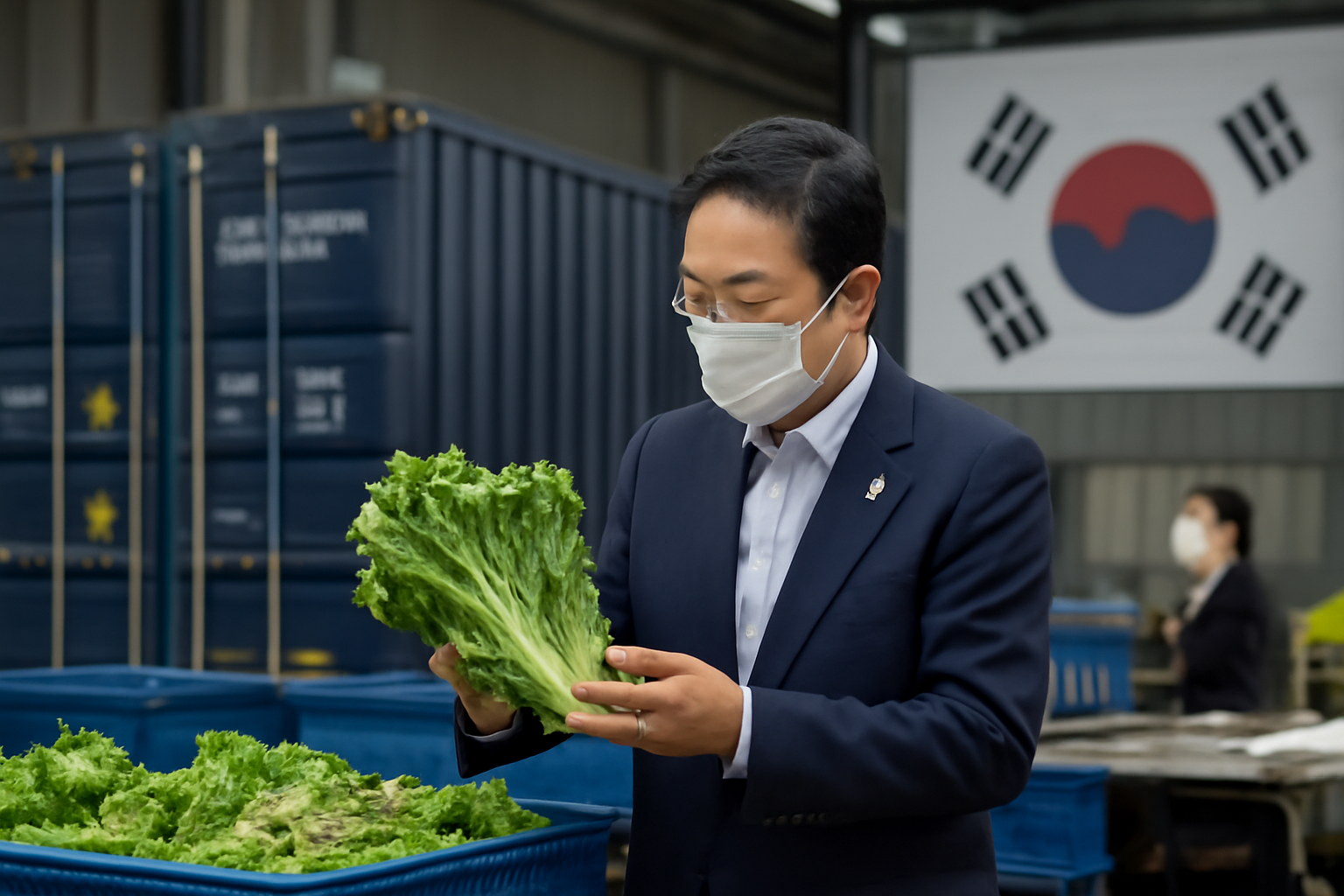
Chinese stem lettuce, the thick-stemmed vegetable sold in South Korea under the name gungchae, has become the centre of a food-safety controversy after footage from China showed the crop being plunged into barrels of an unidentified liquid. Korean media reported that the liquid was a colouring agent whose use on fresh vegetables is prohibited, applied to the stems to give them a deeper and more even green.
The treatment described in the reports takes place after harvest, at the handling and packing stage rather than in the field. That distinction matters commercially. A dye applied to the surface of a stem is invisible to a buyer working from a photograph or a specification sheet, and it leaves no trace in the agronomic record of the crop. Colour is one of the main quality signals in the vegetable trade, and it is also the attribute that degrades first once produce is cut, boxed and moved through a long cold chain. Anything that holds the colour steady raises the price a consignment can command and widens the window in which it can be sold.
The second Chinese vegetable case after formaldehyde cabbage
The dyed-lettuce allegations follow the controversy over Chinese cabbage treated with formaldehyde, a substance classified as a Group 1 carcinogen. Both cases involve the same commercial logic: a cheap chemical applied after harvest to preserve or improve the appearance of a perishable vegetable through storage and transport. Two episodes in close succession place the handling stage of the Chinese vegetable supply chain, rather than cultivation itself, at the centre of the safety discussion for importing markets.
Seoul checks whether the produce reached the market
South Korean authorities are checking whether stem lettuce affected by the practice was imported into the country. That verification work normally means matching the production and processing sites identified in the reports against customs declarations, importer records and border inspection files, then deciding whether sampling of stock already on the market is warranted. No confirmation has been announced that affected product entered South Korea, and no finding has been announced ruling it out either. Several points central to any commercial assessment remain open:
- which Chinese production and processing sites were involved
- which colouring agent was used, and in what concentration
- whether any consignments were shipped to South Korea, and in what volume
- whether the product moved as fresh, dried or further-processed lettuce
Where the exposure sits for importers
Stem lettuce is a niche line rather than a staple in the Korean market, and it is often used in dried and prepared form, where the raw material is no longer visible to the end consumer. That structure concentrates the exposure on importers and processors. They buy on written specification and on the trust placed in a supplier's post-harvest handling, and a colouring agent applied upstream is not something a standard visual inspection at the point of purchase would reveal.
The immediate consequence for the trade is procedural. Importers can expect closer scrutiny of consignments in the affected category, requests from retail and foodservice buyers for documentation on origin and post-harvest treatment, and pressure to shift orders towards suppliers able to demonstrate traceability. Chinese exporters of the product carry the more durable cost. The reputational damage lands in a market where a previous chemical-treatment case is still recent, and where buyers tend to respond to repeated incidents by re-sourcing rather than by renegotiating terms.