South Korea to buy 1,300 tonnes of highland potatoes as 2026 output rises
South Korea’s state-run Korea Agro-Fisheries & Food Trade Corporation will purchase 1,300 tonnes of highland potatoes from the 2026 crop. Production is forecast at about 123,000 tonnes, up 7.4% year on year, prompting an intervention intended to support market stability and create an emergency reserve.
State buyer prepares intervention
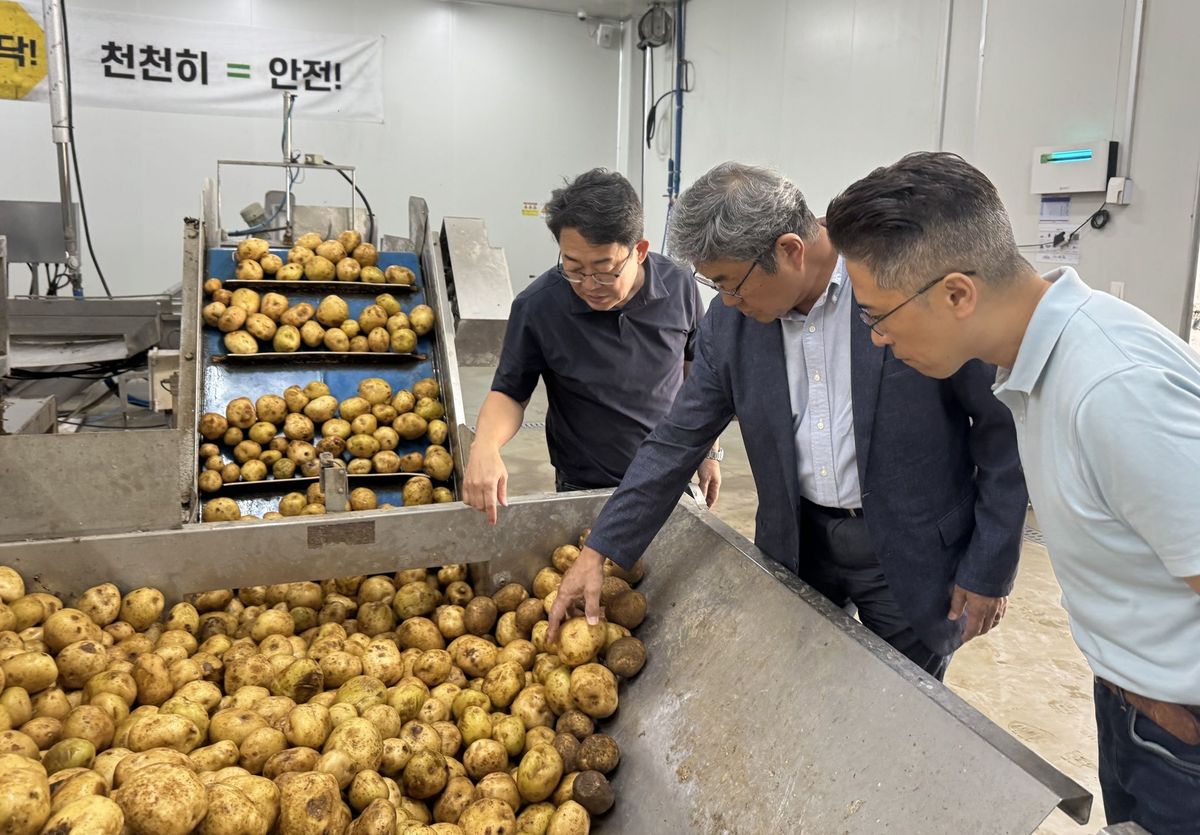
South Korea’s state-run Korea Agro-Fisheries & Food Trade Corporation, known as aT, plans to purchase 1,300 tonnes of highland potatoes from the 2026 crop for storage. The measure comes as growers prepare for a larger harvest and authorities seek to prevent a concentrated flow of supplies from causing a sharp decline in market prices.
Newsis reported that aT held a briefing for prospective bidders at the Pyeongchang Agricultural Technology Center in Gangwon Special Self-Governing Province on 7 September. The agency reviewed growing conditions in the main production areas and explained the tender process, purchasing standards and other requirements for the warehouse procurement programme.
The briefing also included a question-and-answer session and consultations with market participants. That process is intended to clarify procurement rules before purchases begin and reduce uncertainty for companies and storage operators seeking to participate in the tender.
Harvest forecast rises 7.4%
The Agricultural Outlook Center at the Korea Rural Economic Institute forecasts South Korea’s 2026 highland potato production at about 123,000 tonnes, an increase of 7.4% from the previous year. The expansion reflects both a larger planted area and improved yields. Overall crop development has also been assessed as better than last year.
The stronger outlook raises the risk of temporary oversupply when substantial volumes reach the market over a short period. By removing 1,300 tonnes from immediate circulation, the government purchase is designed to limit pressure on farm and wholesale prices while establishing stocks that can be released later.
However, the production forecast remains exposed to weather risks. Recent heatwaves and localized torrential rainfall have increased uncertainty surrounding agricultural output and supply. High temperatures and frequent rainfall in August have already caused changes in potato quality depending on local weather conditions, according to the report.
Stocks reserved for supply disruptions
aT said the purchased potatoes will be used proactively if extreme weather or other factors disrupt supply. The agency also plans to release the stocks at an appropriate time during next year’s off-season, when domestic availability is tighter and consumer prices may face upward pressure.
The programme therefore has two immediate market functions. It provides an outlet for part of a crop expected to exceed last year’s production, and it gives authorities a physical reserve for managing later shortages. The timing of releases will determine whether the intervention can moderate price volatility without displacing potatoes already held by private traders and storage companies.
Lee Jae-wook, aT’s director responsible for supply and demand, said increasingly frequent abnormal weather has made stable, pre-emptive supply management more important. He added that aT would carry out the purchase without disruption and use the acquired volume efficiently to support household price stability. For growers, processors and wholesalers, the next key signals will be the tender terms, actual crop quality and the schedule under which the reserve enters or leaves the market.