South Korea Builds 21,000-Tonne Vegetable Reserve to Protect Chuseok Supply
South Korea has secured 15,000 tonnes of cabbage and 6,000 tonnes of radish for release if adverse weather disrupts supplies before Chuseok. Early-August wholesale prices for cabbage, radish and head cabbage remained 31%-43% below normal after favorable growing conditions increased yields.
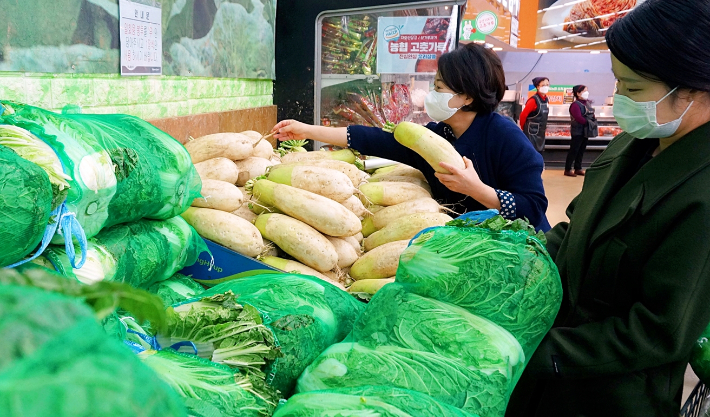
South Korea prepares for weather-related supply risks
South Korea is holding 21,000 tonnes of cabbage and radish in reserve to protect vegetable supplies ahead of the Chuseok holiday, even as current prices remain well below normal. The Ministry of Agriculture, Food and Rural Affairs has secured 15,000 tonnes of cabbage and 6,000 tonnes of radish and plans to supply wholesale markets, processors and other commercial users if shipments decline.
Dailian reported that production of highland vegetables has exceeded normal levels, pushing early-August wholesale prices for cabbage, radish and head cabbage 31%-43% below their usual levels. The ministry expects stable supplies through the peak Chuseok demand period unless a major weather event damages crops.
Favorable weather lifts highland yields
Most summer cabbage, radish and head cabbage now entering the market comes from highland areas of Gangwon Province, including Gangneung, Pyeongchang, Taebaek and Samcheok. Suitable rainfall and temperatures in July and August raised yields per unit of land by 5%-10% compared with normal, according to Dailian.
In early August, wholesale cabbage cost 3,437 won per head, 32% below normal. Radish averaged 1,877 won per unit, down 31%, while head cabbage stood at 1,626 won, 43% below normal. Retail prices were also 23%-32% below typical levels: 4,226 won for cabbage, 1,880 won for radish and 3,192 won for head cabbage.
The strong current harvest comes against a longer-term contraction in summer cabbage acreage. The planted area fell from 5,551 hectares in 2021 to 3,579 hectares in 2025. Summer head cabbage moved in the opposite direction, expanding from 1,882 hectares to 2,307 hectares over the same period.
Heat remains the main threat
Leafy and root vegetables including cabbage, radish, head cabbage, lettuce, perilla leaf and spinach prefer cool conditions, and output declines at temperatures above 30 degrees Celsius. Summer prices are generally two to three times higher than in other seasons because lower shipments coincide with stronger holiday demand and higher costs for irrigation and pest control. On a normal-year basis, summer wholesale cabbage prices are 1.6 times those of other seasons, while lettuce is 2.6 times and spinach 3.6 times higher.
Greenhouse-grown lettuce, perilla leaf and spinach have already become more expensive than in spring because of the heat, although prices remain close to or below normal in most cases. Early-August wholesale prices were 36,903 won per 4 kilograms for lettuce, 33,656 won for perilla leaf and 53,241 won for spinach. Compared with normal, lettuce was 1.4% cheaper and spinach 0.1% cheaper, while perilla leaf was 2.9% more expensive.
A prolonged heatwave or flooding caused by heavy rain could still lift greenhouse vegetable prices. The ministry said shipments should increase when temperatures fall. Even after crop damage, these vegetables can generally be harvested 20-30 days after sowing or transplanting, supporting the outlook for adequate supply in September and during the Chuseok peak.
Reserves, farm support and retail discounts
The ministry is monitoring crops and prices through a management group involving local governments, the Rural Development Administration, the National Agricultural Cooperative Federation and the Korea Rural Economic Institute. Support for products that limit heat damage—including crop-protection chemicals, nutrients, mulching film and shading coatings—has been expanded compared with previous years.
The government will release its reserves if market arrivals weaken. For products facing falling prices, it also plans demand-promotion campaigns with direct-sale markets, consumer organizations and the Korean Dietetic Association. Discounts of up to 40% on vegetables at large supermarkets and traditional markets will continue through the Chuseok season, providing consumers with price relief while helping growers move available supply.